Recap 2018: Building and construction sectors hit by tariff and retaliatory tariff; Researchers achieved breakthrough in aluminium battery sector
Donald Trump’s new tariffs of 25% on steel imports and 10% on aluminium imports affected the manufacturing industries across the nation. The construction industry is not an exception either. Aluminium tariff imposed by the United States government has already led to increases in the cost of construction materials. The move is expected to contribute to even higher building construction costs in the coming days.
The American Institute of Architects (AIA) said Trump’s tariffs on aluminium and steel imports will have negative impact on U.S. design and construction industries. The action will increase the prices of many building materials such as window frames, mechanical systems, and exterior cladding.
"By the same token, the Administration’s proposed infrastructure funding will not achieve the same value if critical materials become more expensive. Any move that increases building costs will jeopardize domestic design and the construction industry, which is responsible for billions in U.S. Gross Domestic Product, economic growth, and job creation.”

Canada levied retaliatory tariffs on several products manufactured in the United States, including a 10 percent tariff on aluminium doors, door thresholds and windows. “These actions will only lead to additional price increases in the residential and commercial building markets in both countries, Michael O’Brien, CEO, Window and Door Manufacturers Association.
Expansions made in the construction sector in 2018
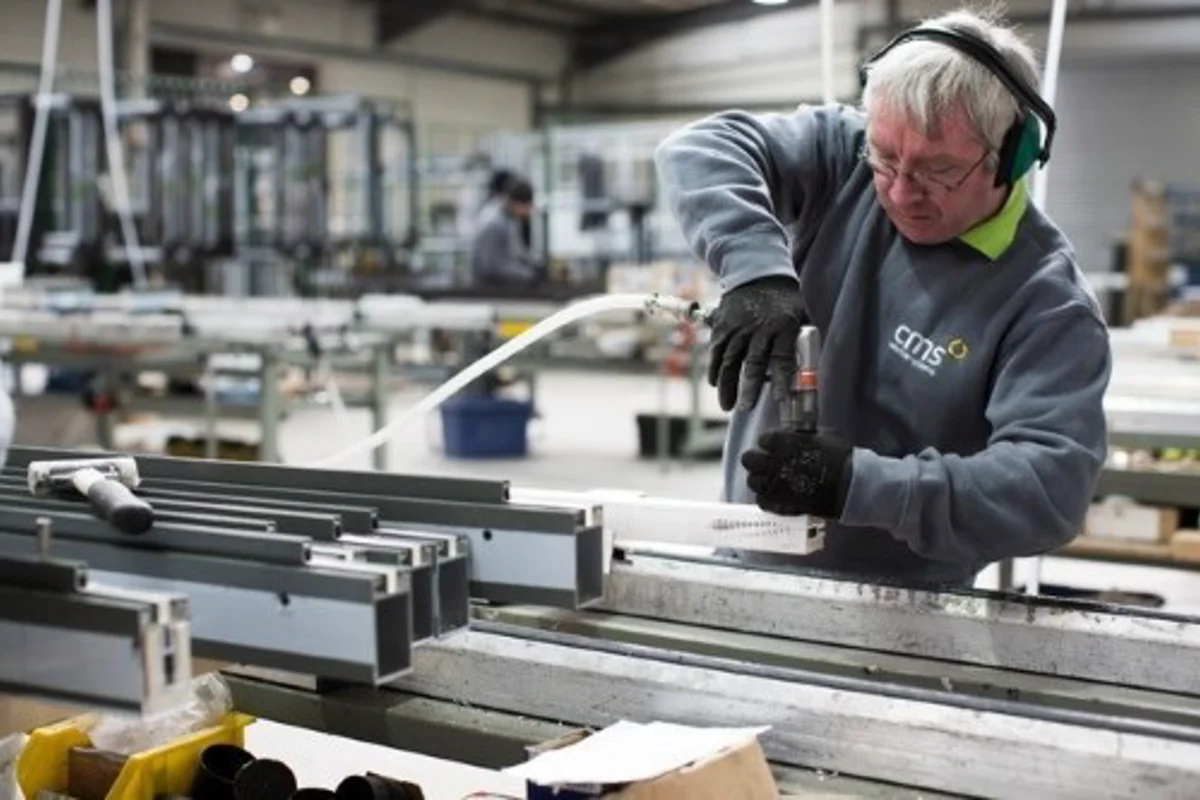
- CMS Window Systems has more than doubled production capacity of aluminium windows, doors and curtain walling with an investment of £500,000 in machinery and personnel. The investment includes the commissioning of Scotland’s first Emmegi Quadra L2, a state-of-the-art 18-axis CNC machining centre for milling, drilling and cutting aluminium profiles.
- Tradelink Window Solutions has doubled its aluminium manufacturing capacity with the inauguration of new dedicated facility. The aluminium facility will deliver aluminium glazing products to local installers even faster.
- Flair Windows is now producing aluminium range following the expansion of its current facility. The company is manufacturing Smarts Visofold 1000 Bi-Folding doors and Alitherm 300 Window Range.
- Reynaers Aluminium is undertaking renovation and extension of its Enniscorthy premises and production facility in order to increase storage capacity by 50 per cent and sympathetically bringing this historic building up to ‘the highest modern standards of safety and comfort’.
Acquisitions
- Norsk Hydro acquired Eugen Notter GmbH, a German aluminium window hardware manufacturer, to support Hydro’s strategy to offer innovative solutions for windows and doors to serve an increasingly sophisticated market.
- Andersen Corporation acquired Heritage Windows and Doors, a manufacturer of custom, high-quality aluminium windows and doors. “The acquisition of Heritage expands Andersen's product portfolio, increases advanced manufacturing capabilities and extends our geographic reach.”
- Emaar Industries & Investments (EII) has acquired a stake in Gutmann Systems Middle East, a supplier of architectural aluminium glazing systems. Gutmann Systems Middle East, said: “The strategic partnership with EII will be a game changer for our operations in the region, as we continue to grow our footprint and business.”
New products launched
- Aludecor Lamination Private Limited launched 3 mm Fire Rated Aluminium Composite Panel (ACP). The 3mm FR ACP by Aludecor is made at its state-of-the-art FR grade ACP production units spread over 25,000 sq m at Haridwar, with up-to-date technology and testing facilities.
- Sapa launched new aluminium flush window for residential application with a variety of frame, vent, mullion and transom options. Aluminium flush window offers excellent weather performance with a Class 9A water tightness rating, Class 3 air permeability and Class B5 wind resistance.
- HVG Facades launched two new facade products to their premium façade product lines. HVG has merged Alucobond Architectural and HVG Facade Solutions division as part of its growth strategy and launched demand driven products to bolster its premium facades portfolio. The new brands introduced by HVG Facades are MondoClad and Zintl.
Development of Aluminium Batteries
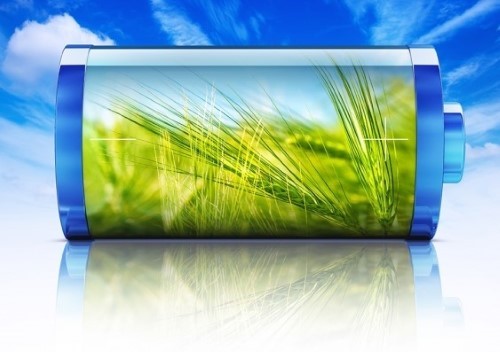
Aluminium batteries have been promoted as an alternative to lithium-ion batteries as a source of power for electric cars. They produce electricity from a reaction between oxygen and aluminium. Aluminium batteries enhanced with cheap and abundant materials could provide the perfect low-cost storage for renewable energy, researchers have claimed.
UNSW Sydney’s Dr Dong Jun Kim and his team of researchers found that aluminium-ion batteries could offer improved renewable energy storage and have much more potential in the field of renewable energy storage.
Dr Dong Jun Kim has completed a study at Northwestern University in Illinois which led a team of researchers including Nobel Laureate Sir Fraser Stoddart to demonstrate a strategy for designing active materials for rechargeable aluminium batteries. This has taken aluminium-ion batteries one step closer to reality.
Researchers in Victoria University of Wellington under the guidance of Professor Thomas Nann created a new electrolyte for making safer and more environmentally friendly aluminium batteries.The electrolyte is a battery part acting as a conductor for electricity.
The professor and his team consider the new electrolyte as just another step towards improving aluminium battery technology and towards the commercial use of aluminium batteries.
Ulsan National Institute of Science and Technology (UNIST), South Korea has developed an electric vehicle (EV) battery technology that is more energy-efficient than gasoline-powered engines. The new technology allows replacement of battery packs instead of re-charging and can troubleshoot slow charging problem with the existing EV battery technology. It also provides lightweight, high-energy density power sources with the use of aluminium.
The new type of aluminium-air flow battery for (EVs) developed through the research outperforms existing lithium-ion batteries in terms of energy density, cost, life cycle and safety.
Pact for batteries signed
- Yunnan Aluminium announced its board had unanimously approved a joint venture with Israel’s Phinergy and another Chinese firm that will make aluminium batteries, its latest bid to cash in on China’s electric vehicle (EV) boom.
- Chinese battery firm GEM Co Ltd signed MoU with South Korean battery producer ECOPRO Co Ltd for the supply of 170,000 tonnes of raw materials from 2019 to 2023. GEM will provide 16,000 tonnes of lithium nickel-cobalt-aluminium oxide (NCA) cathode materials in 2019.
Some other highlights of the year
- Ducab signed three major contracts in Abu Dhabi, UAE, for the supply of over 5,000 km of cables and all aluminium alloy overhead conductors for Abu Dhabi National Oil Company (Adnoc) projects. The company will supply extra-high-voltage (EHV), high-voltage (HV), medium-voltage (MV) and low-voltage (LV) cables.
- The Ducab Aluminium Company (DAC), a joint venture between Ducab and Senaat, has been inaugurated at Khalifa Industrial Zone of Abu Dhabi (KIZAD).DAC will manufacture 50,000 metric tonnes of high quality electrical grade aluminium rod and overhead conductor.
- DAC signed a long-term partnership with Emirates Global Aluminium (EGA) for the supply of molten aluminium for making rods and conductors.
Kozloff presents six-decked 90-metre yacht concept featuring aluminium superstructure
Next articleNMMA urges Trump administration to remove tariffs on common alloy aluminium sheet from China
Grow with
AL Circle





