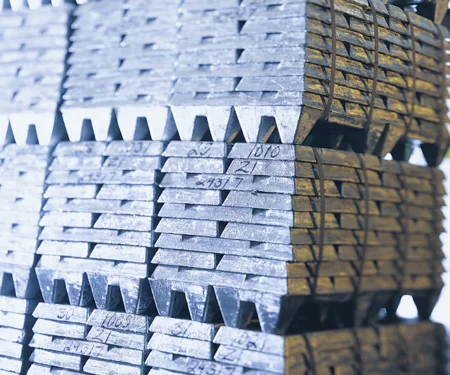
Primary Aluminium Weekly Recap: Indian aluminium producers consuming expensive power from grid due to coal shortage; A00 aluminium ingot price in China comes below RMB22,000/t

Coal shortage continues to be a matter of concern for the Indian aluminium industry this week. However, Indian state-run coal exploitation and refining company, Coal India Limited (CIL) has clarified that the supply dry foil fuel to the non-power sector like aluminium, steel, etc. has been diminished, but not completely ceased as professed by some sectors. As reported by a senior official of CIL, the course of action has been taken to consummate emergency demands for power plants as the country encounters a coal crisis.
To know more: https://www.alcircle.com/news/supply-of-dry-fuel-to-the-non-power-sector-is-regulated-not-stopped-coal-india-71645
According to another report, due to the limited coal stock as Coal India has curtailed supply, India’s aluminium makers are taking costlier electricity from the national grid, said the Aluminium Association of India (AAI). The association estimates that the aluminium production may account for 5-6 percent of India's total power consumption fulfilled through the national grid each year.
As per the aluminium manufacturers, Coal India's move to suspend auctions and limit supplies under long-term contracts, has worsened fuel procurement problems.
On Wednesday, October 20, the Secretary of the Mines Ministry, Govt. of India, Alok Tandon inaugurated the National Aluminium Company’s Lean Slurry Project at Angul, Odisha, marking a notable milestone in the Indian state-owned integrated aluminium company’s journey for business supremacy and embracing outstanding practices in environmental management.
According to Nalco, the Lean Slurry Project by Nalco will secure 100% utilisation of the ash produced at the company’s Captive Power Plant (CPP) and mark a remarkable move in its obligation towards environment-friendly and sustainable operations.
On the other hand, the Chairman and Managing Director of National Aluminium Company Limited (NALCO), Sridhar Patra expects the demand for aluminium to expand by 5% - 6%. He said, “With the curtailment of production by the majors (like China and European Union) and revival of the industry after the COVID-19 pandemic has resulted in a wide gap, so it has pushed the prices up. Demand in the long-term will have a compound annual growth rate (CAGR) of 5-6% which is predicted and short-term it might have some fluctuations, but long-term there will be demand across the globe of 5-6%.”
To know more: https://www.alcircle.com/news/nalco-cmd-predicts-aluminium-demand-to-expand-by-5-6-71661

The LME aluminium benchmark price slipped through this week from October 18 to 21. It opened the week with a hike US$17 per tonne to U$3,180 per tonne but slipped the next day by US$4 per tonne to US$3,176 per tonne. On Wednesday, October 20, the LME aluminium price shrunk to US$3,065 per tonne, which further plunged by US$51 per tonne to settle at US$3,014 per tonne on October 21.
To know more: https://www.alcircle.com/news/lme-aluminium-price-descends-by-1-66-to-us3-014-t-shfe-price-drops-by-us215-71686
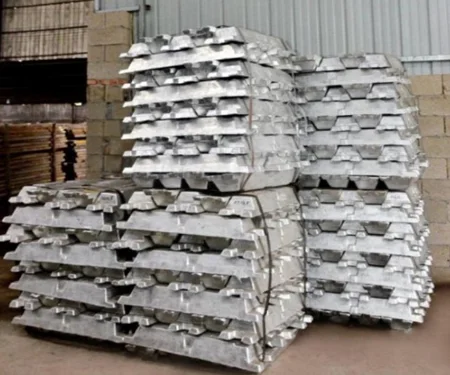
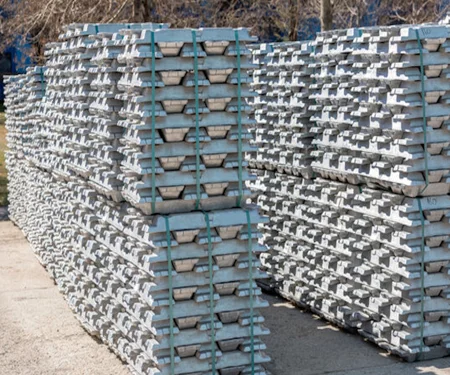
A00 aluminium ingot price in China has nosedived through the week from RMB 24,100 per tonne to RMB 21,900 per tonne, found the Shanghai Metals Market. Although the price grew in the first two days of the week to RMB 24,240 per tonne, it fell sharply on Wednesday, October 20, to stand at RMB 23,120 per tonne. It grew the next day to RMB 23,340 per tonne but again fell on Friday to close below RMB 22,000 per tonne.
According to the Shanghai Metals Market, China’s social inventories of primary aluminium grew by 70,000 tonnes across eight major consumption areas, including SHFE warrants, to come in at 957,000 tonnes on Thursday, October 21. This drastic growth was caused by higher arrivals of stocks at warehouses amid sluggish demand. Wuxi saw the highest growth of 28,000 tonnes week-on-week to stand at 324,000 tonnes, followed by the increase of 17,000 tonnes in Shanghai to peg at 96,000 tonnes.
To know more: https://www.alcircle.com/news/primary-aluminium-inventories-in-china-witness-a-steep-rise-to-957-000-tonnes-this-week-71683
The National Bureau of Statistics showed China churned out 3.08 million tonnes of primary aluminium, which was down by 2.4 per cent from 3.155 million tonnes a month ago and 2.1 per cent a year earlier, marking the fifth consecutive month of downfall caused by ongoing electricity shortages. The average daily production was at 102,667 tonnes per day, which was, however, an increase of 0.88 per cent from 101,770 tonnes a month ago.
The world primary aluminium production continued to decrease in September 2021 by 3.20 per cent month-on-month to stand at 5.508 million tonnes, found the International Aluminium Institute. However, on a year-on-year calculation, the production in September stood 1.77 per cent higher from 5.412 million tonnes. Total production in Q3 2021 (July-September) came in at 16.931 million tonnes, essentially unchanged from 16.922 million tonnes in Q2 2021.

South32, a diversified mining and metal company, has kept its output estimate steady for the fiscal year 2022, based on the output in the first quarter. The company informed that its aluminium production climbed by 1 per cent Q-o-Q in Q1 FY22 to close at 248,000 tonnes, while alumina output fell 10 percent to 1.2 million tonnes. South32 and Alcoa are looking into reopening the Alumar aluminium smelter in the second part of the 2022 fiscal year, with 100 percent renewable energy starting in 2024.
To know more: https://www.alcircle.com/news/south32-keeps-up-their-performance-despite-covid-19-challenges-71677
Hindalco Industries Limited has sharply cut its aluminium ingot and aluminium products prices with effect from Friday, October 21, following several growths until October 19. Hindalco’s aluminium ingot price has shrunk by INR 10,500 per tonne from INR 277,000 per tonne to INR 266,500 per tonne.
After the grand success of the first and second e-magazine under the topic Industry 4.0, AlCircle has come up with the third edition in this series of e-Magazine titled as “Aluminium Industry 4.0: Drivers & Change Makers of 2021”. The e-Magazine contains interviews and articles of some of the famous aluminium industry leaders, change makers, and pioneers, highlighting the importance of Industry 4.0, its success stories, and how it is helping the industry to confront the current challenges.
Primary aluminium production in Africa grows 1.8% Q-o-Q to 403,000 tonnes in 3Q2021: IAI
Next articleEurope’s largest smelter ‘Aluminium Dunkerque’ settles refinancing
Grow with
AL Circle