China destocking continues to support, ex-China supply caps upside
The image used in this article is generated with an AI tool and does not depict any real-time moment
Futures: The most-traded SHFE aluminium contract opened at RMB 23,330 per tonne in the night session on Oct 23, hit a high of RMB 23,615 per tonne and a low of RMB 23,300 per tonne, and closed at RMB 23,575 per tonne, up RMB 225 per tonne or 0.96 per cent from the previous close. Prices rebounded and rose above the 5 per 10 per 20 per 40 per 60-day moving averages, which have shifted from resistance to support, strengthening the short-term bullish signal. Trading volume during the session was 102,000 lots, and open interest stood at 263,000 lots, up 5,862 lots, driven mainly by bullish positioning. On the technical front, the 4-hour MACD golden cross continued, with red bars expanding, releasing short-term rebound momentum. The LME aluminium 3M contract opened at USD 3,005.0 per tonne on Oct 23, hit a high of USD 3,046.5 per tonne and a low of USD 2,991.0 per tonne, and closed at USD 3,040.5 per tonne, up USD 34.5 per tonne or 1.15 per cent from the previous close. Prices stabilised and rebounded from lows, rising above the 5per 10-day moving averages, while the medium and long-term moving averages continued to exert downward pressure. Trading volume during the session was 17,926 lots, and open interest stood at 567,000 lots, up 4,771 lots, with bulls adding positions. On the technical front, the daily MACD turned upward below the zero axis, with DIFF approaching DEA and green bars largely flattening, suggesting signs of stabilisation at lows.
Macro front: Premier Li Qiang chaired a State Council executive meeting on Oct 23. The meeting noted the need to accelerate the building of a birth-friendly society, continuously improve policies on marriage, childbirth, parenting, and education, optimise fiscal, tax, social security, and housing support measures for families, and strive to stabilise the number of new births. A survey released last Friday showed that US consumer confidence edged down to near historic lows in October, as the Middle East conflict pushed up prices, turning US households pessimistic about the economic outlook ahead of the midterm elections, where affordability is a core issue. The University of Michigan consumer survey showed its consumer sentiment index fell to 48.0 this month from a final reading of 48.1 in September.
Fundamentals: In the short term, ex-China spot premiums for primary aluminium remain generally weak, and performance across regions is expected to continue diverging. The Thai market may remain constrained by weak downstream orders, limiting primary aluminium ingot purchasing demand; the South Korean market is likely to stay sluggish in the near term amid low activity from both buyers and sellers. The Japanese MJP market is expected to remain cautious, with buyers and traders unlikely to take aggressive action before demand becomes clearer. In the US, with no significant changes in supply-demand fundamentals, Midwest DDP premiums are expected to remain relatively stable. On the inventory front, as of this Monday, China's aluminium ingot social inventory fell by 30,000 tonnes from last Thursday and by 54,000 tonnes from last Monday.
Primary aluminium market: East China market: Intraday SHFE aluminium futures fluctuated with widening amplitude. During Friday morning trading, the price center edged slightly lower compared with the same session the previous day. Spot premiums continued to decline in transactions, but the drop was not excessive. Notably, the price spread between near-month contracts widened again to around RMB 300 per tonne, putting pressure on premiums. On Friday, SMM A00 aluminium ingot spot premiums stood at RMB 240-260 per tonne. Central China market: Trading sentiment in the central China market was sluggish on Friday. The stockpiling cycle arrived, but downstream plants had already purchased heavily earlier, leaving in-factory inventories high and current purchase willingness significantly reduced. Meanwhile, suppliers were not optimistic about the current spread between futures and spot prices and tended to sell quickly to clear inventories, with low willingness to hold prices firm. Ultimately, actual transaction prices in the central China market centered around premiums of RMB 70-100 per tonne against the SHFE aluminium November contract. South China market: Aluminium prices edged down in the previous trading session, and the spot market finally saw a glimmer of hope. Arrivals tightened and inventories continued to destock, while the near-month backwardation structure remained relatively stable and the basis had fallen substantially, leading to improved market expectations. Suppliers became more determined to hold prices firm and hold back from selling, with only a few making small downward adjustments. Downstream buyers accepted relatively low absolute prices, and purchasing demand gradually recovered. Early attempts to push for lower prices were not met, and as circulation tightened, buyers shifted to increasing market purchases and accepting firm prices. Mainstream transaction prices steadily rose, with active trading. Spot transaction prices concentrated at premiums of RMB 165-205 per tonne against the SHFE aluminium 2611 contract.
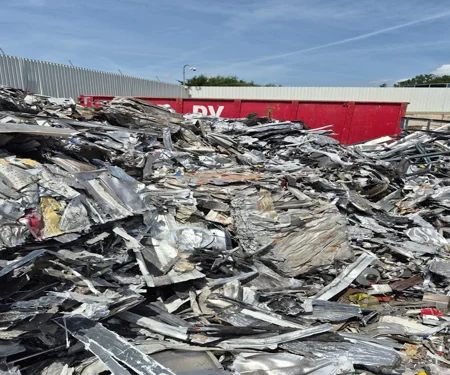
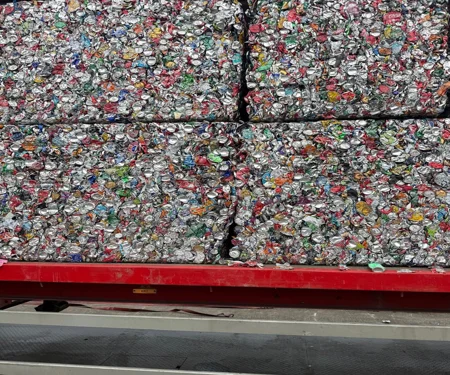
Aluminium scrap: SMM A00 aluminium price closed at RMB 23,670 per tonne in the previous trading session, down RMB 40 per tonne from the previous trading day. Aluminium scrap prices generally held steady with no adjustments. On the price difference front, the price difference between A00 aluminium and mixed aluminium extrusion scrap free of paint in Foshan stood at about RMB 2,177 per tonne on Oct 23, while the price difference between A00 aluminium and shredded aluminium tense scrap was about RMB 567 per tonne. On the supply side, tax inspections in central China continued to deepen, making compliant invoiced aluminium scrap increasingly scarce, and enterprises holding invoices showed strong willingness to hold prices firm. Competition among enterprises was intense, and actual effective supply remained tight. On the import front, imported shredded aluminium prices at Ningbo port and Tianjin port last week were recorded at RMB 20,970 per tonne (tax-inclusive) and RMB 21,020 per tonne (tax-inclusive), respectively, flat WoW. According to customs data, aluminium scrap imports in September totalled 158,800 tonnes, up 12 per cent MoM, continuing the recovery trend. On one hand, shipping schedules and deliveries have gradually returned to normal, with Southeast Asian supply replenishment continuing to increase; on the other hand, the deepening peak season has to some extent driven phased restocking demand for imported scrap. In the short term, the aluminium scrap market is expected to hold up well, with limited downside. On the supply side, the scope and intensity of tax inspections remain the core variable, and the tight supply of compliant invoiced cargo is unlikely to ease. Some industry leaders have raised invoice tax rates further, intensifying competition for compliant supply among enterprises. On the demand side, downstream scrap utilisation enterprises still show resilience in demand, but finished product inventory pressure is also dampening raw material purchasing enthusiasm. In addition, the price difference between A00 aluminium and aluminium scrap has recently narrowed to historical lows, weakening the economic advantage of scrap and bringing the issue of primary aluminium substitution back to the discussion table. Going forward, focus should be on the spread of tax inspections, changes in invoicing quotas across regions, and downstream operating pace.
Secondary aluminium alloy: The ADC12 market overall maintained a stable, wait-and-see stance in the previous trading session, with no significant adjustments in market quotes. SMM ADC12 market quotes remained stable at RMB 24,500 per tonne from the previous day. Futures showed heightened volatility in the previous trading session, and enterprises were generally cautious about adjusting prices. From a fundamental perspective, downstream demand was mediocre, with purchases still mainly need-based and limited trading volume, constraining price increases to some extent. However, aluminium scrap raw material costs still provided support, and combined with tight supply of compliant aluminium scrap, prices also faced some resistance to declines. Overall, the ADC12 market is currently caught between bullish and bearish factors, with both upside and downside limited. In the short term, prices are expected to move sideways with a stable, wait-and-see tone. Going forward, attention should be paid to futures trends, raw material price changes, and actual downstream purchasing.
Comprehensive outlook: The macro front is mixed, with geopolitical disturbances persisting. The valuation pressure from the US dollar and interest rates on nonferrous metals is marginally weakening, and overall macro sentiment remains cautious. On the fundamentals side, ex-China production resumptions and new capacity launches are weighing on futures sentiment, but continued destocking in China still supports aluminium prices at the bottom. Aluminium prices are expected to maintain a consolidation pattern in the short term.
Note: This article has been shared by SMM and has been published by AL Circle with its original information without any modifications or edits to the core subject/data.
Hindalco, Vedanta & NALCO shares fall as EGA restarts Al Taweelah smelter; aluminium prices forcast at $2,800/t in CY27
Next articleShyam Metalics subsidiary secures NCLT approval to merge aluminium foil unit
Grow with
AL Circle