Aluminium Processing Rate Steady at 61.7% as Peak Season Ends
The image used in this article is generated with an AI tool and does not depict any real-time moment
This week, the operating rate of leading downstream aluminium processors in China held steady M-o-M at 61.7 per cent. Overall industry production remained stable, but internal divergence intensified, with initial signs of a shift from peak season to off-season emerging. The operating rate of primary aluminium alloy producers edged up 0.4 percentage points to 60.6 per cent, driven by a M-o-M increase in wheel hub exports in September and growth in automobile production. Downstream demand showed a mild recovery, and the lower aluminium price center helped slightly repair market sentiment, though actual transactions remained sluggish, with enterprises maintaining production schedules aligned with long-term contracts. The operating rate of aluminium plate per sheet and strip producers held steady at 69.2 per cent, with orders not yet experiencing major fluctuations. After the aluminium price rebound, downstream wait-and-see sentiment eased somewhat and finished-product destocking pressure moderated. However, approaching the peak-to-off-season transition period, some enterprises have begun slowing their November production pace. The operating rate of aluminium wire and cable producers pulled back 0.4 percentage points to 64.4 per cent, mainly due to some export-oriented enterprises reducing loads. State Grid's October tender volume narrowed significantly from September, providing limited boost from new orders. Q4 will focus primarily on digesting existing orders, with downward pressure likely to become more evident from November. The operating rate of aluminium extrusion producers held flat at 53.00 per cent. Building extrusion pulled back slightly due to repeated aluminium price fluctuations and intensifying bearish sentiment downstream, which led to insufficient new follow-up orders. In industrial extrusion, energy storage-related profiles continued to see improving inquiries and orders on hand, while some automotive extrusion enterprises saw increased orders, effectively offsetting the decline. The operating rate of aluminium foil producers held steady at 71.1 per cent, with battery foil and brazing foil production lines maintaining good order continuity, supported by continued export recovery in September. The operating rate of secondary aluminium producers held flat at 52.1 per cent. The rebound in aluminium price center drove aluminium scrap prices up in tandem, raising costs. This was compounded by tight supply of compliant aluminium scrap and stricter tax invoice supervision. Meanwhile, as the October peak season drew to a close, end-use demand fell short of expectations, leaving enterprise production schedules constrained by both insufficient orders and limited raw material availability. Overall, the operating rate of the aluminium processing industry held steady this week. Going forward, close attention should be paid to aluminium price trends, the pace of State Grid order releases, and the extent of seasonal pullback in end-use demand.
Primary aluminium alloy: This week, the operating rate of China's leading primary aluminium alloy enterprises was recorded at 60.6 per cent, up 0.4 percentage points WoW, with the overall operating level showing a slight improvement. From the enterprise side, production at industry leaders remained largely unchanged overall, with production still executed according to normal long-term contract pace, production schedules remaining stable, and no notable adjustments observed. From the downstream demand side, wheel hub exports in September improved M-o-M, and automobile production also increased, with downstream demand showing a mild recovery that to some extent drove the slight improvement in industry operating rates. However, the current demand recovery remains relatively mild overall, providing limited boost to operating rates, and enterprise production has yet to show significant volume expansion. From the market sentiment perspective, the aluminium price center has shifted lower recently. Although actual transactions are still understood to be limited, overall market sentiment has improved slightly compared with the earlier period. Downstream enterprises remain in a strong wait-and-see sentiment toward current prices, with procurement and restocking still cautious, and actual transaction volume expansion not yet evident. Overall, the supply side of the primary aluminium alloy industry remains stable, while downstream demand has improved slightly, driven by wheel hub exports and automobile production growth, leading to a modest increase in operating rates. Although the lower aluminium price center has led to a slight recovery in market sentiment, actual transactions remain sluggish, with a strong wait-and-see atmosphere on prices. The operating rate is expected to remain at current levels next week, while the extent of subsequent demand improvement and transaction follow-through remains to be observed.
Aluminium plate per sheet and strip: This week, the operating rate of leading aluminium plate per sheet and strip enterprises was 69.2 per cent, stable M-o-M. Industry production continued its steady trend for the time being, with no major fluctuations on the order side, stable performance across all segments, and no clear signs of weakening market demand. On the price side, aluminium prices rebounded this week, and the previous wait-and-see sentiment among downstream players recovered accordingly, with destocking pressure on finished products easing compared with the earlier period. However, approaching the off-season transition period, expectations of a seasonal decline in demand have gradually emerged, and some enterprises have begun to slow their November production pace, with subsequent production schedule arrangements turning more cautious. On the export side, according to customs data, aluminium plate per sheet and strip exports in September were 310,300 tonnes, down 0.5 per cent M-o-M but up 19.5 per cent YoY. With a solid base of 2.7373 million tonnes in January–September, Q4 monthly average exports are expected to land at 280,000–310,000 tonnes, bringing the full-year export total to 3.58–3.67 million tonnes. Overall, although current operating rates remain steady, under the combined effects of emerging expectations of weakening demand, more cautious enterprise production schedules, and diminishing marginal boost from exports, the operating rate of leading enterprises is expected to decline gradually in the short term and enter the off-season range.
Aluminium wire and cable: This week, the operating rate of China's aluminium wire and cable industry pulled back slightly to 64.4 per cent, down 0.4 percentage points WoW. On the production side, production lines that had previously undergone maintenance returned to normal load, with most sampled enterprises maintaining production schedules at pre-holiday levels. Some export-oriented enterprises trimmed their load slightly, and no concentrated maintenance or large-scale production cuts were seen during the week. On the order side, State Grid's tender volume for aluminium-related materials from October to date was approximately 4,800 tonnes, notably narrower than the 122,000 tonnes in September, providing limited boost to new orders. The roughly five-month delivery lead time for the September batch has already pushed the volume release period to Q1 next year, with Q4 still focused on digesting existing orders and advancing construction. On the export side, overseas inquiries for aluminium stranded wire remained sporadic, and with the domestic-overseas price ratio weakening, new order intake stayed subdued, further pressuring export sentiment. Overall, domestic orders still provided support but lacked sufficient growth. As temperatures decline and year-end production schedules converge, downward pressure may become more evident from November onward.
Aluminium extrusion: This week, the operating rate of aluminium extrusion stood at 53.00 per cent, flat WoW. In the architectural extrusion segment, backlog orders from the National Day holiday were gradually delivered and completed this week, but recent aluminium price fluctuations and intensifying bearish sentiment downstream made clients more hesitant to place orders, dragging on order release. According to feedback from a Shandong-based enterprise, new orders brought by last week's aluminium price pullback still provided some support to this week's operations. However, affected by repeated price fluctuations this week, downstream clients held door and window orders but did not purchase extrusion materials in advance for stockpiling. Due to insufficient new follow-on orders, the operating rate of architectural extrusion edged down. The industrial extrusion segment consolidated on a strong note. The energy storage segment continued to improve, with inquiries and orders on hand for extrusion profiles used in utility-scale energy storage systems extending their upward trend. In automotive extrusion, most enterprises saw stable orders, while some individual enterprises recorded increased follow-on orders as sales of their corresponding car models rose, supplementing the segment's operating rate. Overall, the slight pullback in architectural extrusion was offset by strength in industrial extrusion, keeping the overall operating rate stable. In the near term, aluminium prices are expected to consolidate on a subdued note, with downstream bearish sentiment unchanged and procurement mainly need-based, leaving operating rates exposed to downward pressure ahead.
Aluminium foil: This week, the operating rate of leading aluminium foil enterprises was 71.1 per cent, flat M-o-M, with both production and sales remaining unchanged. At the enterprise operation level, production lines for battery foil and brazing foil largely maintained stable output, with good order continuity and relatively limited impact from seasonal end-use demand fluctuations, providing fundamental support for the stable operating rate. On the export front, according to customs data, aluminium foil exports in September were 128,200 tonnes, up 6.8 per cent M-o-M and up 13.2 per cent YoY. Driven by the continued rebound in exports, total aluminium foil exports for the full year are expected to land at 1.41–1.45 million tonnes, with an expected full-year YoY increase of about 6 per cent. Overall, with the combined support of stable production line operations and continued export growth, the short-term stability of the aluminium foil operating rate is expected to persist.
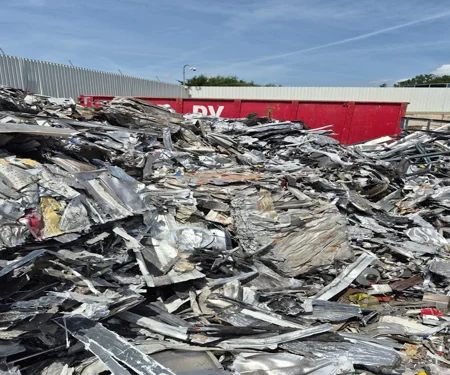
Secondary aluminium: This week, the operating rate of leading secondary aluminium enterprises was flat M-o-M at 52.1 per cent, with the overall supply-demand pattern in the market remaining stable during the week and no significant adjustments in enterprise production. On the raw material side, the rebound in aluminium price center drove aluminium scrap prices up in tandem, raising enterprise procurement costs for raw materials. Meanwhile, factors such as tight supply of compliant aluminium scrap and stricter tax invoice supervision continued to constrain raw material procurement and production. On the demand side, as the October peak season drew to a close, end-use demand underperformed expectations, downstream order improvement was limited, and procurement remained primarily need-based restocking. After ADC12 prices were raised by RMB 100 per tonne at the start of the week, downstream acceptance of high-priced supply was relatively limited, restocking enthusiasm showed no notable improvement, and enterprise production schedules remained constrained by both insufficient end-use orders and restricted raw material supply. Overall, the operating rate of the secondary aluminium industry is expected to remain stable in the short term, with limited room for further rebound. Going forward, close attention should be paid to changes in compliant aluminium scrap supply, raw material cost fluctuations, and the release of end-use orders.
Note: This article has been shared by SMM and has been published by AL Circle with its original information without any modifications or edits to the core subject/data.
SRF plans ₹6b battery-grade aluminium foil plant in Madhya Pradesh as Q2 profit rises 31%
Next articleGermany’s aluminium FRP exports to Poland fall 16% through July 2026
Grow with
AL Circle