Packaging sustainability debate: Aluminium, PET or glass, who leads?
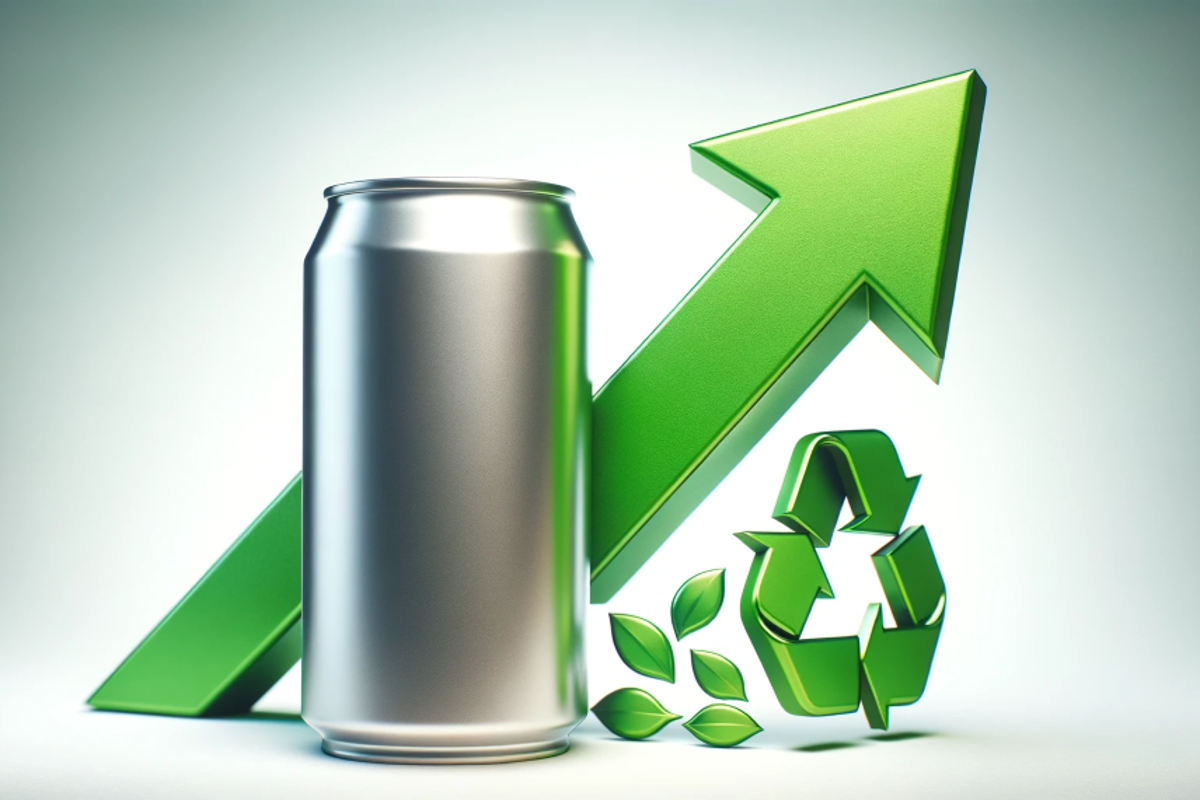
Packaging sustainability continues to be a hot topic, given that assessments of sustainability can vary and may even contradict each other. It is also easy to become sidetracked, as many of these rankings rely on the hierarchy of sustainability metrics or the approach taken to analyse them. Now the debate begins, which is more sustainable in packaging, whether aluminium, glass or plastic.
NAPCOR's study
A recent study by The National Association for PET Container Resources (NAPCOR) shows that Polyethene Terephthalate (PET) bottles stand out in key sustainability metrics compared to aluminium cans and glass bottles, emitting lower greenhouse gas emissions, consuming less energy and water during manufacturing and generating less solid waste by weight.
The results, especially those with respect to GHG emissions, may not be anticipated. Scott Trenor, Technical Director, Association of Plastic Recyclers, explains that the lower emissions from PET can be mainly attributed to two things. Firstly, PET is lightweight and it has a lower temperature requirement for bottle production compared to the high heat required to produce containers with glass or aluminium.
What does it indicate?
To provide some context, NAPCOR's report includes the life cycle analysis (LCA), which details significant sustainability advantages of a 16.9-ounce PET water bottle compared to a 12-ounce aluminium can. The LCA shows the PET water bottle consumes 80 per cent less energy and creates less solid waste, uses 53 per cent less water in production, makes 74 per cent less global warming potential (GWP) and has 68 to 83 per cent less emissions that contribute to acid rain and smog formation.
Another study by the American Chemical Society (ACS) finds that, across 15 of 16 evaluated applications, including packaging with plastic products, produce 10 to 90 per cent fewer life cycle emissions compared with alternative materials.
A missing element in NAPCOR's study
However, on the contrary, some critics warn that life cycle analyses are a limited tool and do not capture the whole sustainability picture. As the authors of the ACS study note, LCAs for plastics commonly ignore high litter figures, any impact on marine life and any possible effects on human health.
Compared to aluminium and glass, PET recycling is significantly behind and has a smaller amount of post-consumer material remade into new containers. The recycling rates are 45.2 per cent for aluminium cans, 39.6 per cent for glass bottles and only 20.3 per cent for PET bottles, as depicted in a study from 2021 displaying recycling rates.
Within the same study, it is further highlighted that the differences in recycled content are also significant, where aluminium cans, on average, report 73 per cent recycled material, glass bottles 23 per cent and PET bottles just 3 to 10 per cent.
However, the controversies in the study do not end here, as a paradoxical finding by NAPCOR claims that aluminium cans for carbonated soft drinks have a greater environmental impact than PET bottles. Still, the Aluminium Association study concluded that aluminium's effect is similar to that of PET in this application and less than that of glass bottles, especially when highly concerned about carbon footprint.
Also read: Circular economy in packaging: The recycling success of aluminium cans, glass & pet bottles
Aluminium's high recyclability rate & its benefits
According to Scott Breen, the President of the Can Manufacturers Institute, due to very high recovery rates, the aluminium industry has an exceptional opportunity to reduce its overall carbon footprint as well.
Producing aluminium is a multi-step process resulting in significant greenhouse gas emissions and environmental burdens from extraction. By recycling, emissions are reduced by up to 95 per cent compared to primary aluminium and with infinite recyclability, most MRFs and deposit return systems can readily capture and recycle aluminium at scale.
Breen further adds that the industry is now concentrating on raising aluminium recycling rates, which have fallen recently, as well as raising the present 73 per cent recycled content. "If we can do that, the carbon footprint drops more. So that's the future. That's where we want to go", concludes Breen.
Nonetheless, glass possesses its unique sustainability profile. Still, Scott DeFife, President of the Glass Packaging Institute, recognised that the weight of glass increases energy use and carbon emissions in the process of manufacturing glass containers and transporting bottles.
Scott DeFife further stated, "But here's where we excel. Glass is the simplest, singular natural packaging material. It is just glass. There is no liner; there is no mixed material. It leaches no toxic chemicals into the environment."
While the heaviness of glass is an issue, the average beverage container weight has dropped by 30 to 40 per cent over the past 25 years. New logistics solutions, such as hub-and-spoke aggregation models and drop-off models, are making transportation more sustainable. However, recovery is a significant barrier, as MRFs frequently filter out residual glass and mix with other waste streams.
DeFife states, "Contamination levels in those residue piles can be 50 per cent non-glass. So, we're talking about finding a needle in a haystack sometimes. But if the material is recovered, it will have a home. And it is beneficial in the making of new bottles. It melts at a lower temperature, so it takes less energy to make bottles from recycled glass than from raw materials."
Also read: Shaky but steady: Brazil’s aluminium can recycling rate falls 2.7% but stands above 95% for 15 years
According to Scott Trenor, recycling always benefits a material's environmental impact rather than making it from virgin resources.
"For PET, you are converting fossil fuels into the monomers, for aluminium, you are extracting materials from Bauxite, and for Glass, you are mining the sand and transporting it to process it. The more you recycle, the more you reduce life cycle impacts." Trenor adds.
Way to sustainable packaging
While it is apparent that recycling is better for the environment than using virgin resources, it is still difficult to figure out which bottle or can is the greenest. Life cycle assessments are complicated and a singular analysis is not conclusive.
Exploring sustainable packaging now involves a complex set of considerations that were unimaginable when packaging's sole purpose was product protection, as noted by Brandi Parker, a brand-level sustainability consultant.
Parker states, "Now, you must have a regenerative or non-toxic end-of-use. Oh, and don't increase energy usage or CO2 production at the same time. We're struggling because we're trying to keep a simple system in which to determine solutions. When sustainability requires reviewing and satisfying solutions across multiple vectors, some of which negate, intersect or cancel each other."
According to Parker, companies looking to operate in a circular economy face an even wider aperture of considerations beyond end-of-use, toxicity, energy, or CO₂.
"They need to think about how they operate, why they operate, who their customers are and how people perceive the company. Balancing these considerations is complex and reinforces how sustainability is broader than just changing materials." added Parker.
Sustainable packaging is a complicated issue and materials, such as PET, aluminium and glass, have significant potential advantages and challenges in terms of production, recycling and life cycle. Recycling is a constant mitigation strategy for lowering environmental footprints for material and a holistic view, considering the operational practice of the organisation, their choice of material and end-of-life plans, which will be the best way for companies to move towards a circular economy.
Orogen Royalties X South32: Generative exploration alliance pact signed
Next articleArdagh Group to showcase innovative metal and glass packaging at Drinktec 2025
Grow with
AL Circle