Oil price jumps 8% after Iran’s Bab el-Mandeb block: Is aluminium next in line?
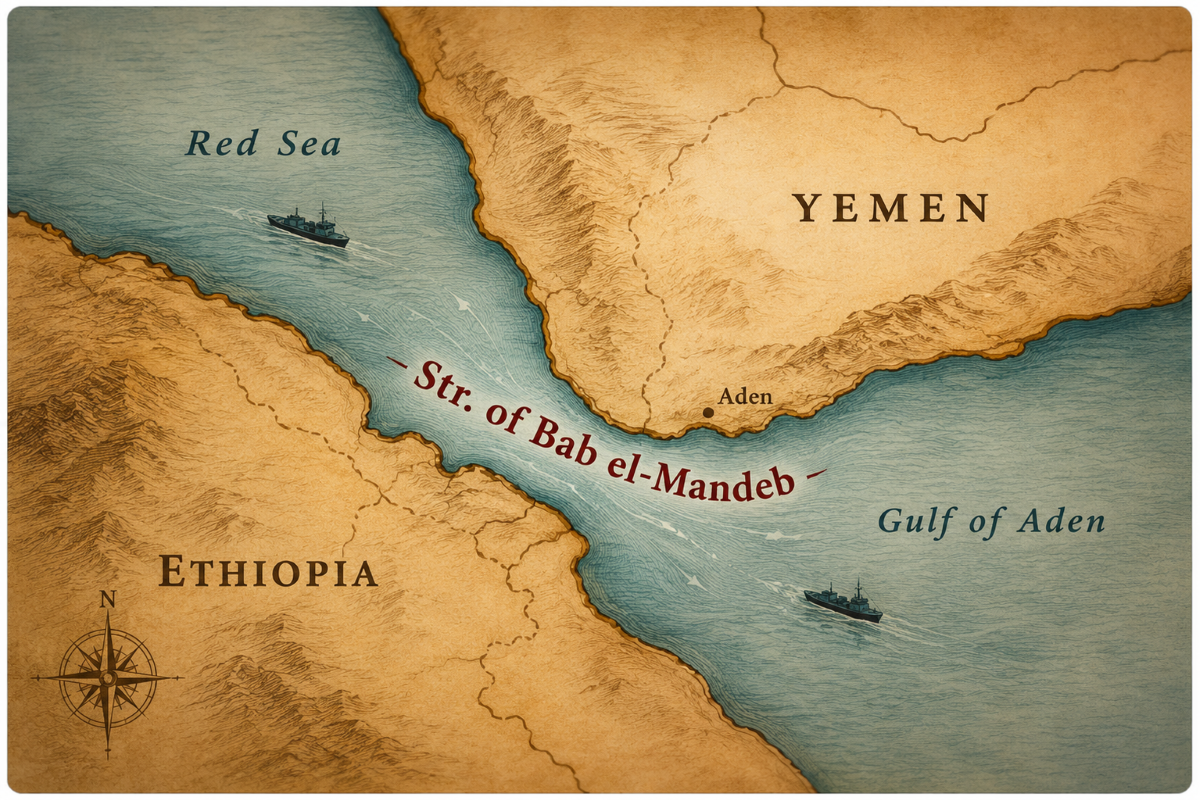
The image used in this article is generated with an AI tool and does not depict any real-time moment
In the latest update on the Middle East conflict, Iran has reportedly intensified regional tensions with plans to block the Bab el-Mandeb Strait, shortly after suspending indirect negotiations with the US.
The closure of a narrow trade route of the Strait of Hormuz soon shook the global market, sending oil prices soaring past USD 100 per barrel. Now, Iran’s latest move to block another crucial trade corridor is likely to further aggravate the present market trend.
Discover: The Gulf aluminium market risks, China impact, alumina supply, carbon costs, and logistics disruptions shaping pricing and trade in Gulf Disruption Roadmap
The development, reported by Iran’s state-affiliated Tasnim News Agency, comes amid growing friction linked to ongoing military developments in Lebanon and Gaza.
According to Tasnim, Tehran has halted all message exchanges with Washington through intermediaries, stating that diplomatic engagement will remain on hold until its conditions regarding the regional situation are addressed.
The announcement has been received by a concerned global energy market, with crude oil prices climbing past 8 per cent and briefly approaching USD 94 per barrel as traders apprehend the possibility of disruptions at two critical maritime routes, i.e., the Strait of Hormuz and the Bab el-Mandeb Strait.
The potential blockade of the Bab el-Mandeb Strait, coupled with ongoing uncertainty around the Strait of Hormuz, poses a significant risk to global trade and commodity markets. While Hormuz is a critical route for Middle Eastern oil exports, Bab el-Mandeb connects the Red Sea to the Suez Canal, making it essential for trade between Asia, Europe and the Gulf. Disruptions at both chokepoints could increase shipping distances, freight rates, fuel costs and insurance premiums.
Bab el-Mandeb emerges as a key maritime concern
The Bab el-Mandeb Strait, positioned between Yemen and the Horn of Africa, is one of the world’s most important shipping corridors, connecting the Red Sea with the Suez Canal. Any interruption to traffic through the passage could have far-reaching implications for global trade, shipping logistics and energy transportation.
Tasnim reported that Iran’s latest position forms part of a broader regional response involving allied groups across the Middle East. The report also noted earlier discussions centred on increasing pressure across strategic maritime routes in response to ongoing geopolitical developments.
The prospect of disruptions at both Bab el-Mandeb and Hormuz has heightened concerns across commodity and shipping markets, given the pivotal role these waterways play in facilitating global energy flows and international trade.
A catch for the aluminium trade?
If oil prices continue to tread on the rising graph, then aluminium prices might automatically feel the ripple effect. As increased fuel prices amid escalating tensions would spike shipping and logistics costs, they are in turn likely to weigh upon aluminium prices that are already soaring.
The London Metal Exchange (LME) aluminium price history on the June 2 session saw aluminium prices hit another four-year high to USD 3,855 per tonne, mirroring the March 4, 2022 figure. Moreover, as aluminium price is projected to reach USD 4,000 per tonne by the end of 2026, the market may have to brace for a new challenge spurred by this development.
Hence, the double blockade of trade routes, like a double blow, might leave the aluminium value chain grappling with price swings in production as well as transportation charges even without a direct supply shortage.
Must read: Key industry individuals share their thoughts on the ALuminium LeaderSpeak 2026

MONTHLY: China's thermal coal market rallies sharply in May on summer restocking, supply concerns
Next articleUS DOE backs rare earth recovery projects with $134M funding
Grow with
AL Circle