您想继续阅读英文文章还
是切换到中文?
是切换到中文?

THINK ALUMINIUM THINK AL CIRCLE

Mexico is popularly known for having a large number of secondary aluminium smelters and die-casters which cater to the domestic automotive industry- globally the seventh-largest in production volume. Most of these smelters use aluminium scrap imported from various parts of the world, but mainly from the US Mexican scavengers, known as buscabotes (literally: can seekers). They salvage aluminium cans from dumpsters and residential garbage and sell them across the border where they are used by the automotive OEMs.
The market for recycled aluminium in Mexico shows a strong demand for scrap due to significant differences in prices for the virgin and secondary metal. According to our third-party data, Mexico’s aluminium scrap import is estimated to see a year-on-year rise this year to 477,743 tonnes, up 103 per cent from the previous year. However, in 2018, the country had witnessed a drop in aluminium scrap import from 317,561 tonnes in 2017 to 235,197 tonnes, down 26 per cent. But the import volume in 2017 was up from the previous year’s 108,660 tonnes.
{alcircleadd}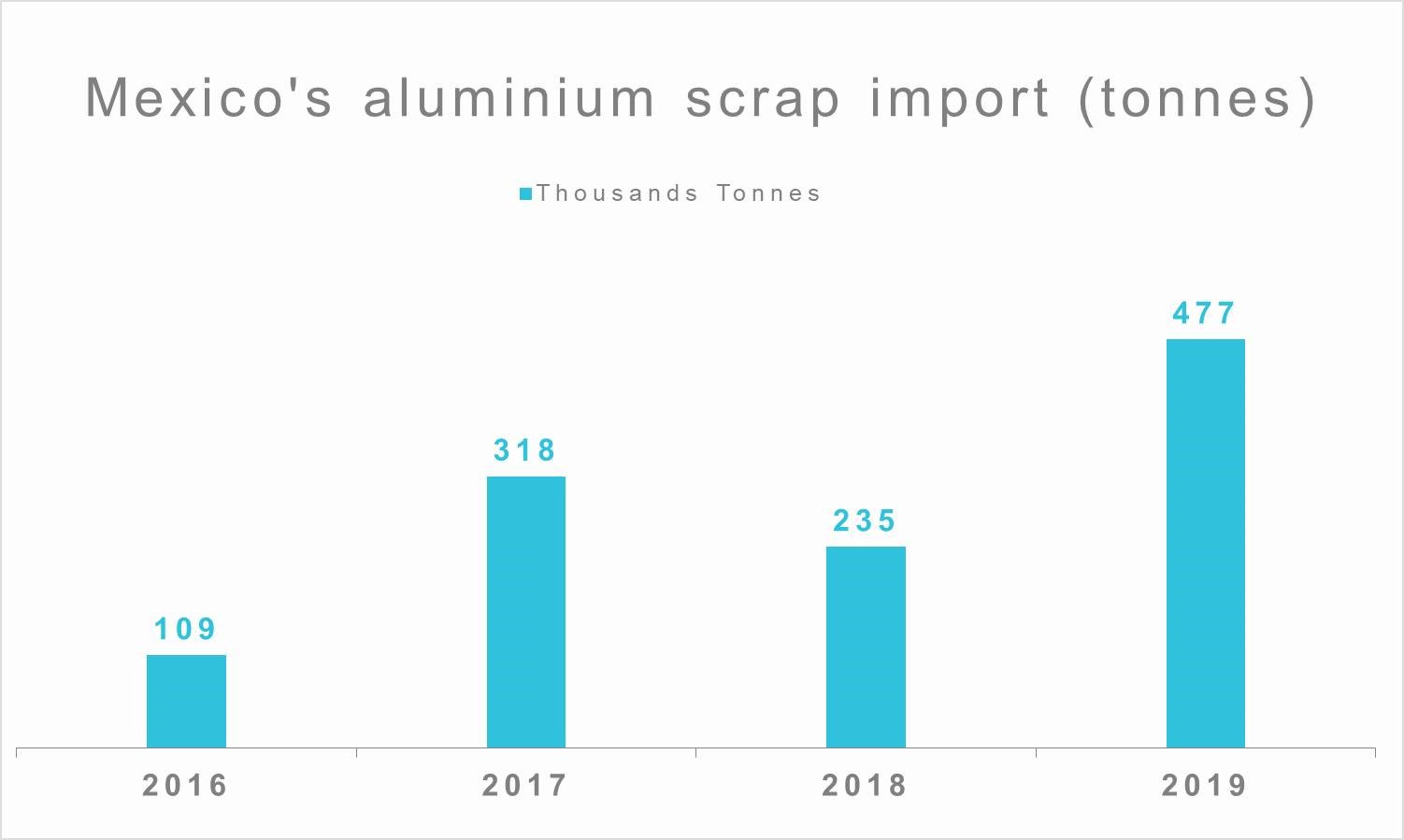
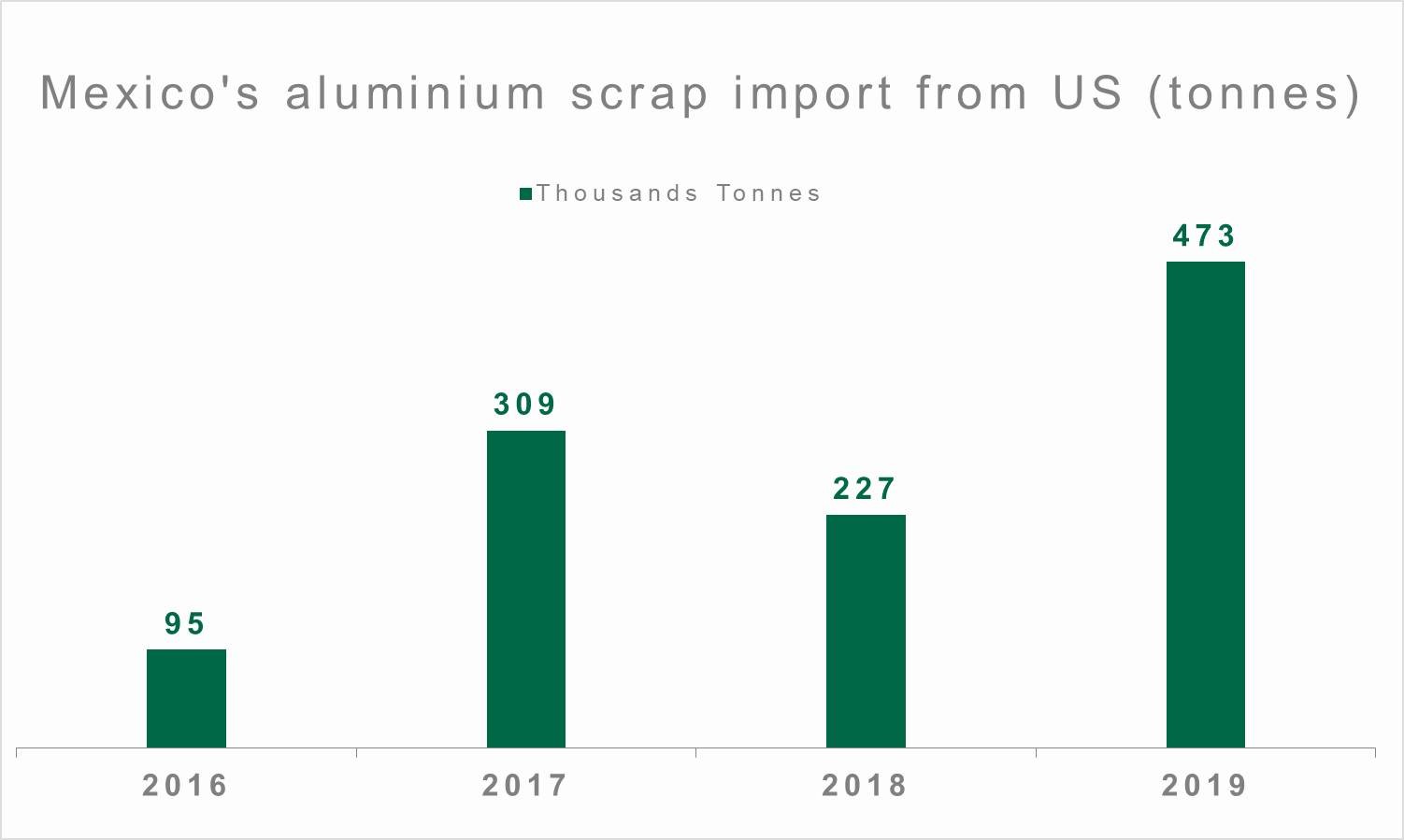
As said earlier, while Mexico’s maximum amount of aluminium scrap is from the US, this year the country is estimated to secure about 473,439 tonnes, out of 477,743 tonnes of its total scrap import. In tandem with the year-on-year rise in Mexico’s total aluminium scrap import, its import from the US is thus estimated to grow as well, by 108 per cent. Last year, Mexico had imported 227,267 tonnes of aluminium scrap from the US. This was down by 27 per cent from 309,451 tonnes in 2017. In 2016, the import was at 95,758 tonnes, which indicates that 2017 saw a year-on-year rise unlike 2018.
Other than the US, this year Mexico will import aluminium scrap from Australia, Canada, China, Germany, Spain, the United Kingdom, and many others, according to the available data.

Responses