您想继续阅读英文文章还
是切换到中文?
是切换到中文?

THINK ALUMINIUM THINK AL CIRCLE

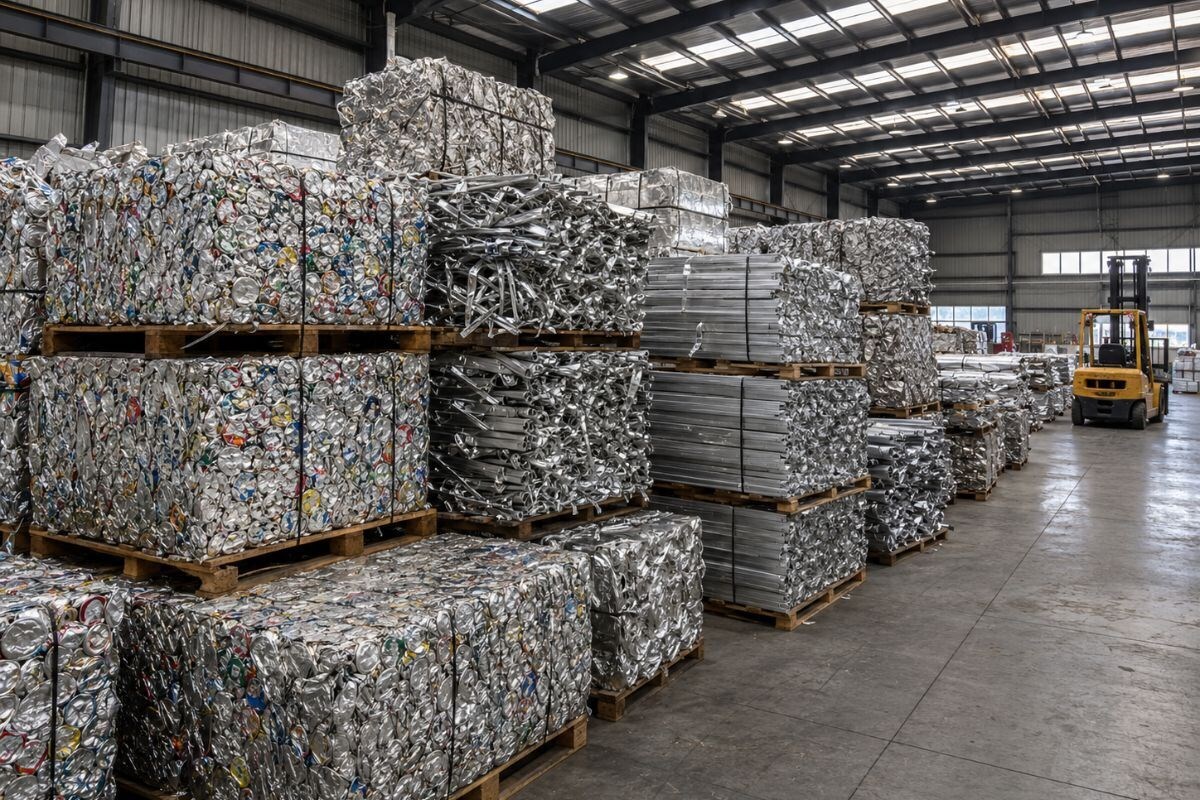
The image used in this article is generated with an AI tool and does not depict any real-time moment
Aluminium scrap: The aluminium scrap market overall fluctuated at highs this week, tracking primary aluminium price fluctuations. As of June 4, the SMM A00 spot aluminium price closed at RMB 24,120 per tonne, down RMB 20 per tonne W-o-W.
{alcircleadd}On the price difference between primary metal and scrap, the price difference between A00 aluminium and mixed aluminium extrusion scrap free of paint in Foshan was recorded at RMB 2,523 per tonne on June 4, while the price difference between A00 aluminium and shredded aluminium tense scrap was RMB 2,093 per tonne.
The mainstream operating range for shredded aluminium tense scrap liquid aluminium prices (tax-exclusive) was RMB 20,300-20,700 per tonne. The operating range for imported shredded aluminium clips (Ningbo Port) was raised by RMB 300 per tonne this week to RMB 22,270-22,570 per tonne (tax-inclusive). Supply side, regulatory enforcement of the "reverse invoicing" policy continued to tighten.
Tax rebate cancellations and intensified tax audits in some provinces drove up invoiced raw material costs, and some enterprises in Anhui, Jiangxi and other regions have already seen production cuts or suspensions.
Warehouse inflows at aluminium scrap distribution hubs declined Y-o-Y, and aluminium tense scrap inventory decreased due to reduced inflows. Currently, compliance costs in the raw material recycling segment remain elevated, available invoiced supply remains tight, and invoice scarcity has become the core price support. Meanwhile, amid disruptions from the US-Iran conflict, the price spread between domestic and overseas markets has inverted, making imported low-cost quality supply scarce and weakening supplementation to the domestic market.
Demand side, off-season effects emerged, with downstream scrap utilisation enterprises operating at low rates, sluggish end-user order follow-through, and enterprises maintaining strategies of purchasing as needed with low inventory, creating a cautious procurement atmosphere. Aluminium scrap market prices are expected to continue fluctuating at highs and hold up well. The persistent tightness in compliant invoiced supply provides a floor for aluminium scrap prices.
The lagging contraction effect of imported aluminium scrap has not been fully released, with subsequent port arrivals set to remain at low levels, and import supplementation remains limited as the overseas market outperforms the domestic market.
At the same time, as the off-season deepens, the sustainability of orders for downstream scrap utilisation enterprises is concerning. Scrap utilisation enterprises maintain strategies of purchasing as needed with low inventory, and the procurement atmosphere is unlikely to see significant improvement.
Currently, invoicing risks in the industry remain elevated, supply-side contraction expectations are strengthening, while weak downstream demand exerts downward pressure, presenting an overall pattern of weakness in both supply and demand.
Secondary aluminium alloy: The price centre of ADC12 moved up this week. As of Thursday, the SMM ADC12 price rose RMB 200 per tonne W-o-W to RMB 23,900 per tonne. Cost side, cost pressure in the secondary aluminium industry continued to intensify this week.
Scrutiny over "invoice-based tax compliance" remained stringent and expanded in scope, with input VAT invoices in persistent short supply, pushing up enterprises' tax burdens and compliance costs while directly constraining normal production.
Demand side, downstream consumption weakened further after June, with die-casting enterprises maintaining just-in-time procurement. After ADC12 prices were raised consecutively at the beginning of the week, downstream buyers became cautious in purchasing, lacking momentum to rush to buy amid continuous price rise.
The demand side failed to provide effective support for price increases, becoming the main variable constraining upside room. In terms of supply, the industry's supply side showed a tightening trend this week. In terms of operating rate, affected by the shortage of input VAT invoices, the weekly operating rate of secondary aluminium industry leaders declined 1 percentage point W-o-W to 53.9 per cent, with some aluminium smelters forced to cut production and new supply sources decreasing.
In terms of inventory, according to SMM statistics, as of Thursday, social inventory of secondary aluminium alloy ingots in China's major consumption areas decreased 400 tonnes W-o-W to 62,500 tonnes, ending seven weeks of inventory buildup; supply contraction, combined with increased trader shipments amid widening spot-futures price spread and the release of downstream and manufacturer repurchase demand, jointly drove destocking.
Import side, ex-China ADC12 quotes stayed high at USD 3,360-3,460 per tonne, and although the theoretical import loss narrowed, it remained as deep as RMB 3,200 per tonne, with the import window remaining closed. The resonance of production cuts, destocking, and import obstruction provided strong support for prices on the supply side.
Overall, the tight invoice supply and increasingly stringent compliance supervision on the cost side are unlikely to ease in the short term, with raw material and tax costs expected to stay high; on the supply side, if the invoice shortage continues to ferment, the scale of industry production cuts will further expand, and combined with low social inventory levels and the closed import window, spot cargo circulation volume will be difficult to increase effectively. However, continued weakness on the demand side will suppress price gains. In the short term, ADC12 prices have limited downside room, and an upward breakthrough also lacks effective support from the demand side. Prices are expected to run in a generally stable with slight rise pattern overall.
Note: This article has been issued by SMM and has been published by AL Circle with its original information without any modifications or edits to the core subject/data.

Responses