Korea’s 483kt of Russian aluminium imports hit record high as sanctions risks deepen
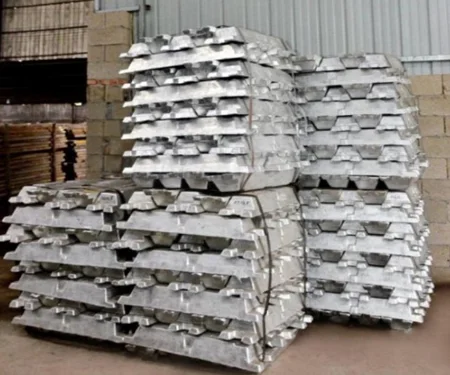
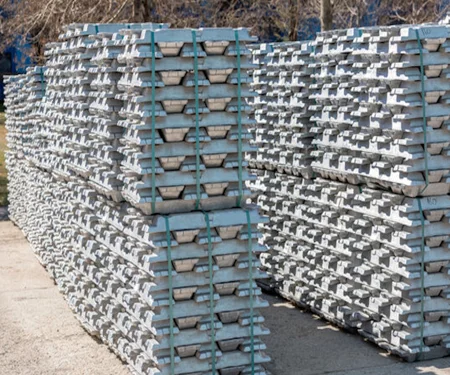
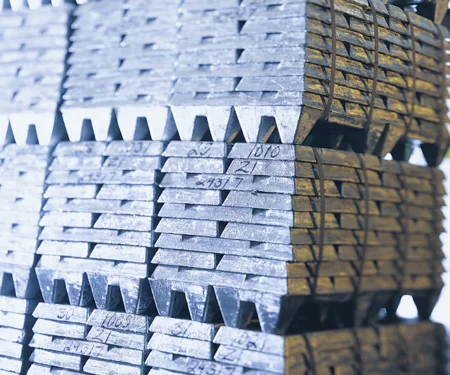
Stock image for referential purposes only
South Korea’s Russian aluminium imports reached a record high in 2025, making Russia the country’s largest aluminium supplier for the first time. The sharp increase has strengthened Korea’s dependence on Russian metal even as the US and Europe tighten sanctions against Moscow. The exposure is significant for Korea’s defence industry, where aluminium and its alloys are used in missiles and other weapons systems.
Korea imported 483,084 tonnes of aluminium from Russia in 2025, according to Korea Customs Service data, representing a 41 per cent increase year on year. The volume exceeded imports from Australia at 408,657 tonnes and China at 394,837 tonnes.
The shift has become increasingly pronounced since 2022. Compared with the 120,629 tonnes imported from Russia in 2021, last year’s volume was more than three times higher.
Explore- Most comprehensive and forward-looking industry-focused report — Global Bauxite & Alumina Market Forecast to 2036: Supply–Demand, Trade Flows & Price Outlook
Russia’s price advantage drives Korea’s aluminium sourcing
Russia, home to major producer Rusal, accounts for roughly 5.5 per cent of global aluminium output, giving it a significant position in the international market.
For Korean buyers, Russian metal has also offered a considerable price advantage. Korea paid an average of USD 2,744 per tonne for Russian aluminium in 2025, compared with USD 4,424 per tonne for Chinese aluminium. Australian supplies were cheaper at USD 2,659 per tonne, but the difference with Russia was relatively narrow.
The price gap has made Russian aluminium difficult for Korean companies to replace.
Park Ji-won, senior researcher on Russia and Eurasia at the Export-Import Bank of Korea’s Institute for Overseas Economic Research, noted, “Korean companies know the risks, but the price advantage makes it difficult to walk away.”
Park added that Russia has increasingly redirected supplies towards Asian markets such as Korea and China as Western restrictions have tightened.
Explore primary aluminium suppliers, product listings and trade opportunities on the AL Biz platform.
Western sanctions raise the stakes
The growing Russian supply exposure comes as restrictions on Russian aluminium continue to expand.
The European Union (EU) decided in February 2025 to phase out imports of Russian primary aluminium, initially limiting purchases to 80 per cent of the previous year’s volume, or around 275,000 tonnes, before a complete ban at the end of 2026. Belarusian aluminium was also included to prevent alternative supply routes.
The US and UK had already taken action in April 2024 by jointly banning imports of Russian aluminium, copper and nickel.
South Korea has adopted Western sanctions covering areas including advanced-technology exports and financial restrictions, but it has not imposed a ban on Russian energy and material imports such as aluminium.
That leaves Korean companies able to continue sourcing Russian metal, but the longer-term risks are becoming harder to ignore.
Kang Boo-gyun, senior researcher on Russia and Eurasia at the Korea Institute for International Economic Policy, observed that importing Russian aluminium does not automatically expose a Korean company to secondary sanctions from the US or Europe. However, “Companies should weigh the potential for tighter sanctions and their impact on financing and exports, rather than basing sourcing decisions solely on what is currently permitted.”
The concern is not limited to direct sanctions. Banks, business partners and other overseas stakeholders could independently restrict transactions involving Russian-linked materials.
Kang also noted that Washington already applies “a 200 percent tariff on products made using aluminium smelted or cast in Russia,” thereby adding another layer of risk for companies with international supply chains.
Unlock key insights from leading companies and experts across the aluminium ecosystem with our e-Magazine - Mine to Market: ALuminium Producers & Manufacturers 2026
Defence dependence adds another layer of vulnerability
The issue becomes more sensitive because of the role Russian aluminium plays in Korea’s defence supply chain.
Aluminium alloys are widely used in aerospace and missile applications because their strength-to-weight characteristics allow manufacturers to reduce weight while maintaining structural performance. Aluminium-lithium alloys are particularly important for aerospace and missile applications where range and manoeuvrability are critical.
An industry source, speaking anonymously, highlighted the extent of Korea’s dependence on Russian aluminium for domestic missile production, stating, “In domestic missiles like Cheongung-II, manufacturers rely on Russia for the vast majority of aluminium imports.”
The source warned that such dependence creates an additional geopolitical vulnerability, particularly because a significant share of Korea’s defence production is “destined for export.”
The timing is particularly essential for the South Korean defence industry. Korean defence exports increased 60 per cent to USD 15.4 billion in 2025, while the combined order backlog of the country’s four leading defence contractors exceeded 100 trillion won (USD 70.8 billion) at the end of the first quarter.
Alba strengthens corporate leadership with new finance, legal and HR talent
Next articleNALCO's record FY26 sets stage for major aluminium expansion push
Grow with
AL Circle