Japan’s aluminium powder and flakes import to drop 6.7% year-on-year in 2019
According to the study of IMARC Group, the global aluminium powder market has grown at a CAGR of around 2.2 per cent during 2011-2018, reaching a volume of 617,238 tonnes in 2018. Aluminium powder is light in weight, odourless, and highly flammable substance mostly used in the making of paints and sealants, sparkles and glitters, aerated autoclave concrete, reflective roof coating, printing inks and much more.
{newsStudioGallery}
Currently, North America represents the biggest market for aluminium powder followed by Europe and Asia Pacific. Japan, known for a growing downstream aluminium manufacturing sector, had been found consuming a considerable amount of aluminium powder and flakes for the past three years.
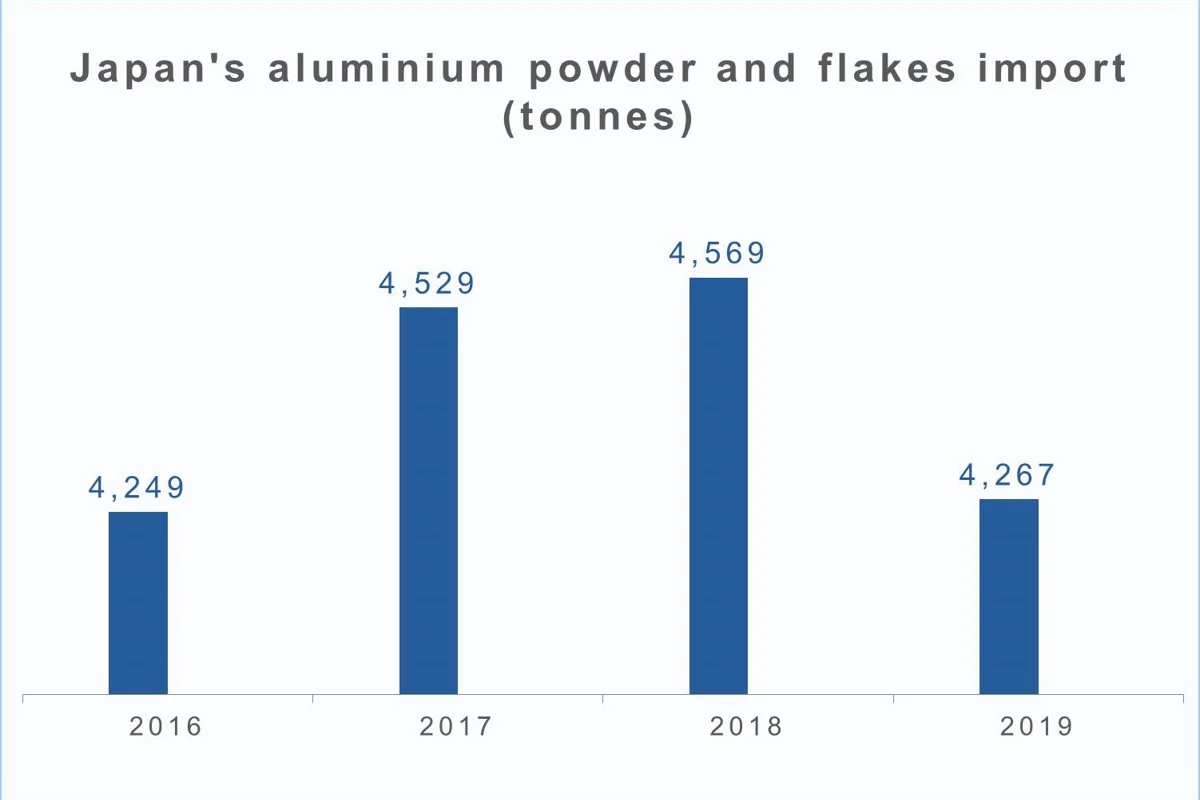
The graph below demonstrates that in 2018, Japan’s estimated import volume of aluminium powder and flakes had pegged at 4,569 tonnes while in 2017 at 4,528 tonnes. This shows that although the import amount in 2018 did not register any significant growth but remained steady year-on-year. In 2016, the import volume was at 4,249 tonnes, which indicates that the successive year 2017 had seen a growth in Japan’s aluminium powder and flakes import volume by 6.6 per cent. However, this year, Japan’s aluminium powder and flakes import is likely to stand down by 6.7 per cent year-on-year at 4,266 tonnes.
Consequently, the country’s aluminium powder and flakes import cost is also expected to be lower this year at US$23 million, compared with US$25 million in 2018. While the import amount remained flat in 2018 compared with the previous year (2017), the cost neither registered any change, as per our available data. In 2016, the import cost was at US$23 million, same as that of the estimated cost this year in tandem with the similar import volume.
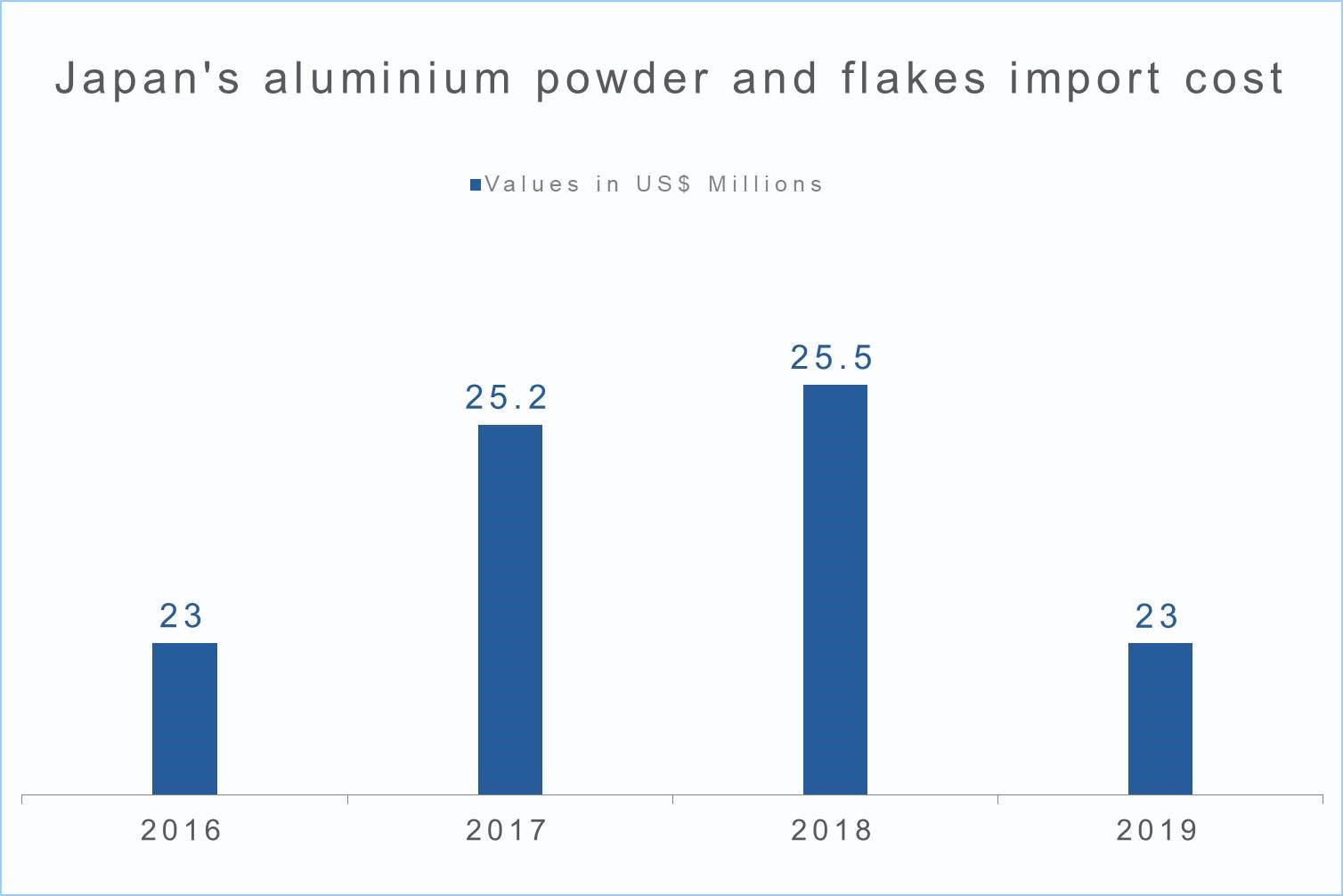
The above data indicates that Japan’s aluminium powder and flakes import has been showing a steady trend over the past few years, both in terms of volume and cost. The automotive industry was one of the prime demand epicentres in the Asia Pacific region, as per the surveys.

6063 aluminium billet inventories record greater W-o-W decline; aluminium alloy price registers no change
Next articleNovelis seeks tariff exclusions on its aluminium product imports from Canada for its Oswego plant
Grow with
AL Circle