Japan’s aluminium imports shift: UAE shipments plunge 41.8% as Australia takes the lead
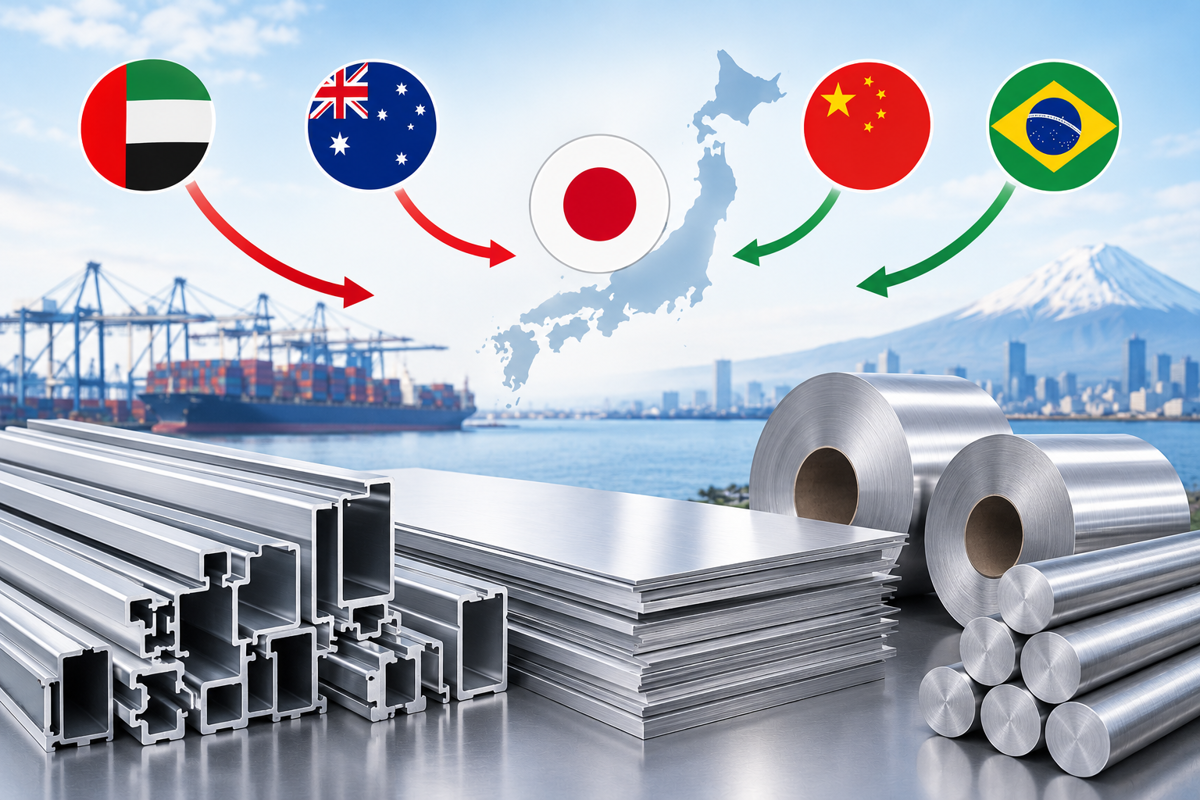
The image used in this article is generated with an AI tool and does not depict any real-time moment
Japan imported 1.36 million tonnes of downstream aluminium products in January–August 2026, down 6.2 per cent from 1.45 million tonnes in the same period of 2025. The latest figures show lower overall imports, with shipments from the UAE seeing the biggest decline among the five leading exporters listed, while imports from Australia also fell.
Japan’s total imports decline
Japan’s downstream aluminium imports stood at 1.36 million tonnes through August 2026, a drop of around 90,000 tonnes, compared to shipments in 2025 during the same period. However, annual imports remained broadly stable over the previous three years, rising from 2.11 million tonnes in 2023 to 2.12 million tonnes in 2024, an increase of 0.3 per cent. In 2025, imports edged up by a further 0.1 per cent to 2.12 million tonnes.
Explore further insights and forecasts for the aluminium flat rolled products (FRP) market from our comprehensive report "Aluminium Flat Rolled Products: Insights & Forecast to 2030"
UAE shipments fall, import spending drops
The UAE was Japan’s largest supplier among the five countries listed in January–August 2025, but fell to second place in January–August 2026 as shipments declined from 269,815 tonnes to 157,022 tonnes, a fall of 41.8 per cent. Japan’s expenditure on imports from the UAE also fell, from around USD 758 million in January–August 2025 to USD 517 million in January–August 2026, a decrease of 31.8 per cent.
The decline in import spending was smaller than the fall in shipment volume.
Looking for aluminium extrusion equipment providers? Browse through a comprehensive list here
Australia becomes Japan’s largest supplier
Australia moved from second place in January–August 2025 to become Japan’s largest supplier among the five countries listed in January–August 2026. Imports fell from 256,366 tonnes to 236,695 tonnes, down 7.7 per cent. Despite the lower volume, expenditure increased from around USD 710 million in January–August 2025 to USD 825 million in January–August 2026, a rise of 16.2 per cent.
Australia’s higher import value despite lower shipment volumes contrasted with the decline in both volume and spending recorded for the UAE.
Together, Australia and the UAE supplied around 393,716 tonnes of downstream aluminium to Japan in January–August 2026, compared with 526,182 tonnes in January–August 2025. Their combined shipments declined by 25.2 per cent.
Read our latest magazine “ALuminium’s Frontline: OEM Edition 2026” and learn how OEMs are transforming critical aluminium applications across end-use sectors.
Imports from Brazil and China rise
Imports from Brazil increased from 104,916 tonnes in January–August 2025 to 120,121 tonnes in January–August 2026, a rise of 14.5 per cent. China recorded a stronger increase, with shipments climbing from 89,735 tonnes to 138,214 tonnes, up 54 per cent.
China moved from fifth place among the five leading suppliers in January–August 2025 to third place in 2026, while Brazil retained fourth place.
Meanwhile, Malaysia’s shipments remained almost unchanged at 115,258 tonnes, compared with 115,841 tonnes a year earlier. It slipped to fourth place (earlier it was third) in 2026 as shipments edged down by 0.5 per cent
Grow with
AL Circle