Is aluminium's carbon footprint becoming packaging's next competitive advantage?
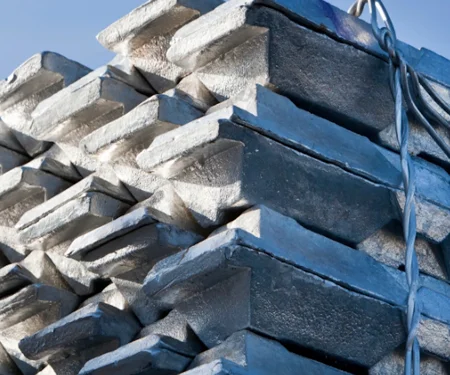
The image used in this article is generated with an AI tool and does not depict any real-time moment
Aluminium has long been the material of choice for flexible packaging because of its barrier performance, strength and recyclability. Today, however, another characteristic is attracting equal attention-its carbon footprint.
For decades, discussions around aluminium packaging largely revolved around functionality. Could it keep moisture out? Would it extend shelf life? Could it be recycled at the end of its use? Those questions still matter, but a new one is steadily moving to the forefront:
How much carbon is embedded in the aluminium before it even becomes packaging?
That question is becoming increasingly relevant as businesses face growing pressure to account for emissions throughout their supply chains. For packaging manufacturers, reducing emissions is no longer only about designing recyclable products; it also means understanding the carbon intensity of the raw materials that go into them. As a result, the conversation is expanding beyond whether aluminium is recyclable to how it is produced, how its emissions are measured and how those reductions can be demonstrated with credible data.
It is against this backdrop that Constantia Flexibles has published a white paper on Low Carbon Aluminum. Rather than presenting a new aluminium grade, the paper explores how lower-carbon aluminium can be defined through measurable Product Carbon Footprint (PCF) values, verified through independent certification and incorporated into flexible packaging without changing the material's functional performance or existing production processes.
Can aluminium become lower carbon without becoming a different material?
The answer, according to Constantia Flexibles, lies not in changing aluminium itself but in changing how it is produced.
Aluminium's performance characteristics-its ability to act as an effective barrier against moisture, oxygen, light and aromas, its corrosion resistance, and its recyclability-remain the same. The focus instead shifts to the emissions generated before the material reaches the packaging line.
The white paper identifies the aluminium production process as the starting point. It begins with bauxite mining, followed by refining the ore into alumina. The alumina is then converted into aluminium metal through electrolysis, a process that uses large amounts of electricity and is described as the most energy-intensive stage in the aluminium value chain. According to the paper, when this electricity is generated from fossil-based sources, the resulting carbon footprint is significantly higher.
Delve deeper into the recycled aluminium and secondary aluminium market with our World Recycled ALuminium Market Analysis Industry forecast to 2032
For Constantia Flexibles, lowering emissions starts with reducing the carbon intensity of this stage. The paper explains that using lower-carbon electricity during electrolysis can significantly reduce emissions associated with primary aluminium production without changing the material's inherent properties.
Recycling forms the second pillar of the company's approach. Since producing secondary aluminium requires up to 95 per cent less energy than primary production, increasing recycled content offers another pathway to reducing emissions. Rather than presenting renewable electricity and recycled content as separate solutions, the white paper suggests that combining the two can further lower aluminium's overall Product Carbon Footprint.
But what actually makes aluminium 'low carbon'?
As the term gains wider use across the aluminium value chain, another question naturally follows: Who decides what qualifies as low carbon?
The white paper acknowledges that there is currently no globally accepted definition or official emission threshold for Low Carbon Aluminum. While the term has become increasingly common, companies may rely on different methodologies to support their claims, making direct comparisons difficult.
To address this, Constantia Flexibles has established its own framework based on quantified Product Carbon Footprint (PCF) values for rolled plain aluminium foil.
The first category covers aluminium with emissions of 6.1 tonnes of CO₂ equivalent or less per tonne, based on primary aluminium produced using renewable electricity. A second category lowers that threshold to 4.5 tonnes of CO₂ equivalent per tonne, achieved by combining renewable electricity with recycled aluminium content. According to the company, both values represent cradle-to-gate emissions, covering the stages from raw material extraction through the production of rolled plain aluminium foil.
How do you prove the carbon footprint behind a roll of aluminium foil?
Measuring emissions is one challenge. Demonstrating them across a global supply chain is another.
Unlike finished consumer products, aluminium passes through several stages-from smelting and casting to rolling and converting-before becoming packaging. During these stages, materials are frequently processed together, making it impractical to physically separate one stream of aluminium from another.
To account for this, Constantia Flexibles applies what is known as a mass balance chain-of-custody system. Under this approach, the company states that every tonne of Low Carbon Aluminum sold is matched by the purchase of an equivalent quantity of certified low-carbon material. Although the physical aluminium may be mixed during production, the quantity entering the system must equal the quantity allocated to finished products.
The paper notes that this accounting method is recognised by several industry standards and certification frameworks when independently verified.
The mass balance approach is complemented by Product Carbon Footprint calculations that follow a cradle-to-gate methodology. These calculations include emissions associated with raw material inputs, manufacturing energy, production emissions and waste generated during aluminium foil production. According to Constantia Flexibles, the methodology has been independently validated by TÜV SÜD and aligns with internationally recognised standards, including ISO 14067 for Product Carbon Footprint calculation and ISO 22095 for chain of custody and traceability.
The objective, the company says, is to provide customers with carbon footprint data that is measurable, documented and independently reviewed, rather than relying solely on general sustainability claims.
Explore: The most comprehensive and forward-looking industry-focused report “Sustainability & Recycling: Aluminium's Dual Commitment”
Sterling & Wilson Renewable hits record $1.35bn UOV as aluminium demand in solar rises
Next articleEU targets 46% electrification by 2040, proposes $114.37b ETS overhaul
Grow with
AL Circle