Hydro Q2 EBITDA rises 14.5% as aluminium business gains strength
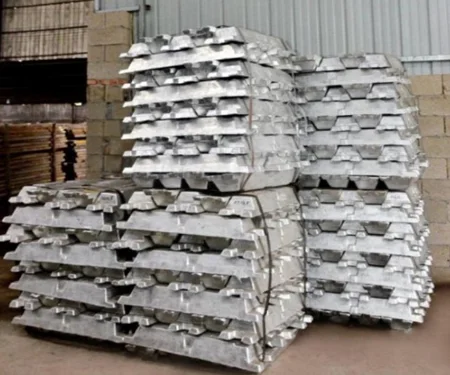
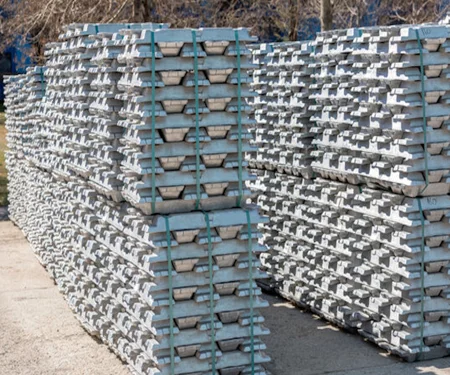
Stock image for referential purposes only
Norwegian aluminium producer Hydro delivered stronger financial results in the second quarter of 2026 as firmer aluminium prices, higher product premiums and improving recycling performance offset weaker energy production and currency headwinds.
The company reported adjusted EBITDA of NOK 8.923 billion (USD 927.39 million), up from NOK 7.790 billion (USD 809.6 million) in the corresponding period last year. Adjusted earnings per share increased to NOK 2.2 (USD 0.23) from NOK 1.7 (USD 0.18), while free cash flow reached NOK 4 billion (USD 415.5 million). Hydro's 12-month adjusted return on average capital employed (RoaCE) stood at 10.9 per cent.
Slovalco restart strengthens European capacity
A key development during the quarter was the announcement on July 1 that Hydro will restart 75,000 tonnes of capacity at the Slovalco aluminium smelter in Slovakia during the second half of 2026.
The decision follows an agreement with the Slovak government covering long-term operating conditions, including indirect carbon cost compensation.
"This quarter reflects both Hydro's operational strength and the opportunities for European industry. Alongside strong financial results driven by solid operational performance and supportive markets, the agreement on a framework to restart Slovalco is an important step toward rebuilding European aluminium capacity," said Eivind Kallevik, President and CEO of Hydro.
Recycling and metal business gather momentum
Hydro's upstream operations maintained strong operational performance throughout the quarter. Production continued to ramp up at the company's Norwegian smelters following the restart of previously curtailed capacity, while Alunorte improved refinery productivity compared with a year earlier.
The recycling business also delivered one of its strongest quarters, generating more than NOK 900 million (USD 93.7 million) in adjusted EBITDA. Hydro attributed the improvement mainly to favourable market conditions and stronger value-added product premiums in North America.
Explore: The most comprehensive and forward-looking industry-focused report – World Recycled ALuminium Market Analysis Industry forecast to 2032
The company also recorded its highest-ever casthouse production in Norway, highlighting robust operational performance across its primary aluminium business.
Hydro continued expanding its portfolio of low-carbon aluminium products by signing a five-year agreement with Nexans to supply around 85,000 tonnes of low-carbon aluminium wire rod. The contract supports Europe's growing investment in electricity infrastructure and follows the recent expansion of wire rod production capacity at Karmøy.
Renewable power remains strategic priority
Securing competitively priced renewable electricity remained a major focus during the quarter.
In early July, Hydro signed a 10-year power agreement with Eviny, covering 0.5 TWh annually between 2031 and 2040. The latest deal means the company has secured around 85 per cent of its projected electricity requirements in Norway during the 2030s.
Kallevik said additional renewable power generation will still be needed to support future industrial growth across Europe.
Aluminium Metal drives earnings
Hydro's Aluminium Metal business posted the strongest improvement among its operating segments.
Adjusted EBITDA climbed to NOK 6.421 billion (USD 668.9 million), compared with NOK 2.423 billion (USD 252.4 million) in the second quarter of 2025, supported by higher realised aluminium prices and lower alumina costs. The gains were partly offset by lower sales volumes, higher energy and carbon costs, and a weaker US dollar against the Norwegian krone.
Global primary aluminium consumption increased slightly during the quarter, driven by 2.2 per cent growth in China, while demand outside China remained weaker.
The three-month aluminium price eased during the quarter, falling from USD 3,532 per tonne at the beginning of the period to USD 3,086 per tonne by quarter-end. Hydro said the ceasefire between the US and Iran, together with the partial reopening of the Strait of Hormuz, reduced supply concerns as more aluminium shipments resumed from the Middle East and smelter production recovered.
Mixed performance across other businesses
The Bauxite & Alumina segment reported adjusted EBITDA of NOK 522 million (USD 54.25 million), down from NOK 1.521 billion (USD 158 million) a year earlier, mainly due to lower alumina prices and currency movements despite improved sales volumes.
The energy business generated NOK 499 million (USD 51.86 million) in adjusted EBITDA, compared with NOK 1.069 billion (USD 111 million) last year, reflecting lower hydropower production and unfavourable price area differences. At the end of the quarter, Norwegian hydropower reservoirs stood at 61.9 per cent capacity, below the seasonal average of 67.9 per cent.
Explore our e-magazine “Sustainability & Recycling: Aluminium's Dual Commitment” for the latest industry insights and trends.
Alvance British Aluminium begins £400K hydro power upgrade to support aluminium production
Next articleASI certifies Guangdong Xingfa Aluminium Co., Ltd against Performance Standard V3.1 and Chain of Custody V2
Grow with
AL Circle