CBAM pushes Brazilian aluminium and steel exporters to accelerate emissions certification
The image used in this article is generated with an AI tool and does not depict any real-time moment
Brazilian aluminium and steel exporters are stepping up efforts to measure, verify and certify product emissions as the European Union's Carbon Border Adjustment Mechanism (CBAM) begins to influence trade with Europe. What was initially viewed as a future compliance requirement is now affecting pricing, contracts and sourcing decisions, particularly for companies supplying the European market.
According to Rafael Della Barba, climate risk and decarbonisation coordinator at WayCarbon, Brazilian exporters have responded differently to the new framework. Some steel producers started preparing in 2023, well before mandatory compliance, while others postponed investments and are now working to understand their emissions exposure.
Under CBAM, exporters must calculate emissions at the individual product level, covering production routes, traceability and auditable data. This requires companies to move beyond traditional corporate emissions inventories. Those unable to demonstrate lower emissions may have to rely on default emission values, reducing the advantage of Brazil's relatively clean energy matrix.
Aluminium exports
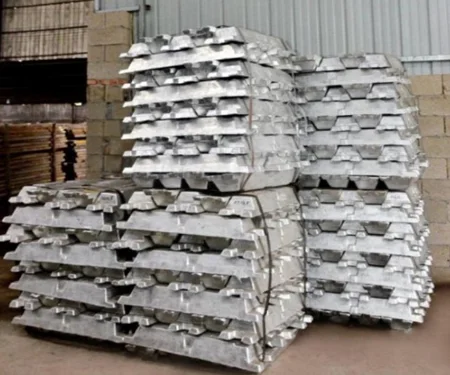
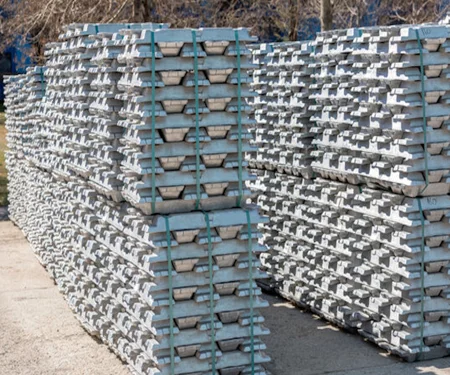
Brazil's aluminium exports to Europe have already shown mixed trends this year. Government data cited by Fastmarkets showed aluminium billet exports to Europe fell 43.9 per cent to 4,261 tonnes during January-June 2026 from 7,597 tonnes a year earlier. Aluminium ingot exports also declined 47.3 per cent to 51,935 tonnes, compared with 98,565 tonnes in the first half of 2025.
However, export volumes recovered after late February as the Middle East conflict pushed European aluminium premiums higher. Between March and June, Brazilian aluminium ingot shipments to Europe increased 61.9 per cent year on year to 40,564 tonnes, compared with 25,048 tonnes during the corresponding period of 2025. The higher premiums helped offset additional CBAM-related costs and encouraged exports despite more complex compliance requirements.
Fastmarkets assessed the P1020A aluminium premium in Rotterdam at USD 500-530 per tonne on July 21, up from USD 320-350 per tonne on January 2, with the assessment including CBAM certificate costs. In Brazil, the low-VAT P1020A premium delivered to São Paulo rose to USD 300-330 per tonne from USD 220-250 per tonne over the same period. Market participants said Brazilian producers achieved export premiums of around USD 330 per tonne in June, although traders noted that CBAM has made transactions more complicated as some European buyers remain cautious about managing compliance costs.
Explore why verification, traceability and carbon footprint reporting become essential in AL with our upcoming webinar by Alberto Monje Gama, Sustainability Policy Manager, TIC COUNCIL, on “Recycled aluminium, CBAM and trust: Why verification matters for Europe's circular economy”
Steel exports
Steel exports have followed a different trajectory. Brazilian slab shipments to the European Union reached around 1 million tonnes in the first half of 2026, compared with about 265,000 tonnes a year earlier, representing a 283.7 per cent increase. Shipments exceeded 200,000 tonnes in both January and February, reached about 260,300 tonnes in April and totalled 182,700 tonnes in June, up 90.8 per cent year on year.
Market participants said European buyers increasingly viewed Brazilian slab as a lower-carbon supply option. Fastmarkets previously reported that European mills booked more than 300,000 tonnes of Brazilian slab, while its assessment for Brazilian slab exports stood at USD 575-585 per tonne FOB on July 17, below the April peak of USD 600-615 per tonne.
To know the long-term bauxite market forecast, book our report: “Global Bauxite & Alumina Market Forecast to 2036: Supply–Demand, Trade Flows & Price Outlook”
Certification challenges
Brazil's relatively clean energy matrix is often seen as an advantage under CBAM, but Della Barba said turning that into lower carbon costs is not straightforward. Incorporating renewable energy and bioenergy into product-level emissions accounting remains complex, particularly for the metals sector, and requires internationally recognised verification and certification.
While Brazil's steel and aluminium industries are ahead of many other sectors in emissions accounting, gaps in certification could limit their ability to benefit from lower CBAM costs. Recycled materials may offer a simpler compliance route in the short term. Still, broader compliance will require stronger supply-chain integration and certification, a process that can take around six months.CBAM also requires emissions to be calculated on an average basis and does not allow companies to allocate low-carbon benefits to only part of their production through mass balance accounting.
Preparing for CBAM
Della Barba also stressed the need for Brazil to develop its domestic carbon market, noting that several competing exporting countries have already introduced emissions regulations and improved efficiency. Brazil established the legal framework for its emissions trading system through Law No. 15,042/2024, but the market is still being developed. Companies are expected to start reporting their emissions in 2027. Mandatory emissions monitoring will follow in 2028 and 2029, while trading of emission allowances is scheduled to begin in 2030.
Trading aluminium across borders? Find out the exact cost you need to bear for the embedded carbon in the product by using this CBAM calculator.
The timeline is important for exporters because the CBAM is already influencing trade negotiations with European buyers. The mechanism is also expected to expand over time to cover Scope 2 emissions and additional product categories. Regulators are also working to close gaps in the rules for semi-finished products. Companies that begin tracking, verifying and certifying their emissions early are likely to be better prepared as Europe strengthens its carbon-related import requirements.
ASI certifies Guangdong Xingfa Aluminium Co., Ltd against Performance Standard V3.1 and Chain of Custody V2
Next articleAustralia's green aluminium roadmap: 9 key developments driving clean energy transition
Grow with
AL Circle