Heat pumps: The missing piece in aluminium industry's decarbonisation puzzle
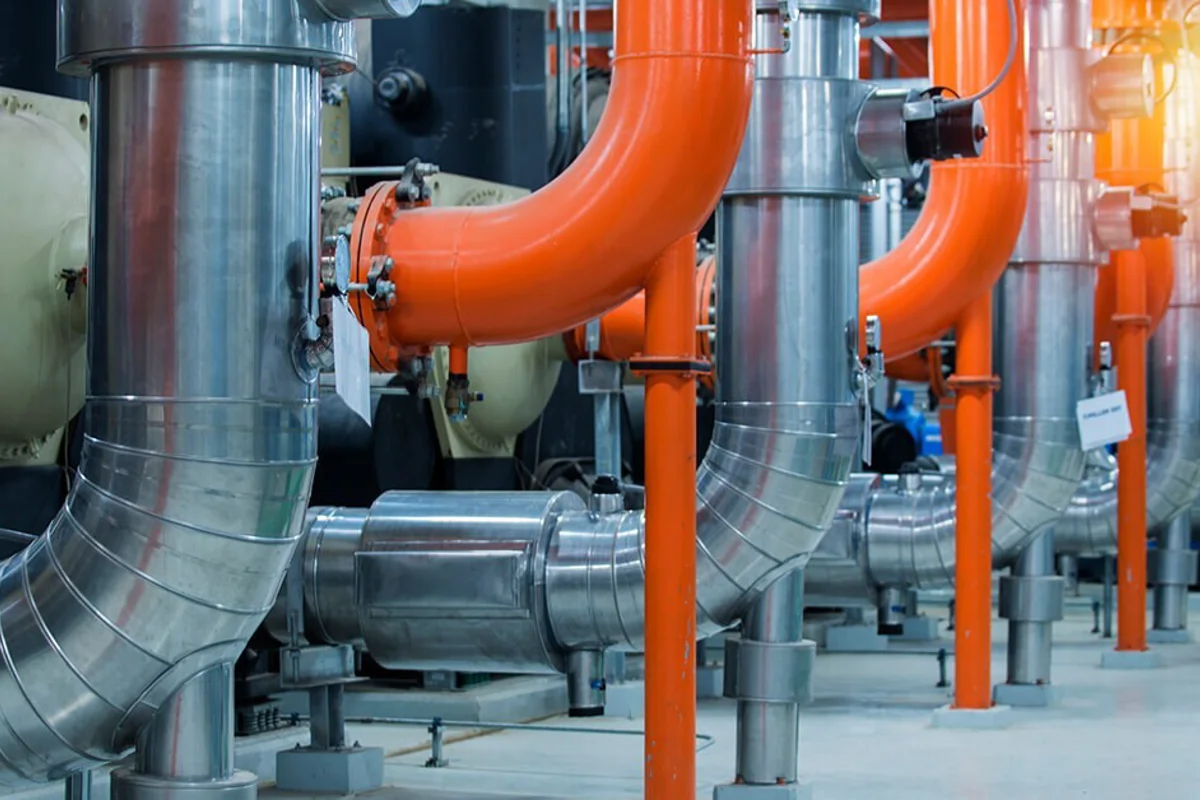
Each tonne of alumina production emits such heat, which, if reused further, can increase the energy demand, which in the long run also boosts carbon footprint reduction globally.
Image Source: Hilt CRC
How can we do that?
The answer is ‘industrial heat pump’. These use electricity to transfer heat from one location to another, supplying heating and cooling for a building. Heat pumps are better energy efficient than conventional heating mechanisms with gas or oil boilers, emitting less carbon cumulatively.
According to the International Energy Agency's (IEA's) World Energy Outlook special report titled The Future of Heat Pumps, decarbonisation of industrial heat through electrification is crucial in tackling the climate conundrum, and there is substantial potential for electric heat pumps to provide process heat for the industry. The elaborate and interdisciplinary measures needed from the diverse stakeholders to utilise the full potential of industrial heat pumps have been inferred in the foreword of this issue.
In Australia, industrial heat pumps (IHPs) could replace more than half of the gas used for industrial process heat, or about 17 per cent of domestic gas use, a large share of which could come from the aluminium production industry.
"The majority of the opportunity lies in Victoria and Western Australia, which are both facing material excess gas demand in the coming years," the research report's co-author Amandine Denis-Ryan said.
The two most prospective applications other than domestic usage are in the food and beverage (F&B) and alumina refining segments. Commercially obtainable IHPs could substitute 29 petajoules (PJ) of gas used in F&B. Applying mechanical vapour recompression (MVR), which works as a series of open-cycle heat pumps, in alumina could cut gas use by 94 PJ but needs demonstration.
What is the detailed process of the heat pump's operation?
Heat pumps use waste heat that would otherwise be dispersed into the environment; they increase air temperature to a more effective level. Heat pumps can deliver heat for less money than the cost of fuel. Heat pumps operate on a thermodynamic principle known as the Carnot Cycle. To aid understanding of this cycle, it is helpful to contrast the Carnot Cycle with the more familiar thermodynamic cycle that underlies the operation of steam turbines, the Rankine Cycle. Degrading high-grade thermal energy into lower-grade thermal energy creates shaft work, or power, in the Rankine Cycle. In a steam turbine, this is accomplished by supplying high-pressure steam and exhausting lower-pressure steam.
In contrast, mechanical heat pumps operate oppositely. They convert lower-temperature waste heat into useful, higher-temperature heat while consuming shaft work. The work mandatory to steer a heat pump is dependent on the increased temperature of the waste heat. On the contrary, a steam turbine yields increasing work as the pressure range over it increases. These machines consume energy to elevate the temperature of wasted heat and eventually downsize the use of purchased steam or fuel. Therefore, the commercial value of buying a heat pump relies on the proximate costs of the energy types that are depleted and saved, as known from the U.S. Department of Energy's data.
How will the aluminium industry holistically benefit from such applications?
According to a 2018 report by IAI, mining bauxite isn't particularly carbon-intensive. Per tonne of finished aluminium, bauxite mining contributes just 0.1 tonne CO2e — or 0.4 tonnes of CO2 emission per tonne of bauxite. Meanwhile, refining is moderately carbon-intense, contributing to 2.6 tonnes of CO2 per tonne of alumina. Those emissions are primarily from burning fuels to produce heat through the Bayer Process, which takes place at 150-200°C (300-390°F). Finally, the most energy-intense and carbon-intense step of aluminium production is smelting alumina to aluminium.
This occurs via electrolysis, a hugely energy-intensive process, taking some 15.37 MWh of electricity per tonne of aluminium. This estimate is close to 5 times the annual energy consumption of a UK household.
A research report on Science Direct states as the entire production flow is energy-demanding, a high availability of excess heat at adequate temperatures could potentially be utilised as a heat source for a heat pump. An apt heat source could possibly be the exhaust air from the calcination stage.
The alternative to a natural gas-based combustion technique with precise CO2 emissions of 0.204 tonnes per megawatt-hour corresponds to an abatement of 90,800 tonnes of CO2 per year in the case of alumina production and to 13,100 tonnes of CO2 per year in the case of spray dryer. Replacing oil- or coal-based heating utilities results in elevated emission cuts. The consequence of heightened prices for CO2 emission certificates on economic performance was demonstrated and may be additionally derived from and by adding costs to alternative fuel costs.
Aren't there any challenges?
As stated by the Institute of Energy Economics and Financial Analysis, a key challenge for IHP deployment is their significantly higher upfront costs than conventional technologies. The global IHP market is anticipated to rise from US$2 billion in 2023 to US$ 11 - US$21 billion by 2030, fetching expense drops. IHPs can generate large operational expenditures by conserving energy through decreased energy use. Focusing on gas-based systems and using relative wholesale spot prices as a proxy without actual energy cost data, we found that the electricity-to-gas price ratio has steadily decreased from 2015 to 2024, reaching about 2:1 recently. With such a ratio, IHPs could likely deliver energy cost savings of 36-7 per cent compared with a traditional thermal system.
What is the global sales scenario?
According to the latest analysis presented by the IEA on March 31, global sales of heat pumps grew by 11 per cent in 2022, denoting a second year of double-digit gain for the technology. Boosted policy support and incentives for heat pumps pushed strong uptake, with Europe enjoying a record year and sales of air-to-water models leaping almost 50 per cent. Heat pump purchases exceeded those of gas furnaces in the U.S. However, sales remained stable in China amidst a general economic slowdown.
To abide by all national energy and climate pledges worldwide, heat pumps must fulfil close to 20 per cent of global heating requirements in buildings by 2030. According to this report, the world is on the right track to attain this milestone if new structures continue to grow at a similar proportion globally as they did in the past two years.
Does aluminium work for building the aluminium industry's heat pump?
In the case of geothermal or ground-source heat exchangers, heat pumps are typically made with aluminium. They can also be incorporated into radiator mechanisms using aluminium radiators. The use of aluminium is considered apt since it is an excellent conductor. Aluminium designs warm quickly, allowing the heat to pass through efficiently, resulting in financial benefits.
Further, aluminium, with its infinite recyclability, offers benefits related to the environment. Using recycled aluminium for geothermal systems makes good sense. Companies like Hydro, Siemens, and Berg thus indulge in producing industrial heat pumps.
Unlock full access – sign up for FREE.
Key benefits
Metal prices get multiple shots in the arm
Next articleChinalco Zhengzhou Research Institute expands operation with its new fine alumina branch in Zibo
Grow with
AL Circle












_md.webp)
_md.webp)
_md.webp)