Guinea targets 8Mt of alumina capacity by 2030: Can its power grid deliver 5k–10k MW?
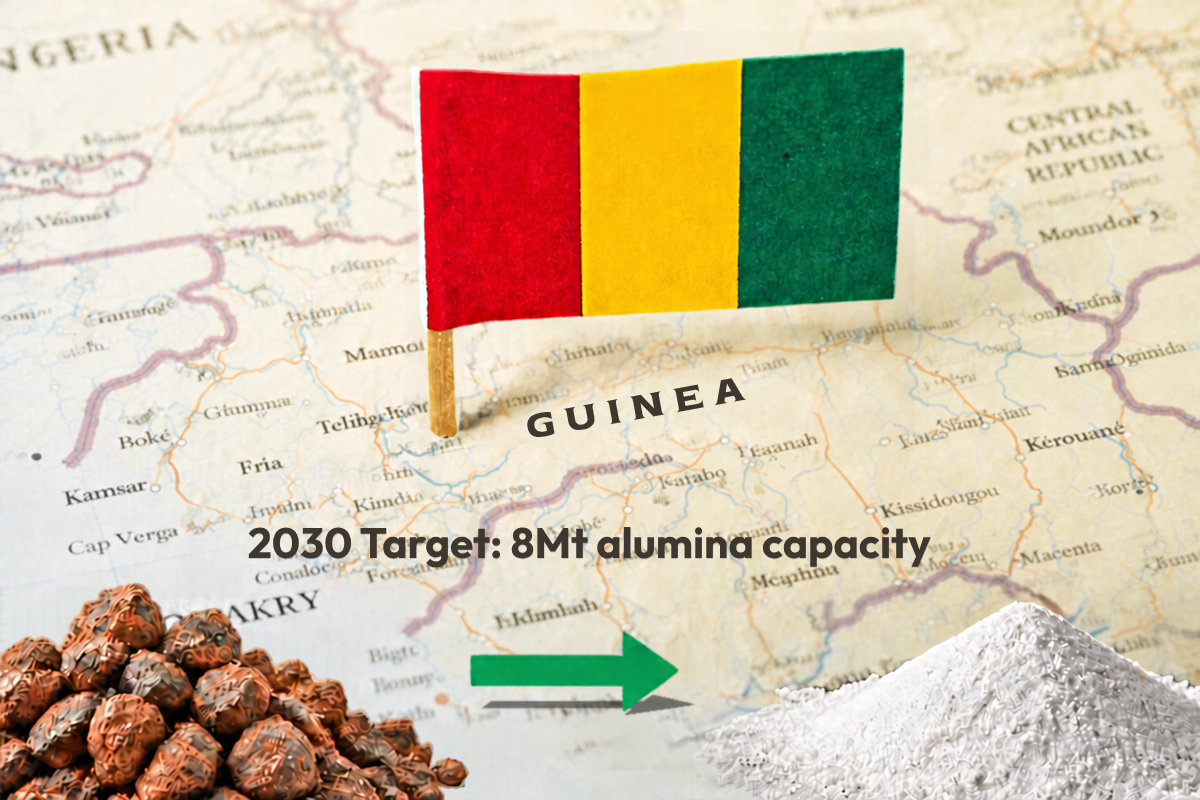
The image used in this article is generated with an AI tool and does not depict any real-time moment
After introducing its annual bauxite export cap at 150 million tonnes in June 2026, Guinea is now accelerating its alumina refining ambitions, with three refineries under construction and a target of five operating by 2030. However, the country’s electricity generation of around 1,000 MW falls well short of the estimated 5,000–10,000 MW needed to support industrialisation, putting energy infrastructure at the centre of its bauxite-to-alumina strategy.
Daouda Diakite, Senior Adviser to Guinea’s Minister of Mines and Geology, Bouna Sylla, outlined the plans at African Mining Week in Cape Town. The government aims to establish annual alumina production capacity of approximately 7 million to 8 million tonnes, with aluminium smelters envisioned as a subsequent step.
To know the future market and value proposition of red mud, explore the report "A Comprehensive Analysis of Bauxite Residue (Red Mud): Sustainability, Resource Recovery and Strategic Recommendations"
Guinea, which recently overtook Australia as the world’s largest bauxite producer and exporter, has also mentioned plans to limit bauxite exports, although restrictions have not yet been introduced. Investors seeking access to the country’s bauxite reserves would be encouraged to develop smelters or railways, along with mining rights and certain tax holidays available.
Power supply emerges as the critical constraint
Diakite identified energy and infrastructure as the main obstacles to industrial growth, stating that “the main issue is infrastructure and energy, mostly energy.”
Guinea generates around 1,000 MW, primarily from hydropower. Throughout the rainy season from April or May to November, it exports electricity to neighbouring countries. During the dry months, it imports power from Ivory Coast or Senegal. However, materialising its industrial ambitions would require an electricity generation capacity of 5,000 to 10,000 MW.
Without domestic coal reserves, Guinea is exploring “all economically viable energy solutions, including gas, coal, and nuclear,” Diakite stated. He further suggested that ships arriving empty to load bauxite could be carrying home coal from South Africa or Mozambique.
Explore alumina and other essential inputs in the right grades from global suppliers on AL Biz
Africa’s industrial ambitions hinge on affordable energy
South Africa offers a warning about the consequences of rising power costs. Despite holding more than 70% of the world’s known chrome reserves, fewer than a dozen of its 66 ferrochrome smelters remain operational after electricity costs rose roughly tenfold since 2008.
Mzila Mthenjane, Chief Executive of the Minerals Council South Africa, noted that “the number one lesson is how important energy supply reliability and affordability are to industrialisation.” Drought-related power shortages have also affected the region’s aluminium industry, with South32 placing its Mozambique aluminium plant on care and maintenance this year.
Egypt’s Deputy Minister for Strategic Industries, H. E. Eng. Mohamed Zada, outlined four pillars that investors seek, viz., reliable feedstock, power, stable policy and committed buyers. He cautioned delegates that “we cannot focus on one and ignore the four pillars that are very important to be moving together.”
Unlock key insights from leading companies and experts across the aluminium ecosystem with our e-Magazine - Mine to Market: Aluminium Producers & Manufacturers 2026
Financing support is also developing to bolster the building and feeding of alumina refineries. The US International Development Finance Corporation and Africa Finance Corporation are backing processing projects and intend to expand their involvement.
Franklin Edochie, AFC’s Deputy Director and Head of Mining, observed that demand was available for African output, stating, “We produce very high-quality products on the continent …we always have buyers.”
Guinea’s alumina refineries and bauxite export cap would shape the country’s upstream ambitions, while reliable and affordable electricity remains critical to advancing Guinea’s industrialisation and strengthening Africa’s aluminium value chain.
China Sept alumina imports plunge 80% M-o-M as arbitrage shuts; exports dip on freight costs
Next articleAughinish Alumina dodges proposed EU sanctions as 22nd Russia package takes shape
Grow with
AL Circle