Germany’s 99% aluminium can recycling magic: How DRS built a circular economy leader
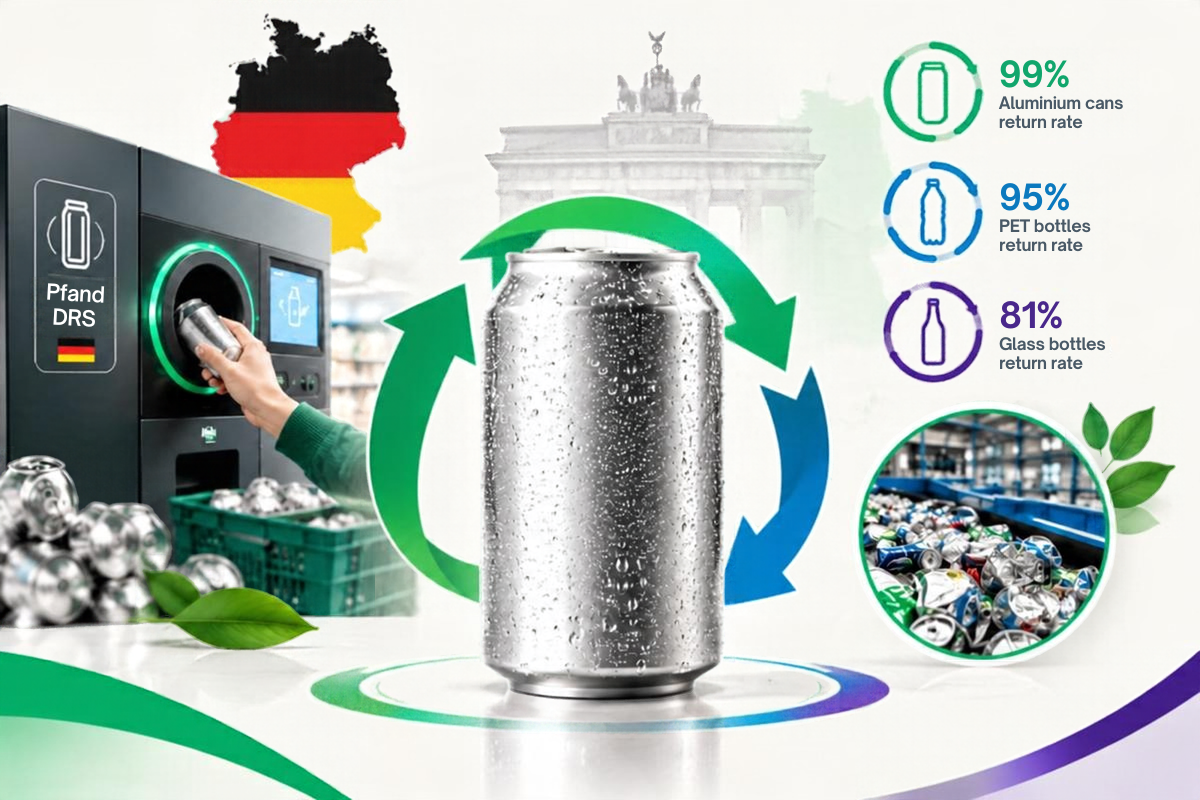
AI-generated editorial illustration; not an actual customer or plant installation.
When it comes to used aluminium beverage can recycling, with a reported 99 per cent recycling rate in Europe’s grand total of 76.3 per cent recycling record, Germany comes first in the aluminium can recycling race. An International Aluminium Institute (IAI) study shows the overall package recycling picture in Germany, led by the 99 per cent aluminium can recycling, followed closely by 95 per cent PET bottle recycling and 81 per cent of glass bottle recycling.
The aluminium can recycling rate sits on top, with a consistent track record over the years. But what are the cogs and wheels turning behind this massive recycling system that ensures tomorrow looks a little greener? Let’s have a look at one of the backbones of Germany’s aluminium can recycling system, the Deposit Return Scheme (DRS), widely known as Pfand.
By making empty beverage containers financially valuable and easier to return, Germany has built a collection network that supports aluminium recycling alongside the recovery of plastic and glass packaging. The system’s scale and performance came into focus again in 2026, as Germany marked 20 years of its nationwide one-way deposit scheme.
Join the fourth edition of the webinar "Hedging for recyclers - Become an expert in 6 hours" by Jorge Dyszel.
From a mandatory deposit to a nationwide system
Germany’s current single-use beverage deposit system took shape through a series of steps. The mandatory deposit requirement was decided in 2003. In 2005, retailers and the drinks industry jointly established Deutsche Pfandsystem GmbH (DPG) to develop a standardised framework for implementing the requirement.
The nationwide DPG system for single-use beverage packaging came into operation in May 2006, supported by an extended take-back obligation that required the new arrangements to be in place from May 1 that year. The goal was to create an efficient system with common standards while allowing retailers, drinks companies and other market participants to manage their respective roles.
Under the scheme, consumers pay a EUR 0.25 (USD 0.28) deposit on eligible single-use beverage containers and recover it when they return the empty packaging through an accepted collection point. Retail take-back, reverse-vending machines and standardised container identification have helped make returns part of routine shopping.
Today, the system handles around 20 billion containers annually, making it the largest one-way deposit-return system in the European Union, according to the supplied DPG material. Over 1,000 companies are affiliated with the system as participants and partners.
Looking for UBC aluminium scrap? Browse through global suppliers on AL Biz.
How does DRS strengthen aluminium recycling?
The seminal advantage of DRS in the aluminium industry is not simply the number of cans returned. It is the creation of a reliable, dedicated stream of used beverage cans that can enter organised collection and recycling channels rather than being lost in mixed waste.
The EUR 0.25 (USD 0.28) refund gives consumers a direct financial reason to return containers. Retail take-back and reverse-vending machines make the process convenient, while container recognition and standardised identification help distinguish eligible packaging and direct materials into separate collection streams.
Germany’s system, therefore, provides a substantial and recurring flow of packaging for recovery. A refundable deposit can also help limit material loss by encouraging consumers to keep eligible containers out of ordinary disposal routes.
A strong recycling industry backing DRS
Germany’s high collection performance sits alongside a sizeable recycled aluminium industry. The supplied material estimates national recycled aluminium capacity at around 700,000–720,000 tonnes annually.
Novelis operates its Nachterstedt facility in Germany, described in the supplied material as the world’s largest aluminium recycling facility, with the capacity to process up to 400,000 tonnes of aluminium scrap annually. Hydro-owned WMR Recycling GmbH in Dormagen supplies technology-driven sorting equipment and has the capacity to sort 36,000 tonnes of aluminium scrap per year, using X-ray transmission and other sorting technologies.
Trimet Aluminium SE has also expanded its Gelsenkirchen recycling facility, increasing production capacity by 20 per cent to 80,000 tonnes of recycled aluminium.
These operations highlight the connection between collection and industrial recovery. DRS helps bring containers into organised channels; sorting and recycling facilities then play a crucial role in preparing the recovered metal for further use.
Thus, the sorting and recycling form a complementary relationship in the story of Germany’s aluminium can recycling.
Showcase your brand, aluminum recycling initiatives and sustainability vision in our upcoming magazine: Sustainability & Recycling: Aluminium’s Commitment 2026.
Germany completes two decades of DRS
Germany’s Deposit Return Scheme’s 20-year milestone was marked at anniversary celebrations in Berlin on June 17, 2026. The European Commission and Germany’s Federal Environment Ministry highlighted the scheme’s contribution to the circular economy.
EU Commissioner for the Environment Jessika Roswall praised the system’s role in making packaging returns a routine part of everyday life. “All packaging – whether glass bottles, plastic bottles or aluminium cans – should be sent for recycling in order to increase efficiency, reduce waste and protect the environment,” she mentioned.
Antje von Broock, Head of the Department for Circular Economy, Air Pollution Control and Chemical Safety at the Federal Environment Ministry, also threw light upon the scheme’s importance, stating, “The deposit-refund system makes a very important contribution to the circular economy today.”
DPG Managing Director Susanne Kürschner pointed to the system’s development over time, noting that the organisation and its partners had maintained its stability while making it “more efficient – resilient, future-proof and scalable.”
Germany’s DRS also operates alongside broader packaging collection arrangements, including household sorting through the Dual System, commonly associated with the Grüner Punkt. The deposit scheme provides a dedicated route for eligible single-use beverage containers, while other packaging remains subject to the relevant collection and compliance arrangements.
As Europe looks to strengthen packaging circularity, Germany’s two-decade record offers a practical example of how collection systems can help connect consumer behaviour with aluminium can recycling.
Note: This is exclusive coverage by AL Circle and may not be reproduced, republished or shared without prior permission.
Grow with
AL Circle