Beyond windows: Aluminium in India's construction sector
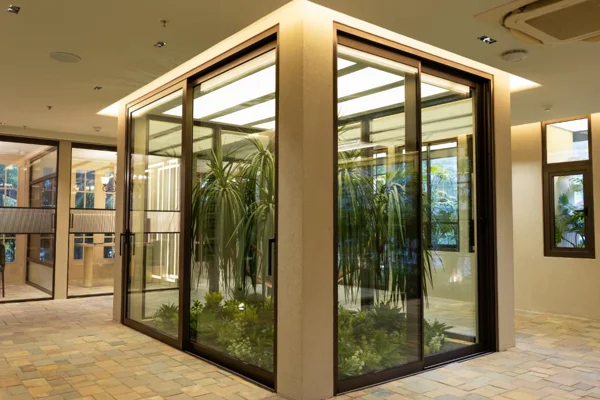
For decades, aluminium windows and doors were largely viewed as functional elements of construction. Today, advances in extrusion technology, precision engineering and architectural design have transformed their possibilities. What once required bulky frames and conventional openings can now be achieved through remarkably slender profiles, expansive glass surfaces and sophisticated systems that bring together structural strength, durability and understated luxury. As Indian architecture becomes increasingly ambitious, aluminium is no longer simply framing spaces; it is helping redefine how they are designed, experienced and connected. Market data According to ALUMEX India 2025: Extruding the Future, India is the world’s second-largest primary aluminium producer and third-largest consumer,...
15 EU nations back Warsaw Declaration to strengthen industrial competitiveness, energy security and aluminium scrap supply: European Aluminium welcomes the act
European industry is facing a difficult balancing act of maintaining global competitiveness while accelerating decarbonisation, securing critical raw materials and managing persistent energy-cost pressures. Against this backdrop, 15 European Union (EU) member states have endorsed the Warsaw Declaration 2026, calling for a stronger industrial policy that places competitiveness, economic security and manufacturing resilience at its core. Adopted following the 9th Friends of Industry Ministerial Conference in Warsaw on October 26, the declaration outlines a coordinated approach to protecting Europe's industrial base. Its priorities include affordable energy, reliable access to secondary raw materials, stronger trade defence mechanisms, technological sovereignty and reforms to the EU's carbon...
Grow with
AL Circle

Energy crisis or more – what will potentially decide the fate of Tomago aluminium smelter?
More than three years and the shockwaves of energy crisis in Australia are still being felt loud and clear. Caused by not one particular factor, the crisis began in the spring of 2022 (April-July) due to the spike in international gas prices, domestic plant outages, and weak renewable power generation. Beyond these, political allegations for mismanagement also take a centre stage as the present federal energy minister, Chris Bowen, blames the earlier Coalition Government for taking no precautionary measures for the impending crisis, while the latter claims the new Labor Government is incapable to handle the situation. But whoever or whatever is at the blaming point, the fact remains undeniable that this energy crisis has scorched Australia’s manufacturing backbone, especially aluminium....

Rising US tariffs push Canada’s aluminium industry to a crossroads
For more than a century, Quebec’s Saguenay–Lac-St-Jean region has been more than just a hub of aluminium production — it’s the soul of Canada’s aluminium industry. The gleaming metal shaped its economy, built its communities, and earned the area its proud nickname: “aluminium valley.” But the deep cross-border ties that sustained it for over a century are now under strain, as Washington’s escalating tariffs threaten to unravel one of North America’s most enduring industrial partnerships. An alliance tested by tariffs The trade rift began in March 2025, when US, invoking national security issue under Section 232 of the Trade Expansion Act, imposed 25 per cent tariffs on Canadian aluminium and steel. By June, those tariffs were doubled to 50 per cent. The tariffs now apply not only to raw...

WEEKLY: Chinese alumina prices slip further as oversupply pressure remains
The national average price for metallurgical-grade alumina with purity above 98.6 per cent dropped by RMB 31 per tonne (USD 4.4 per tonne) or 1 per cent from a week earlier to RMB 2,930 per tonne on October 23, Mysteel's price assessment showed. Ongoing price weakness has heightened financial pressure on domestic alumina producers, market sources said. Nevertheless, most refiners showed little intention to curb output, with many prioritising operational stability over production cuts in order to safeguard annual long-term supply contracts for the coming year, as reported. In consequence, last week's alumina production remained broadly unchanged from the prior week. According to Mysteel's survey, total metallurgical-grade alumina output among the 44 Chinese refiners it regularly tracks...

GDP and AL industry included, here’s how the world could double prosperity while using less energy
There’s a neat paradox at the heart of the clean-energy debate: richer societies typically use more energy, yet the latest modelling from the Energy Transitions Commission (ETC) suggests we can (provided that we choose to) have a lot more of the good things that energy delivers (travel, cooling, manufacturing) while using less energy overall. The ETC’s October 2025 briefing argues that smart electrification, appliance efficiency and material recycling could let the global economy more than double by 2050 while cutting final energy demand by about 24 per cent compared with today. Image source: https://en.wikipedia.org/ Also read: High time to invest in Africa’s solar potential! Why? It records the highest ‘sunshine’ on Earth That claim is startling because it rewrites a default storyline:...

China’s aluminium industry walks a fine line between construction slowdown and automobile strength
China’s manufacturing industry, which has been the world’s largest for fifteen consecutive years, appears to be sputtering in 2025, weighed down by global trade tensions and waning domestic demand. Yet amid the broader industrial slowdown, one segment has quietly kept the aluminium sector afloat and that is the country’s resilient automobile industry. Manufacturing momentum falters Accounting for nearly 30 per cent of global manufacturing value and 26 per cent of the domestic GDP, China’s manufacturing sector has long been the backbone of the nation’s economy. However, since early 2025, signs of fatigue have been unmistakable. The Purchasing Manager’s index (PMI) – a key gauge of industrial activity - started the year in contraction, standing at 49.1 in January, according to the data...

Ardagh Metal Packaging posts $27M Q3 profit, targets up to $735M EBITDA in 2025
Ardagh Metal Packaging S.A. (AMP) reported a firm third-quarter performance, backed by higher sales, better profitability, and improved efficiency across its regional operations. The company also raised its full-year guidance on the back of steady demand for beverage cans and disciplined cost management. For the three months ended September 30, 2025, AMP’s revenue rose to USD 1.43 billion, up from USD 1.31 billion a year earlier — an increase of 9 per cent, or 6 per cent on a constant currency basis. The improvement was largely supported by higher shipments in Europe and North America, along with a healthier mix of products that cushioned softer sales elsewhere. Net profit for the quarter came in at USD 27 million, compared with USD 18 million last year. Adjusted EBITDA rose 6 per cent to...
SHFE non-ferrous metal futures rise on week
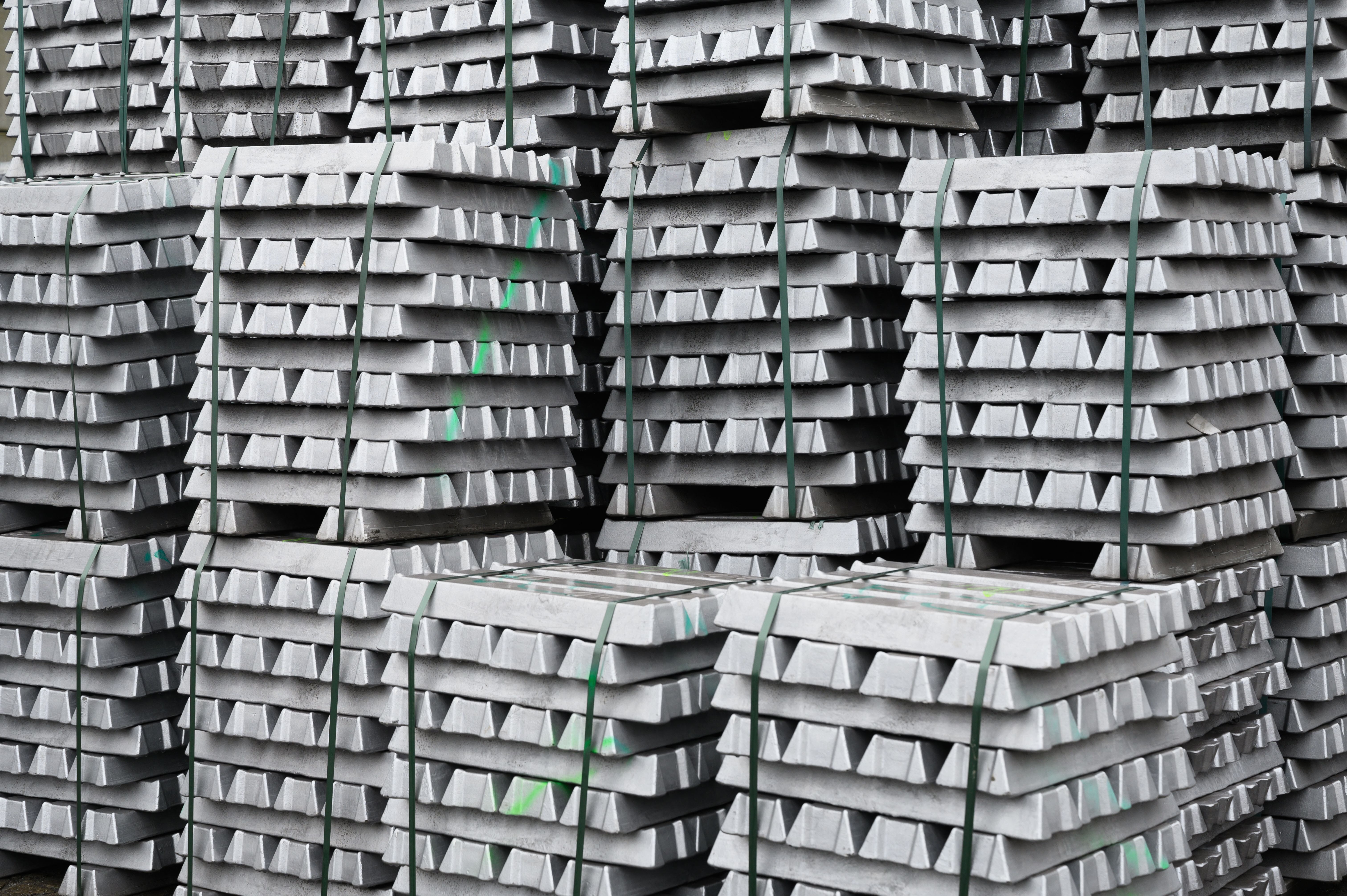
Major futures prices for key non-ferrous metals – copper, aluminium, and nickel – on the Shanghai Futures Exchange (SHFE) all rose during the week of October 17-24, supported by improving macroeconomic sentiment both at home and abroad. By the close of the daytime trading session on Friday, the SHFE's most-traded December copper contract had recorded a 3.9 per cent on-week jump to close at RMB 87,720 per tonne (USD 12,316 per tonne). Similarly, the most-traded December aluminium and nickel contracts also climbed, rising by 1.5 per cent and 0.7 per cent from a week earlier to RMB 21,225 per tonne and RMB 122,150 per tonne, respectively. The on-week gains were largely the result of stronger investor confidence fuelled by expectations of continued economic improvement in China and signs of...

Japan’s aluminium premium collapses: What the Q4 $86/t settlement means for Asia
In late October 2025, the quarterly surcharge for imported primary aluminium into Japan was assessed at USD 86 per tonne (CIF main Japanese ports, P1020/P1020A ingot) by S&P Global Commodity Insights (Platts) — a 20.4 per cent drop from the Q3 figure of USD 108 per tonne. The decline, which came after a 41 per cent plunge in Q3 from the Q2 level of USD 182 per tonne, is a clear sign of weakening in Japan’s role as the region’s aluminium-import benchmark and highlights pressure points for exporters, especially in Asia. Image for referential purposes only Also read: Japan’s aluminium can demand holds at 2.09 billion units in 2025 Benchmark context and mechanics MJP (Main Japanese Port) aluminium premium is a quarterly negotiation between Japanese buyers and overseas suppliers for CIF...

NBS: China's Sept alumina output rises 8.7% Y-o-Y to record high
China produced 8 million tonnes of alumina last month including metallurgical-grade and other types, up by 8.7 per cent from September last year and by 0.9 per cent from August, according to data released by the country's National Bureau of Statistics (NBS). The figure marked a record monthly high, Mysteel Global noted. Image source: https://files.hssite.com/ Also read: GACC: China's Sept bauxite imports jump 38% Y-o-Y despite on-month decline Last month's performance meant that over January-September, China's total alumina output reached 68.56 million tonnes, representing an 8.4 per cent on-year increase, the NBS data showed. The modest on-month climb in September reflected generally stable alumina production nationwide, though output rose in several southwestern regions, market watchers...

GACC: China's Sept bauxite imports jump 38% Y-o-Y despite on-month decline
China imported 15.9 million tonnes of bauxite in September, up by 38.3 per cent from the same month last year but down by 13.2 per cent from August, according to the latest data released by the country's General Administration of Customs (GACC). Also Read: China's alumina operating capacity set to fall in October as prices squeeze margins Over January-September this year, China's total bauxite imports reached 157.6 million tonnes, an increase of 32 per cent from the corresponding period in 2024, the Customs data showed. Guinea remained China's dominant overseas bauxite supplier last month, exporting 10.5 million tonnes and accounting for about 66 per cent of China's total imports. Although September's volume was 14.9 per cent lower on the month, it was still 58.2 per cent higher on the...

The future of US aluminium hinges on energy, not tariff policy — here’s why
At the Aluminum Association’s annual meeting in Washington this September, the topic that dominated was not tariffs, not trade, but energy. As the US government doubles down on its Made in America agenda, aiming to restore domestic aluminium production, executives warned that the dream of a primary aluminium revival may ultimately hinge on one factor alone: affordable electricity. Aluminium has always been an energy story disguised as a metal story. It takes immense electricity to turn alumina into molten aluminium — roughly 11 terawatt-hours (TWh) per smelter every year, enough to power a city like Boston or Nashville. “When you think about the energy intensity that is required for an aluminium smelter, you’re talking about basically powering a city,” Kelly Thomas, Aluminum Association...

High time to invest in Africa’s solar potential! Why? It records the highest ‘sunshine’ on Earth
Africa is blessed with sunshine. In fact, the African Development Bank notes that the continent has “almost unlimited” solar potential, roughly 10,000 gigawatts (10 terawatts) of capacity. This equates to more than 50 times the world’s current power needs. Yet ironies abound. Some 600 million Africans (about 43 per cent of the population) still lack reliable electricity, and roughly 80 per cent of all the people on earth without power live in sub-Saharan Africa. Here lies both a challenge and an opportunity: Africa’s abundant sunshine could be the key to closing its energy gap – and in doing so, transforming industries like aluminium that desperately need clean, affordable power. Image for referential purposes only (source: https://unsdg.un.org/) Also read: Reliance Industries’ mega solar...

DAILY: Chinese spot alumina prices fall further, futures recover
According to Mysteel's daily assessment, the national average spot price for smelter-grade alumina with a purity above 98.6 per cent slid by RMB 5 per tonne (USD 0.7 per tonne) from Monday to RMB 2,940 per tonne on Tuesday. This marked the 30th consecutive working-day decline. The drop mainly reflected weaker quotations throughout China's five key alumina production regions. Prices for the same grade in Shandong, Henan, Shanxi, and Guizhou provinces and in the Guangxi autonomous region all fell by RMB 5 per tonne from Monday, averaging between RMB 2,805 per tonne and RMB 3,090 per tonne, Mysteel's data showed. In particular, the assessed price of RMB 2,805 per tonne in Shandong was the lowest in more than two years, Mysteel Global noted. To ease inventory and sales pressure, alumina...

India’s bauxite export story in H1 2025: Surging demand meets domestic roadblocks
India’s bauxite trade rode a wave of highs and lows through the first half of 2025. Global demand shifts, changing tariffs, and mining hurdles at home kept exports swinging sharply from one month to the next. Even with the volatility, India’s performance between January and June (H1 2025) was far stronger than a year earlier. Export earnings rose 143 per cent to USD 12.81 million, compared with USD 5.27 million in H1 2024, while shipments increased 80 per cent to 385,641 tonnes from 214,575 tonnes. Month on month data The year began steadily before turbulence set in. In January 2025, exports grew 88 per cent in value to USD 2.08 million, though volumes dipped slightly to 53,001 tonnes. February brought a clear rebound — earnings jumped 255 per cent to USD 1.21 million, with shipments up...

5 years post-COVID, US auto sector yet again faces the crunch of tariffs and more
Nearly five years since the Covid-19 pandemic, which forced the US automakers to stop production, and now factories are hitting the same brakes once more. A shortage of domestic aluminium, restrictions on semiconductor exports and increasing tariffs are causing delays for key models, like Jeep SUVs and Ford’s high-end vehicles. Additionally, supply chain issues and geopolitical tensions are slowing down America’s auto industry, leaving us to wonder how long production can keep moving forward. Reasons troubling the US automotive industry The US automotive industry is facing a major setback due to a fire at Novelis, a leading aluminium supplier. This incident occurred last month at its facility in Oswego, New York and it is particularly concerning because Novelis provides a significant...

The battle for the Americas: Washington confronts China’s expanding reach
China’s economic rise across Latin America and the Caribbean has quietly redrawn the map of global influence. What began as scattered infrastructure projects has evolved into a network of ports, energy facilities, and data hubs that increasingly serve Beijing’s strategic interests. For years, Washington paid little attention. Successive administrations focused elsewhere, assuming geography and history would secure US dominance in the hemisphere. That assumption no longer holds. The Trump–Rubio (United States Secretary of State) administration countering China’s growing presence in the Americas has become a core foreign policy priority, closely linked to national security, trade competitiveness, and the protection of vital supply chains. Washington’s new doctrine: Hemispheric resilience...

NBS: China's primary aluminium production rises 2.2 per cent Y-o-Y during Jan-Sept
In September alone, primary aluminium output nationwide reached 3.8 million tonnes, rising by 1.8 per cent from the same month in 2024, the NBS data showed. This was 0.3 per cent higher than August, Mysteel Global calculated based on the NBS statistics. Improved profitability encouraged many domestic primary smelters to maintain steady production last month, contributing to the modest rise in output, market watchers said. According to Mysteel's monthly survey, the average profit margin among the 89 smelters under its regular tracking rose by 6.6 per cent on month to RMB 4,849per tonne in September. The higher profits mainly stemmed from firm aluminium prices and lower production costs. For example, in September Mysteel assessed the national price for primary aluminium ingots with over...

Vedanta’s Deshnee Naidoo: India’s path to growth and green energy are “inextricably linked”
At the Financial Times’ organised Energy Transition Summit India, Vedanta Resources’ CEO Deshnee Naidoo offered a tempered but confident take on the world’s shifting energy landscape. Speaking to the Financial Times, Naidoo reflected on the complexity of the moment — a time, as she put it, when the global conversation around energy transition is “in a state of emergency,” yet perhaps not as bleak as it appears. Image source: https://www.ausimm.com/ Also read: UK keeps anti-dumping duties on Chinese aluminium foil until 2029 — here’s why Naidoo argued that despite the apparent policy back-pedalling in some economies, underlying momentum remains intact. “I'd like to say that maybe you can take a step back, maybe it's not all lost right now in terms of what's happening,” she said, noting...

