China’s economic rise across Latin America and the Caribbean has quietly redrawn the map of global influence. What began as scattered infrastructure projects has evolved into a network of ports, energy facilities, and data hubs that increasingly serve Beijing’s strategic interests.
For years, Washington paid little attention. Successive administrations focused elsewhere, assuming geography and history would secure US dominance in the hemisphere.
That assumption no longer holds. The Trump–Rubio (United States Secretary of State) administration countering China’s growing presence in the Americas has become a core foreign policy priority, closely linked to national security, trade competitiveness, and the protection of vital supply chains.
Washington’s new doctrine: Hemispheric resilience
The new US approach is anchored in what officials call the Doctrine of Hemispheric Resilience. The policy reflects a shift from passive observation to active containment. Spearheaded Marco Rubio, it seeks to ensure that investment across the Americas aligns with transparent, rules-based norms rather than China’s opaque, state-directed model.
Rubio has framed the issue as one of sovereignty. In his view, Beijing’s state-backed companies have used debt and weak regulation to gain control over key industries, often delivering substandard infrastructure in exchange for long-term influence. The doctrine marks a clear departure from earlier administrations that treated China’s regional ambitions as an economic inevitability rather than a strategic challenge.
The scale of Chinese expansion
The scale of China’s advance is striking. Since 2000, Chinese firms have invested more than USD 193 billion and extended USD 120 billion in state loans across Latin America and the Caribbean. The projects range from power plants in Brazil to transport corridors in Peru.
By 2024, total trade between China and the region surpassed USD 500 billion, a figure underpinned by President Xi Jinping’s new USD 9 billion credit line announced at the China–CELAC Forum in May 2025 as per various media sources.
Chinese technology and energy companies now occupy major positions in multiple markets. Huawei leads the rollout of 5G networks and cloud infrastructure from Mexico to Argentina. Renewable energy players are driving large solar and EV investments in Brazil and Mexico. Major infrastructure ventures — including Peru’s Chancay Port, the Twin Ocean Railway, and proposed canal projects in Nicaragua — reveal Beijing’s intention to shape the hemisphere’s logistics for decades to come.
Jamaica: A case study in strategic risk
Jamaica’s experience illustrates the risks of overreliance on Chinese construction and financing. The island’s aluminium sector — a cornerstone of its economy and a critical link in US supply chains — has long depended on American partners. In April 2023, Century Aluminum strengthened that partnership by acquiring a 55 per cent stake in Jamalco, helping secure alumina exports to the US that rose 238 per cent year-on-year in early 2025.
But the sector’s stability is now in jeopardy. The China Harbour Engineering Company (CHEC), responsible for building the T3 Highway, has been blamed for serious environmental damage caused by poor drainage design and low-quality materials. Flooding and soil disruption have affected water systems vital to alumina refining, threatening operations at Jamalco and Windalco.
Despite acknowledging responsibility, CHEC has yet to implement effective repairs. The environmental fallout now risks drawing regulatory scrutiny that could inadvertently penalise legitimate operators — a vivid example of how poorly executed Chinese infrastructure can destabilise strategic industries.
Panama: A strategic turning point
If Jamaica shows the local cost of Chinese involvement, Panama demonstrates its strategic implications. The Panama Canal, through which nearly 5 per cent of global maritime trade and 40 per cent of US container traffic passes, is among the most critical trade arteries in the world.
For years, CK Hutchison Holdings, a Hong Kong-based conglomerate, managed Panama’s Balboa and Cristóbal ports, giving China quiet leverage over key transit points. That changed in February 2025, when Secretary Rubio visited Panama and President José Raúl Mulino withdrew the country from the Belt and Road Initiative. A subsequent audit revealed USD 1.2 billion in unpaid fees and multiple breaches of concession agreements.
By June 2025, a US-led consortium headed by BlackRock had agreed to acquire Hutchison’s regional assets for nearly USD 23 billion. The deal was celebrated in Washington as a critical step toward reclaiming influence over vital shipping routes. Beijing dismissed it as “economic coercion,” a sign of how deeply the contest for hemispheric control has intensified.
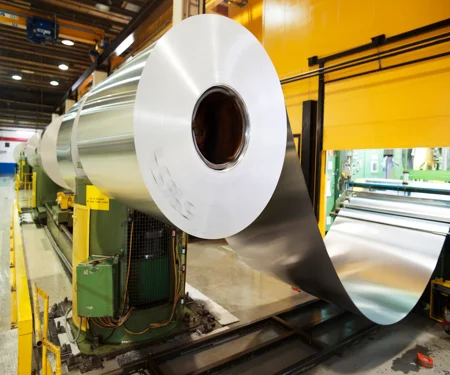
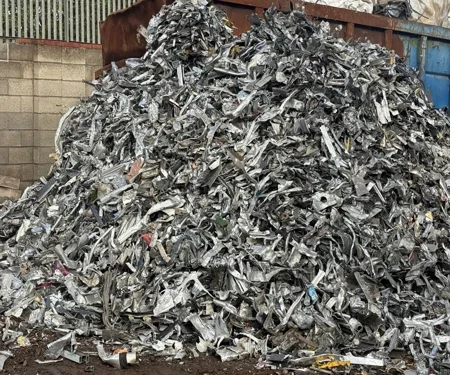
Beneath the diplomatic maneuvers lies a contest for control over key industrial materials. Aluminium — vital for defense, transportation, and renewable energy — has become a proxy for the broader competition. In the first half of 2025, US aluminium imports totaled 1.81 million tonnes, slightly below the previous year as tariffs rising to 50 per cent cut Chinese supplies. Canada continues to dominate as the top supplier, while producers in India and the UAE have expanded their presence.
In contrast, China’s aluminium exports have slowed under tariff pressure and weak global demand, though domestic output remains near record levels — 34 million tonnes in the first nine months of 2025, up 2.2 per cent year-on-year. Prices have climbed to about USD 2,780 per tonne, driven by demand from electric vehicles and data centers, sectors now central to both nations’ industrial policies.
A battle for the hemisphere’s future
The Trump–Rubio administration views the Americas as the frontline of a new geopolitical struggle — one waged through ports, energy networks, and supply chains rather than military bases. By advancing transparency, sound governance, and Western investment, Washington seeks to counter China’s expanding economic reach and safeguard regional autonomy.
Its message is clear: The Western Hemisphere must remain a space of partnership and fair competition, not a platform for Beijing’s ambitions. Through diplomacy, targeted sanctions, and strategic investment, the US aims to reclaim influence across Latin America before China’s presence becomes irreversible.













_md.webp)