Europe’s aluminium scrap policies: Strengthen recycling but leave export challenge unresolved
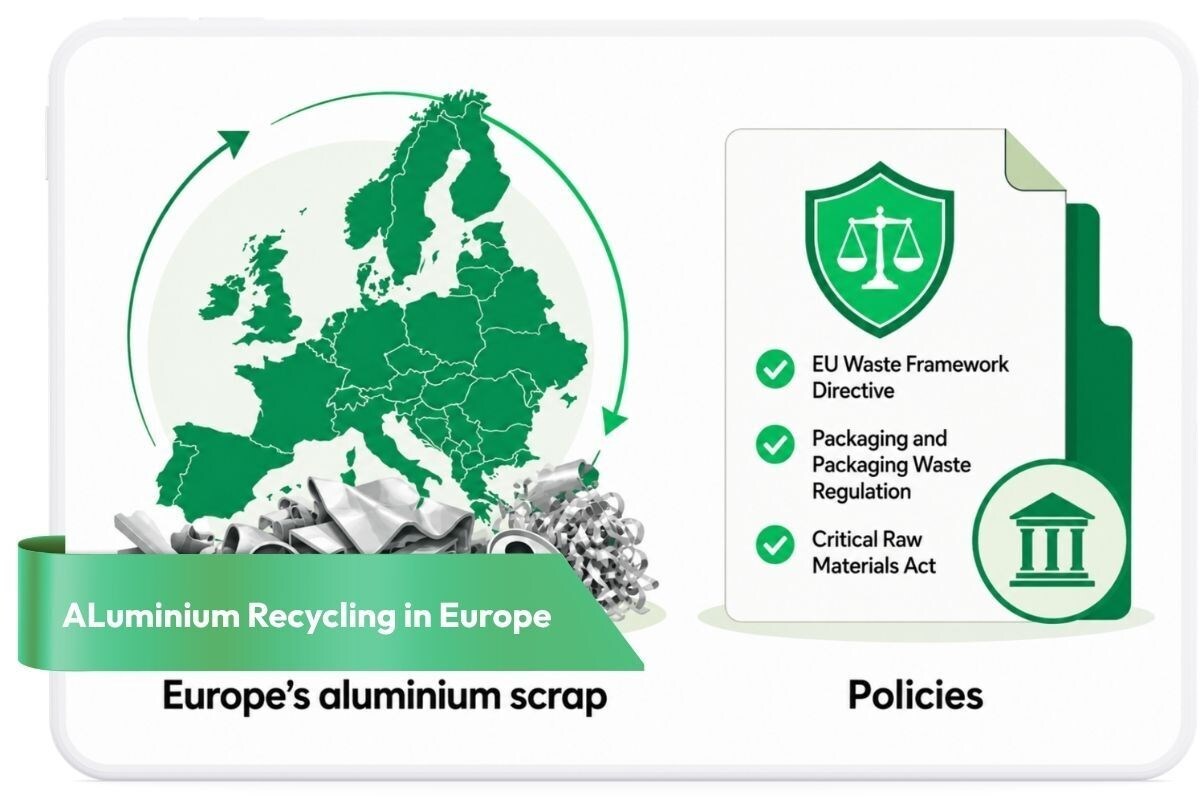
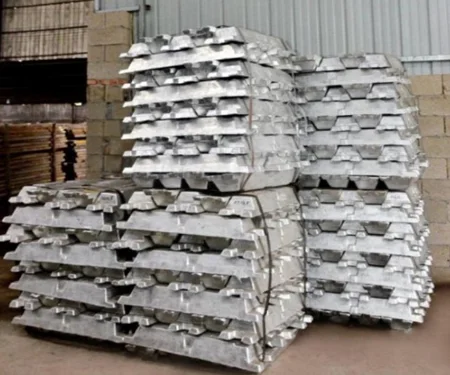
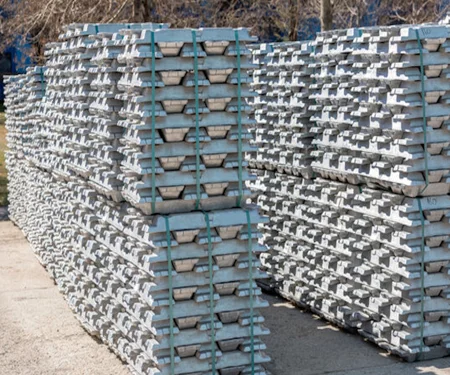
The image(s) used in this article is generated with an AI tool and does not depict any real-time moment
As the world is accelerating its shift from primary to recycled aluminium, Europe is finding itself at a difficult crossroads. Strong demand, advanced recycling technologies and clear sustainability ambitions are one part of the story, while tightened scrap availability is another part. More than a Europe-wide problem in equal measure, the pressure is most visible in the European Union, where scrap leakage, as what they call, has become a serious challenge due to the increased overseas exports to India, China, and Thailand.
Scrap leakage becomes a risk
As mentioned by Mario Conserva, Secretary General of FACE, in an exclusive interview with AL Circle, the current leakage of aluminium scrap is leading to 1.2 million tonnes of such strategic resource flowing out to third countries annually. This is not a marginal volume; rather it represents 25 per cent of Europe’s total recycling capacity, which could be processed inside and reduce primary aluminium imports by nearly 24 per cent.
The criticality of aluminum scrap for Europe becomes more evident now when the continent is grappling with the declining primary aluminium production and severely exposed to the Middle East crisis. Europe imports around 1.4 million tonnes of unwrought ingots (HS 76) from the Persian Gulf, which again represents 22 per cent of EU’s unwrought ingot imports. Any disruption in this flow, especially amid Middle East instability, could increase pressure on downstream producers and create greater demand for recycled aluminium.
Very likely Djibril René, Director of Industry & Market Intelligence of European Aluminium sees this unwrought aluminium import loss to make a room for increased recycled aluminium demand in the near future. The logic is clear: if primary metal imports become more uncertain, recycled aluminium becomes more strategically important. But Europe is currently facing a contradiction. It needs more recycled metal, yet it continues to allow large volumes of scrap to leave the region.
Europe’s year-on-year primary aluminium production decline makes the situation more complicated. Over the years, high energy costs have pushed the continent’s primary aluminium production down to 7.059 million tonnes in 2025 from 7.782 million tonnes in 2018.
Considering all the situations, the growing reliance on recycled aluminium in Europe is inevitable, and the trend is already moving in that direction. From 6.6 million tonnes in 2021, demand rose to 8 million tonnes in 2025, recording an increasing of 21.1 per cent, attributed to stricter recycled content targets, decarbonisation policies, and increased inclusion of recycled aluminium in automotive, construction, and packaging.
_0_0.gif)
Demand for recycled aluminium creates a paradox
At the same time, Europe’s scrap generation has expanded, thanks to advanced technologies, new remelting capacities, and stronger recycling policies. As per the European Aluminium’s report, about EUR 700 million has been invested in the region in building new recycling facilities, expanding existing ones, and upgrading processes with the latest technologies. Policy support has also improved. The EU Waste Framework Directive, the cornerstone legislation governing waste management in Europe, has enhanced the recycling rate. This particular policy aims to shift the continent from a linear take-make-waste model to a sustainable circular economy by preventing waste generation and maximising resource efficiency.
In addition, Packaging and Packaging Waste Regulation (PPWR) mandates that all packaging put on the EU market are recyclable and all member states implement Deposit Return Schemes (DRS) to ensure high separate collection rates of aluminium beverage cans.
The Critical Raw Materials Act (CRMA) also has a role to play by encouraging consistent supply chains and financial support for recycling infrastructure. In parallel, new EU circularity rules for vehicles are expected to improve end-of-life vehicle recycling by requiring vehicles to be designed for easier dismantling and recovery of parts and materials.
All the policies in place brought the total aluminium scrap generation of 7 million tonnes in Europe last year. 95 per cent of aluminium in Europe is recovered from the end-of-life vehicles and building sectors and 76 per cent is recovered form cans. Although these are strong figures, yet they do not solve the core problem. High recovery does not automatically guarantee local availability if recovered scrap is exported.
Policy gaps: collect, recycle and export with no retention
This is where Europe’s policy gap becomes visible. The EU has several policies encouraging recycling, improving collection and strengthening circularity. But it has fewer effective tools to ensure that recovered scrap remains available to European remelters and refiners.
The European aluminium scrap price also casts a red light. According to Mario Conserva, scrap prices in the European Union have risen by 80 per cent since 2019, and scrap has been traded at more than 90 per cent of the LME ingot price. So, the economic margin for converting scrap into secondary ingot becomes difficult. Margins narrow, investment confidence weakens, and the viability of EU remelters and refiners comes under pressure. In some cases, this can lead to postponed investments, curtailed recycling activity and even plant closures.
Join our exlusive webinar 'Hedging for recyclers - Become an expert in 6 hours' to stay ahead in the competitive market
This makes the debate around scrap-export restrictions more urgent. If recycled aluminium is central to Europe’s decarbonisation strategy, then scrap can no longer be treated as an ordinary traded waste commodity. It must be treated as a strategic raw material. The European Commission acknowledges the same and considers to restrict scrap exports.
But how? To start with, the Commission suggests ‘export fees’ to make recycling of critical raw materials waste within the Union more attractive than exporting, as it is stated in the Clean Industrial Deal. The European Aluminium also supports this direction believing the access to aluminium scrap is crucial for the circular economy in Europe.
Mario Draghi, former European Central Bank President and one of Europe's great economic minds, in his recent report on the ‘Future of European competitiveness’ has also proposed the adoption of reciprocal measures; meaning imposing taxes on exports to those countries that already maintain barriers on their own aluminium scrap trade.
Europe’s major scrap trade destinations are India, Malaysia, Indonesia, and China, and all of them operate with restrictions or controls. For instance, India’s applies 2.5 per cent duty on aluminium scrap imports, alongside a strict non-hazardous waste compliance. Malaysia imposes a 10 per cent export tariff, Indonesia enforces licensing requirements on aluminium scrap, China levies 15 per cent tariff on scrap exports, and Vietnam applies 22 per cent export duty.
On the other hand, the United States adds another layer to the problem by keeping aluminium scrap outside the scope of Section 232 tariffs, which is already pulling European scrap worsening the issue of scrap leakage.
European Aluminium is also proposing the EU Commission to design a separate ETS Product Benchmarks for aluminium recycling. At present, it falls under non-sector specific ETS heat & fuel consumption benchmark. The proposed one would better recognise the critical role of recycling in Europe’s decarbonisation pathway and be mindful to the rerouting approach that many countries adopt.
Countries with strict import policies like China can still secure scrap through rerouting via Malaysia and Thailand. Moreover, many third countries still operate with lower environmental and sustainability standards, allowing scrap to be processed under conditions that would not be acceptable in the EU.
CBAM may also support Europe’s scrap-retention agenda, but only indirectly and as long as recycled aluminium does not come under the scope of CBAM. The mechanism is designed to ensure that imported goods face a carbon cost equivalent to EU-produced goods, reducing carbon leakage. If CBAM makes carbon-intensive aluminium imports less competitive and increases demand for low-carbon aluminium within Europe, EU remelters and recyclers would pay more competitively for local scrap.
Europe’s hard choice for aluminium scrap
The conclusion is uncomfortable but necessary, Europe has built strong policy framework to encourage recycling, where the results are also visible. But if the continent wants to reduce dependence on primary imports, lower emissions and strengthen its industrial base, it cannot afford to let millions of tonnes of aluminium scrap leave the region unchecked.
Toyota’s European-first chapter: End-of-life aluminium recycled in hybrid Corolla
Next articleTrimet expands German recycling capacity by 80,000 tonnes per annum
Grow with
AL Circle