EGA in 2025: Record 2.83 million tonnes sold, but net profit slips to AED 2.12 billion
When Emirates Global Aluminium (EGA) declared “strong underlying financial performance” for 2025, the forefront numbers were difficult to ignore. Underlying net profit (excluding Guinea Alumina Corporation) rose 16 per cent year-on-year to AED 4.93 billion (USD 1.34 billion), while total cast metal sales reached a record 2.83 million tonnes. Underlying revenue climbed 14 per cent to AED 31.98 billion (USD 8.71 billion), and EBITDA reached AED 9.28 billion (USD 2.53 billion).
Yet 2025 was not all about a flourishing success story. Strip out the adjusted metrics and include the full impact of events in Guinea, and reported net profit fell to AED 2.12 billion (USD 577 million), down from AED 2.62 billion (USD 713 million) in 2024. The difference is explained almost entirely by the revocation of mining rights in Guinea, which fundamentally altered EGA’s upstream positioning.
Pål Kildemo, Chief Financial Officer of Emirates Global Aluminium, said: “Across multiple end‑markets, we are seeing strong secular tailwinds that continue to accelerate the need for aluminium—driven by sustainability, electrification, and long-term infrastructure renewal. There is a significant addressable market for aerospace and defence, driving growth. Every electric vehicle requires significantly more aluminium. The price of aluminium is less than one-third the price of copper, leading to accelerating potential substitution across power cables and wiring applications. These underlying structural trends position aluminium - and EGA’s business - extremely well for the long term.”
For the global aluminium value-chain 2026 outlook, book our exclusive report “Global ALuminium Industry Outlook 2026"
Guinea’s disruption impact
The cancellation of the mining concession held by Guinea Alumina Corporation (GAC) resulted in a USD 765 million (AED 2.81 billion) loss in 2025, compared with an amount of AED 1.64 billion (USD 447 million) in 2024, net of tax credits.
Guinea is one of the world’s most significant bauxite producers, and GAC was central to EGA’s long-term raw material security. Reports suggest that the revocation forced EGA to rebalance raw material supply through alternative sourcing arrangements, potentially including Australia, Ghana and Brazil. According to official sources, more than 70 per cent of its bauxite requirements were covered through alternative supply channels during the year.
Operationally, smelting continued with slight interruption. Financially, however, reported earnings fell, and the upstream integration thesis that once differentiated EGA now appears more exposed to geopolitical risk than previously assumed.
Record sales, but price support did the heavy lifting
Against the raw material scenario, downstream and smelting performance became a rather stabilising pillar to the overall performance report. Total cast metal sales increased to 2.83 million tonnes from 2.77 million tonnes in 2024. More importantly, 81 per cent of volumes were classified as premium products, a high-margin mix that shields earnings during cost volatility.
Average realised aluminium prices also supported results. The London Metal Exchange average price rose to around USD 2,610 per tonne in 2025, up from approximately USD 2,392 per tonne in 2024. Revenue expansion was therefore not purely volume-driven; it was also price-assisted.
Also, in Japan, the MJP premium surged past USD 220 per tonne in the early months of the year, slid to nearly USD 65 per tonne by August, and then climbed back to close the year at roughly USD 170 per tonne. On an annual basis, the MJP averaged about USD 125 per tonne in 2025, down from approximately USD 145 per tonne in 2024.
Across Europe, the MB duty-paid premium fell below USD 190 per tonne around mid-year before staging a recovery to exceed USD 330 per tonne. For the full year, the MB premium averaged close to USD 250 per tonne in 2025, compared with roughly USD 315 per tonne in 2024.
In the United States, the imposition of higher aluminium import tariffs drove a dramatic escalation in the MW duty-paid premium, which rose from around USD 500 per tonne to above USD 2,000 per tonne by the end of the year. The 2025 annual average stood near USD 1,300 per tonne, a sharp increase from about USD 425 per tonne in 2024.
Sales of low-carbon aluminium — including solar-produced CelestiAL and recycled RevivAL products — rose 70 per cent to 196,000 tonnes. Automotive, packaging and consumer brands continue to tighten Scope 3 requirements, and EGA is positioning itself as a supplier of differentiated metal rather than undifferentiated commodity output.
Don't miss out- Buyers are looking for your products on our B2B platform
Cash flow strength versus asset write-down
Despite the Guinea setback, underlying operating cash flow reached AED 8.27 billion (USD 2.25 billion) compared to AED 8.30 billion (USD2.26 billion) in 2024, with a cash conversion ratio improving to 80 per cent from 64 per cent the year before. Net debt to underlying EBITDA stood at around 1.35x, indicating balance-sheet stability.
Total debt descended to AED 14.08 billion (USD 3.83 billion) from AED 15.96 billion (USD 4.35 billion) in 2024. During the period, EGA made scheduled debt repayments of AED 2.5 billion (USD 687 million) and completed its repayment of the GAC loan of AED 1.94 billion (USD 530 million).
EGA declared a dividend of AED 3.7 billion (USD 1.01 billion), approximately 75 per cent of the underlying net profit.
That payout signals management confidence. But it also raises a structural question: is capital better preserved in a year marked by upstream asset impairment, or is strong cash return a signal of long-term financial comfort?
The US project announcement supports diversification
In 2025, EGA signed an agreement with Century Aluminum to develop what is described as the first new primary aluminium smelter in the US in more than four decades. The proposed facility, with an estimated annual capacity of 750,000 tonnes, would see EGA take a 60 per cent ownership stake.
The US smelter project with Century Aluminum, meanwhile, advocates that EGA is not retreating but recalibrating. The company appears to be shifting from a resource-control narrative toward a market-access and technology narrative.
Alongside, EGA’s recycling platforms expanded globally, with new capacity coming online in the US, expanded capacity in the UAE and plans for a major expansion of its Leichtmetall recycling facility near Hannover, Germany.
Must read: Key industry individuals share their thoughts on the trending topics
So, was 2025 a strong year or a difficult one?
The answer depends on which lens is applied:
On an operational and commercial basis, EGA performed strongly. Record sales volumes, improved margins, rising low-carbon shipments and robust cash flow point to a well-run smelting operation benefiting from price support and product differentiation. However, 2025 exposed vulnerabilities in upstream integration and forced the company to absorb a substantial impairment charge.
In 2025, Emirates Global Aluminium entered into a landmark agreement with TAQA, DUBAL Holding and Emirates Water and Electricity Company to decarbonise aluminium production while fast-tracking the expansion of renewable and clean energy capacity in Abu Dhabi.
Under the arrangement, TAQA and DUBAL Holding will acquire Emirates Global Aluminium’s Al Taweelah power and water assets in a transaction valued at AED 7.0 billion (USD 1.9 billion).
Concurrently, EGA has entered into Abu Dhabi’s largest-ever electricity supply agreements with Emirates Water and Electricity Company (EWEC) and TAQA Distribution. The long-term contracts position EGA as the single largest electricity off-taker on Abu Dhabi’s grid, securing 23 terawatt hours (TWh) of power annually over a 24-year term. The supply mix will progressively incorporate a higher proportion of renewable and clean energy as EWEC commissions its new large-scale solar generation projects.
Abdulnasser Bin Kalban, Chief Executive Officer of Emirates Global Aluminium, said: “We delivered a strong financial performance in 2025, driven by record sales, favourable aluminium prices, and disciplined cost control — demonstrating the strength and resilience of our business. At the same time, we made significant strategic progress to secure our future growth. We advanced plans for a new smelter in the United States and successfully piloted our next-generation smelting technology, which will underpin our long-term competitiveness. We also expanded our recycling footprint, with new capacity in the United States and growth projects in the UAE and Europe. These milestones position us to lead the industry’s next phase of growth and create sustainable long-term value.”

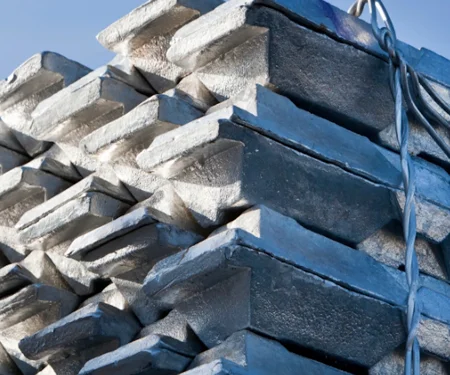
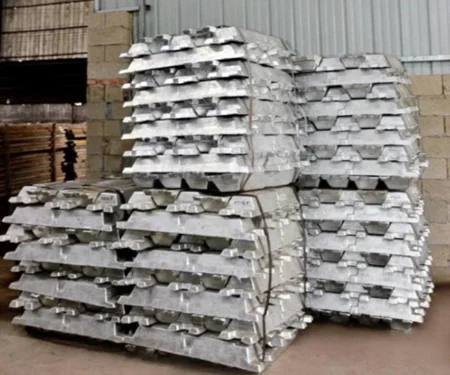
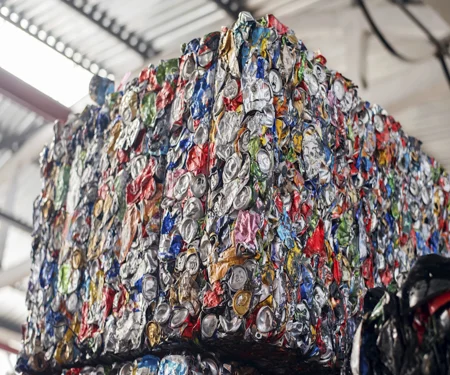
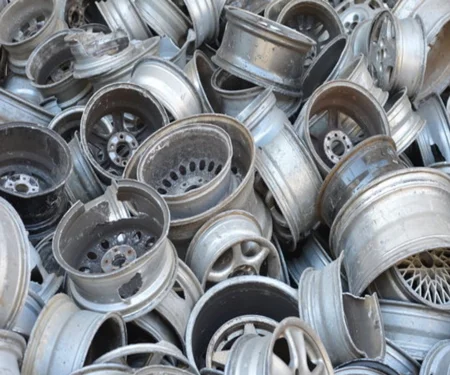
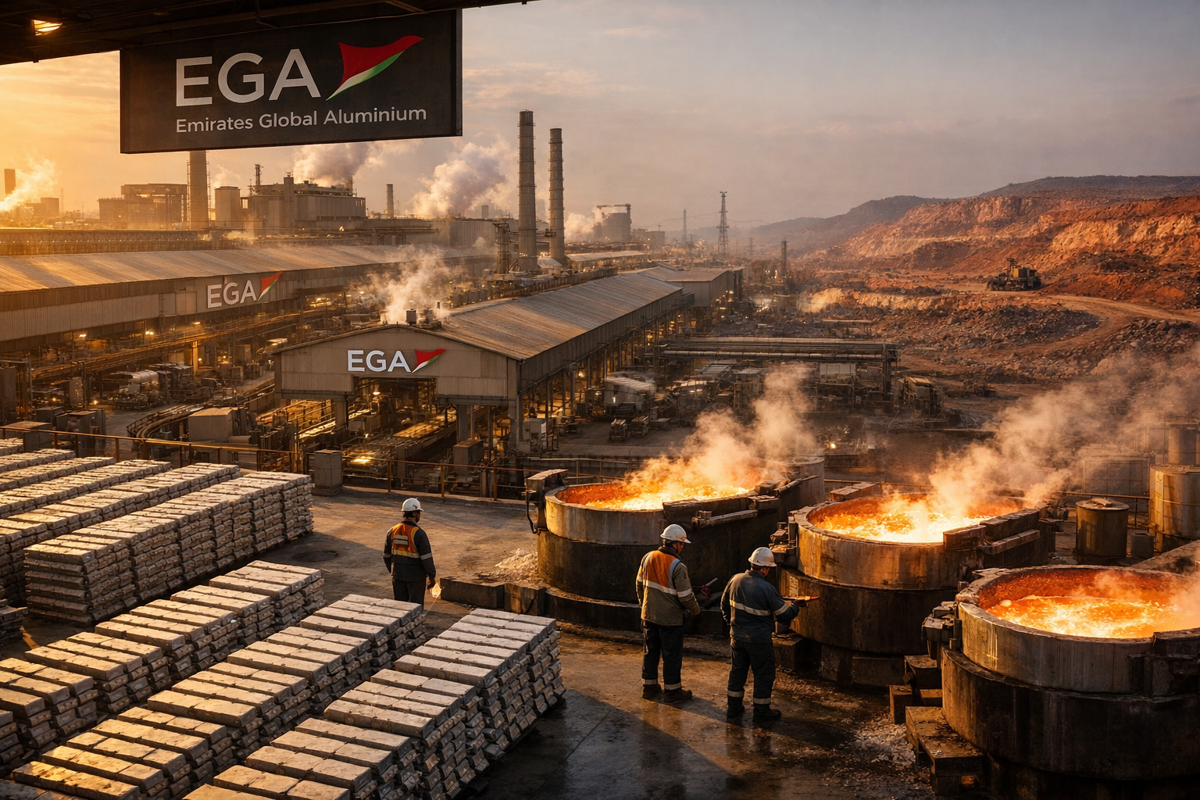
Note: The image used in this article, is generated with AI-tool and does not depict any realtime moment
Scientific innovation of aluminium-based compounds can act as alternatives to rare earths
Next articleVALCO reports $120m revenue as government reviews expansion drive
Grow with
AL Circle