Crisis-risk rates near 3% as US-Iran conflict puts 6.16 Mt GCC aluminium industry back on Hormuz watch
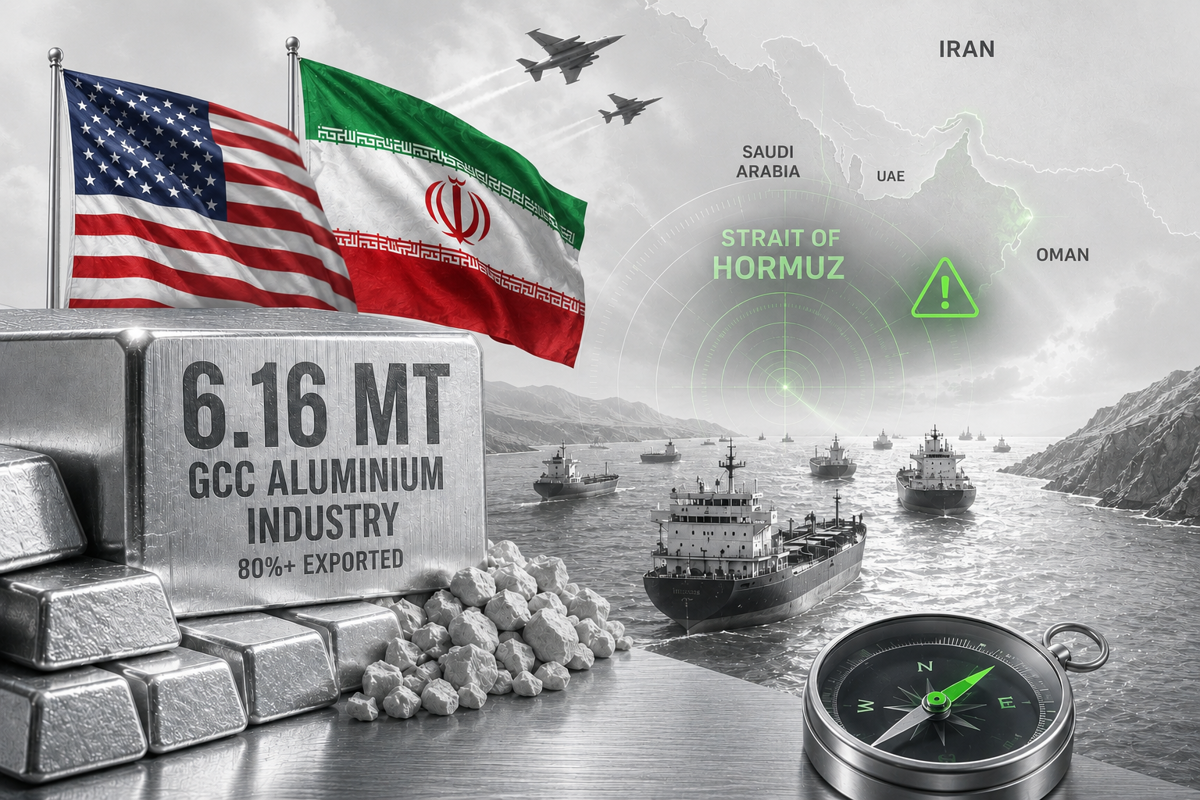
The image used in this article is generated with an AI tool and does not depict any real-time moment
The Strait of Hormuz is back at the centre of the US-Iran conflict, and the cost of moving ships through the Gulf is already responding.
War-risk insurance rates for ships inside the Gulf have risen from around 2 per cent of vessel value at the end of last week towards 3 per cent in the past 24 hours, Reuters reported on July 8, citing industry sources.
The renewed shipping tension has emerged for the aluminium industry, while the 6.16 million-tonne GCC primary aluminium industry is still dealing with the effects of the earlier disruption. Importantly, more than 80 per cent of the region's aluminium output is exported.
Three ships were attacked as Hormuz traffic remains fragile
The latest confrontation followed projectile attacks on three commercial vessels in and around the Strait.
The US resumed strikes against Iran after the vessels were hit, putting pressure on the interim ceasefire. Ship movements through Hormuz remained sensitive to the deteriorating security situation.
The International Maritime Organization urged shipowners, flag states and operators not to expose crews to unnecessary danger, while shipping companies continued to reassess the safety of regional routes. Some vessels have also operated without broadcasting their positions.
The latest security deterioration has come after months of severe disruption to normal shipping activity. The Strait remains central to the movement of Gulf commodities and industrial raw materials, while aluminium producers in the region rely on maritime trade both for incoming feedstock and outgoing metal shipments.
Explore- Most comprehensive and forward-looking industry-focused report — Global Bauxite & Alumina Market Forecast to 2036: Supply–Demand, Trade Flows & Price Outlook
Marine war-risk premiums rise again for vessels transiting the Strait of Hormuz
The US military subsequently launched a fresh wave of strikes against Iran. US Central Command said the operation targeted capabilities that could threaten freedom of navigation through the Strait and described the action as a response to recent Iranian aggression against commercial shipping and civilian crews.
The escalation continued as Iran retaliated against targets in Gulf states. Tehran fired back at Bahrain, Kuwait and Qatar, bringing renewed military activity into countries located around major Gulf industrial and logistics infrastructure.
Shipping conditions have tightened accordingly.
Some marine war insurers had advised clients to pause voyages through Hormuz. War-risk cover is typically provided for seven days and reviewed every 24 to 48 hours, while even small rate increases can add hundreds of thousands of dollars in daily costs.
The movement from 2 per cent towards 3 per cent of vessel value is significant in the context of insurance costs recorded since the conflict began. In March, a 3 per cent rate on a tanker valued between USD 200 million and USD 300 million could translate into a hull war-risk premium of around USD 7.5 million, compared with approximately USD 625,000 at a pre-conflict rate of 0.25 per cent.
The renewed attacks have also affected the fragile ceasefire arrangement between Washington and Tehran.
The latest confrontation followed the US decision to resume strikes and revoke a permit that had allowed Iran to sell oil internationally under the interim arrangement. Iran, meanwhile, continued to assert authority over shipping routes through the Strait, while the US and Gulf countries rejected Iranian control over passage.
Explore- Most comprehensive and forward-looking industry-focused report — Global Bauxite & Alumina Market Forecast to 2036: Supply–Demand, Trade Flows & Price Outlook
6.16 Mt aluminium region remains highly trade-dependent
The renewed shipping risk matters to aluminium because the GCC is one of the world's largest export-oriented primary aluminium production regions.
GCC countries produced 6.16 million tonnes of primary aluminium in 2025 with more than 80 per cent of output exported. of the conflict also found that Gulf aluminium production had fallen to around two-thirds of capacity after raw-material supply disruption, energy constraints and attacks on major production assets.
The earlier phase of the conflict interrupted alumina deliveries to Aluminium Bahrain, Emirates Global Aluminium and Qatalum. EGA's Al Taweelah alumina refinery also faced disruption to regular seaborne bauxite supplies.
By April, GCC primary aluminium production had fallen to 330,000 tonnes, according to International Aluminium Institute data. Against regional installed capacity of 6.23 million tonnes per year—or approximately 520,000 tonnes per month — the implied utilisation rate at around 64 per cent.
The production picture has since shown some movement. EGA announced progress in restoring Al Taweelah operations, with 89 reduction cells restarted by late June after the smelter's earlier shutdown.
However, the renewed Hormuz tension is emerging before the Gulf aluminium supply chain has fully returned to its earlier operating pattern.
Alumina's USD 100-160 per tonne logistics detour
During the earlier Hormuz disruption, Gulf producers developed alternative ways of moving smelter feedstock into the region.
Seaborne alumina imports into GCC countries, excluding intra-regional movements, recovered to 520,000 tonnes in May. Around 440,000 tonnes were estimated to have ultimately reached Gulf smelters after accounting for the regular requirements of Oman's Sohar operation.
Ports outside the Strait-dependent supply route, including Sohar, Duqm and Fujairah, gained importance as alumina was moved onwards through road transport and intra-GCC shipments.
The workaround came with a substantial price tag.
Combined freight, handling, re-export and trucking costs for some rerouted alumina movements at USD 100-160 per tonne. At least 220,000 tonnes of alumina imported into the region was suspected to have been bagged in China after initially being sourced from Australia and Indonesia.
For comparison, FOB Australia alumina prices had been trading between USD 300 and USD 350 per tonne since late 2025.
The latest rise in marine war-risk premiums now adds another shipping cost development to a Gulf aluminium logistics system that has already been operating through expensive alternative arrangements.
Aluminium's war premium is back in the spotlight
The earlier phase of the conflict had already left a clear mark on aluminium pricing.
Benchmark aluminium on the London Metal Exchange reached USD 3,707.50 per tonne on June 1, its highest level since March 2022. The physical market also tightened, with regional premiums rising sharply during the Gulf supply disruption.
By late May, European duty-paid aluminium premiums had risen 73 per cent since the beginning of the conflict to a record USD 621 per tonne. The US Midwest premium had reached USD 2,557 per tonne.
At the time, with LME aluminium trading around USD 3,670 per tonne, an approximate all-in cost of USD 6,200 per tonne for US consumers and USD 4,300 per tonne for European buyers.
The disruption also changed metal sourcing patterns. GCC suppliers accounted for 16 per cent, or 1.95 million tonnes, of US aluminium imports in 2025.
Meanwhile, Canadian metal increasingly moved towards Europe. Canadian shipments to Europe rose 276 per cent from 2024 levels to more than 590,000 tonnes in 2025, while exports to the US declined 25 per cent to around 2 million tonnes.
The latest US-Iran escalation has therefore returned Hormuz risk to the aluminium market at a time when Gulf output, shipping insurance costs, raw-material logistics and alternative metal sourcing are all moving parts of the supply picture.
With war-risk insurance rates for ships inside the Gulf now rising towards 3 per cent of vessel value, the immediate focus has shifted back to the cost and security of maritime transit through the Strait—and to how quickly the latest round of US-Iran hostilities develops from here.

Note: This is exclusive coverage by AL Circle and may not be reproduced, republished or shared without prior permission.
AI in aluminium smelters: Is your smelter’s digital twin about to fail?
Next articleSHFE aluminium consolidates at highs, short-term correction continues; alumina adds positions and rebounds, but weak trend remains unchanged
Grow with
AL Circle