US tariffs have had a serious adverse impact on Korea as the country’s economy leans heavily on exports to the American market. The strain is already visible in the country’s trade performance, with export growth slowed to 3 per cent Y-o-Y, down from 5.8 per cent in July. Although that marked the third consecutive month of growth, it was the weakest in the streak, underlining the impact of Washington’s trade barriers.
A new study by the CODIT Global Evidence-Based Policy Institute, “U.S. Imposes 50% Tariffs on Aluminum and Copper: Strategic Responses for Korea,” underscores the structural vulnerabilities of Korea’s non-ferrous metals industry, valued at KRW 57 trillion (USD 40.5 billion) and dominated by small and mid-sized companies. The study finds that aluminium and steel form the backbone of Korea’s export engine; hence, tariffs on those metals have led to severe economic fallout.
At the end of July 2025, President Donald Trump struck a deal with South Korea by reducing tariffs from 25 per cent to 15 per cent on cars and semiconductors, two of Korea’s key export items. This agreement came in exchange for Seoul’s USD 350 billion investment pledge in the US. But crucially, this reprieve did not extend to aluminium and steel, South Korea’s other major export earners. They continued to face a 50 per cent duty, leaving Korea’s auto industry - the nation’s economic mainstay - exposed on both ends. With raw materials taxed at 50 per cent and finished vehicles facing 15 per cent tariffs, automakers now shoulder an effective burden of 65 per cent.
That’s not all. CODIT warns the consequences of 50 per cent US tariffs on Korea will be threefold. First, Korea’s aluminium sheet, foil, and extrusion exports to the US are set to shrink; second, forced market diversification will drive up costs; and third, exporters will face mounting pressure to find new export destinations for downstream aluminium products, semiconductors, and electric vehicles.
Reflection in aluminium trade
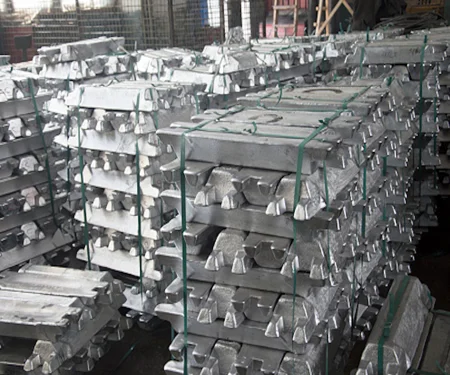
The slowdown in trade market is also evident in aluminium export figures. Until July 2025, the export volume grew by only 25.2 per cent compared to the last year’s 61.84 per cent surge. During January-July 2024, South Korea’s aluminium exports to the US rose from 79,167 tonnes to 128,129 tonnes, while this year, the export increased to 160,412 tonnes. Alongside the volume, South Korea’s export value to the US also saw a year-to-date slower increase, at about 28.83 per cent versus 49 per cent growth during the corresponding period of the previous year. During January-July 2025, South Korea’s export value stood at USD 600 million after growing from USD 465.7 million a year ago. In contrast, the export value during January-July 2023 was about USD 312 million.
Since the United States is a key export hub for South Korean aluminium, a slower growth rate to the US exports dragged down the overall pace of South Korea’s worldwide exports. According to the data revealed by the International Trade Monitor, the South Korea’s worldwide exports grew by only 2.5 per cent, from 670,156 tonnes to 687,021 tonnes, compared to the growth rate 11.64 per cent Y-o-Y from 600,273 tonnes to 670,156 tonnes.
To mitigate these losses, the research institute has suggested five policy recommendations – 1) negotiations with the US for tariff exemptions or reductions, 2) Strengthening bargaining power via bilateral and multilateral alliances, 3) provide relief funds to the domestic industries, 4) enhance long-term competitiveness through supply chain and data management, 5) offer institutional support from the National Assembly. All the suggestions are being taken from the line of actions by Canada, China, Australia, and India.
South Korea’s factory activity also weakened for the seventh consecutive month in August, coming in at 48.3, down below the 50 mark. "According to manufacturers, challenging domestic economic conditions and the impact of US tariffs weighed most on the sector, stymieing sales and production levels," said Usamah Bhatti, economist at S&P Global Market Intelligence.
Solution? The government’s emergency financial aid announced for this year of up to 570 billion won ($408.8 million). This aid has been announced to help South Korean companies cushion the impact of the 50 per cent US tariffs on all steel and aluminium imports.
"The 50% tariffs on aluminum and copper pose a serious threat to Korea's strategic industries, yet they have drawn far less attention than steel," the Institute stressed. "Korea must adopt a dual-track approach: negotiating aluminum-specific concessions with the U.S. while simultaneously reinforcing supply chain resilience through long-term policy tools."
To get more insights into US tariff impacts, read our curated e-Magazine: American Aluminium Industry: The Path Forward.














_md.webp)