China’s bauxite imports rise 17.5% in H1 2026 despite 45Mt aluminium production capacity cap: What is driving the surge?

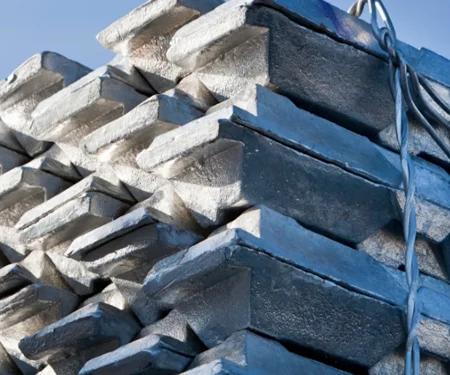
The image used in this article is generated with an AI tool and does not depict any real-time moment
China is importing bauxite at a pace that raises a bigger question for the aluminium market: why are imports still climbing when the country is moving towards a 45-million-tonne primary aluminium production capacity cap? In H1 2026, China imported 121 million tonnes of bauxite, up from 103 million tonnes in H1 2025, a rise of 17.5 per cent. Imports were also well above the 77 million tonnes recorded in H1 2024, after rising 33.8 per cent between H1 2024 and H1 2025.
If we see, quarter on quarter, China imported 58 million tonnes in Q1 2026, followed by 63 million tonnes in Q2, an increase of around 8.6 per cent.
The quarterly numbers were also significantly higher than in previous years. China imported 47 million tonnes in Q1 and 56 million tonnes in Q2 2025, while imports in 2024 stood at 36 million tonnes in Q1 and 41 million tonnes in Q2.
Lower prices make bauxite more attractive
One major reason behind the increase is price. Imported bauxite prices in H1 2026 were significantly lower than in the same period of 2025, giving Chinese buyers an opportunity to secure more material at lower costs.
According to SMM data, the average SMM Imported Bauxite CIF Index stood at around USD 66.37 per tonne in January-June 2026, down around 26.0 per cent year on year.
The average Guinea bauxite CIF China price was around USD 65.88 per tonne, down around 25.8 per cent year on year. The average Australia high-temperature bauxite CIF China price stood at around USD 56.93 per tonne, down around 23.0 per cent, while Australia low-temperature bauxite CIF China averaged around USD 61.63 per tonne, down around 24.1 per cent.
So, while China was importing more bauxite, it was doing so at considerably lower prices than a year earlier.
The price movement was not always linked directly to mine-side prices. In March, Guinea bauxite CIF prices increased more sharply than FOB prices. SMM data shows Guinea bauxite FOB at around USD 37.5 per tonne on March 2, rising to USD 38.5 per tonne on March 20 and remaining near that level at the end of March.
During the same period, the Guinea CIF-FOB spread widened from around USD 24.5 per tonne to around USD 30 per tonne. This indicates that freight rates, energy costs, trading premiums and expectations around forward supply risks also supported landed prices.
To know the production, demand and consumption forecasts of bauxite and alumina, explore the report "Global Bauxite & Alumina Market Forecast to 2036: Supply–Demand, Trade Flows & Price Outlook"
Guinea supply concerns add to buying interest
Price was not the only consideration. Possible changes to Guinea's export policy also made buyers more cautious about future supply.
From late April to early May, the market heard rumours that the Guinean government might announce bauxite export cap of 150 million tonnes. Guinea bauxite CIF China remained largely stable at around USD 67.5 per tonne between April 24 and May 8, while the SMM Imported Bauxite CIF Index stayed near USD 67.52 per tonne.
The uncertainty returned in June. Guinea bauxite CIF China rose from around USD 68 per tonne in early June to around USD 69.5 per tonne in mid-June, before reaching around USD 71 per tonne by the end of June.
Guinea's monthly long-term contract price also moved during the period. It stood at USD 67 per tonne in January 2026, fell to USD 62 per tonne in February, recovered to USD 63 per tonne in March, and remained at USD 70 per tonne from April to June, before rising to USD 71 per tonne in July.
The firm long-term contract price provided some support to the spot market.

So why import so much bauxite if aluminium production is capped?
The 45-million-tonne production ceiling does not necessarily mean China's aluminium output will stop exactly at 45 million tonnes every year.
China may now have close to 45 million tonnes of authorised primary aluminium capacity, but authorised capacity is different from actual annual production. Smelters do not operate at 100 per cent utilisation indefinitely.
Pots can fail, potlines require repairs, and rectifiers and transformers need maintenance. Casting constraints can also emerge. At the same time, floods, droughts, power-market conditions and local electricity restrictions can affect production.
There is also the possibility of capacity creep. Some successful smelters can produce above their nominal rating, while others may operate below capacity because of technical, power or raw-material problems.
This means the important measure is the net capacity creep across China's entire aluminium system.
Even a 1 per cent increase on a 45-million-tonne nominal capacity base would add around 450,000 tonnes of effective annual capability. Under exceptionally favourable operating conditions, that could allow China to approach or slightly exceed 45 million tonnes of annual aluminium production.
Explore buying & selling leads of bauxite and trade opportunities on AL Biz
From where do China import the most
Guinea remains the biggest contributor to China's growing import volumes.
China imported 99 million tonnes of bauxite from Guinea in H1 2026, compared with 79 million tonnes in H1 2025 and 56 million tonnes in H1 2024. Imports therefore increased 25.3 per cent year on year in H1 2026, following a 41.1 per cent rise in H1 2025.
Australia remained another major supplier. China's imports from Australia reached 18.1 million tonnes in H1 2026, compared with 16.5 million tonnes in H1 2025 and 17.8 million tonnes in H1 2024. This represents a 9.7 per cent increase in H1 2026, after a 7.3 per cent decline in H1 2025.
Imports from Guyana reached 1.092 million tonnes in H1 2026, up from 854,000 tonnes in H1 2025, a 27.9 per cent increase.
Analysis
The sharp increase in China's bauxite imports can be linked to three key factors.
Lower prices: The average landed cost of bauxite entering China fell from about USD 88 per tonne to USD 64 per tonne, a 27 per cent decline, while import volumes increased by 18 per cent year on year. The lower prices created an incentive to buy and stock more material.

Guinea export quota concerns: Rumours of a possible Guinean export quota created another reason to secure cargo early. Although no quota was confirmed during H1 2026, buyers had an incentive to purchase before any potential restrictions. If a quota were introduced after July, it likely would not apply retroactively to shipments already made. This created a "buy now, before the door might close" dynamic.
Changing shipping flows: Middle East tensions, including disruptions around the Strait of Hormuz, redirected some Australian cargo originally destined for Middle Eastern buyers towards China. At the same time, a favourable China-versus-overseas price spread opened arbitrage opportunities for traders. Global bauxite flows to China rose an estimated 26 per cent year on year in April 2026 alone as a result.
Unlock key insights from leading companies and experts across the aluminium ecosystem with our e-Magazine - Mine to Market: Aluminium Producers & Manufacturers 2026
Metro Mining ships 700k WMT in July as waste stripping jumps 140%
Next articleIndia moves to set up trading exchange for bauxite, iron ore and other major minerals to improve price discovery
Grow with
AL Circle