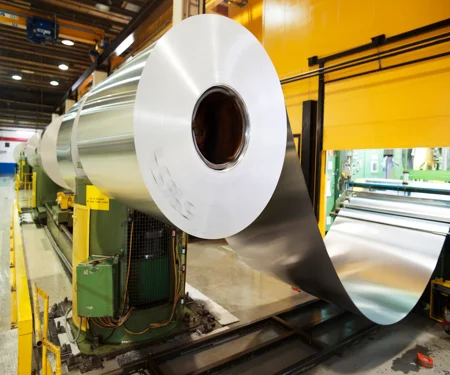
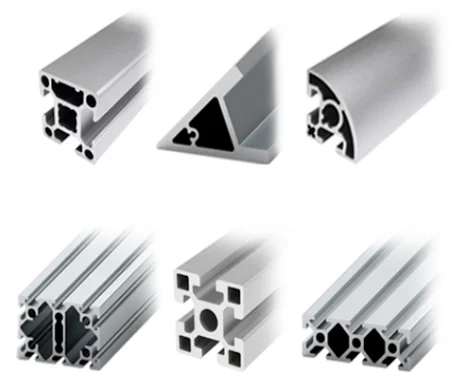
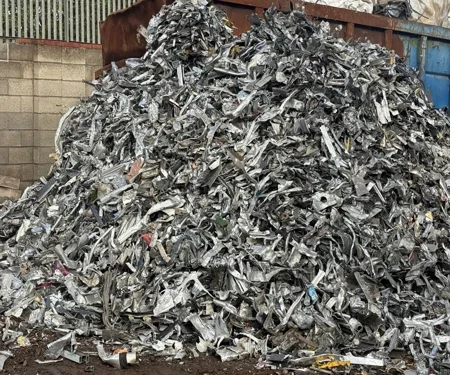
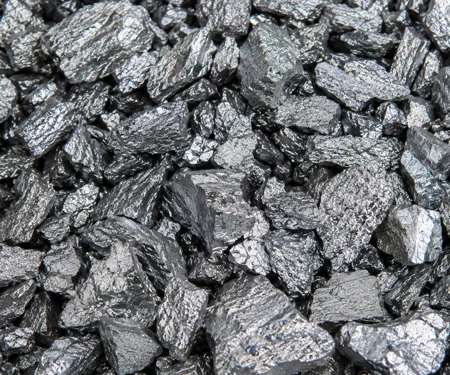
China has unveiled an ambitious agenda to extend its carbon trading system to encompass the steel, cement, and aluminium smelting sectors. The Ministry of Ecology and Environment has announced that this expansion will incorporate an additional 1,500 enterprises, enabling them to procure credits to offset their CO₂-equivalent emissions.
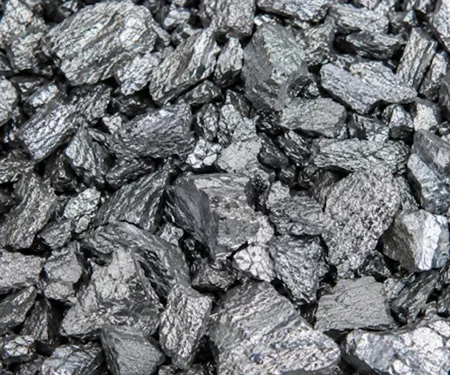
Image for referential purposes only
This extension will elevate the total volume of carbon dioxide regulated under the trading system to 8 billion tonnes—encompassing over 60 per cent of China’s total emissions. Ministry spokesperson Pei Xiaofei revealed these developments during a briefing on Wednesday.
As one of the world’s foremost exporters of goods subject to the EU’s Carbon Border Adjustment Mechanism (CBAM), China is projected to export approximately 868.94 million tonnes of such commodities between 2026 and 2040, according to S&P Global Commodity Insights. The iron and steel industries will account for 42 per cent of these exports, cement 8 per cent, and aluminium 6 per cent.
At present, the scheme governs approximately 5 billion tonnes of carbon dioxide emissions generated by 2,200 power enterprises.
Last week, China reactivated its voluntary carbon credit market after an eight-year suspension, prompting significant price fluctuations. A Bloomberg report highlighted that China Certified Emission Reduction (CCER) credits initially surged to RMB 107.36 (USD 14.82) per tonne—21 per cent higher than mandatory carbon allowances—before plummeting to RMB 72.81, reflecting a 17 per cent discount.
These price shifts underscore robust initial demand juxtaposed against a constrained supply of credits. Within the first five days of reopening, 911,000 tonnes of credits were traded—nearly triple the volume of China’s compulsory emissions market.
China has pledged at the Conference of Parties to curtail its carbon emissions per unit of GDP by 60 to 65 per cent by 2030. To realise this commitment, the country has embraced market-driven mechanisms, notably the Clean Development Mechanism, underpinned by a ‘bottom-up’ framework.
During the 2010s, Beijing initiated seven pilot carbon markets across various regions, encompassing sectors such as heat and electricity production, cement manufacturing, and petroleum extraction. These pilot zones—Beijing, Chongqing, Guangdong, Hubei, Shanghai, Shenzhen, and Tianjin—collectively contribute 25 per cent of China’s GDP. These industrial hubs, among the most polluting, were instrumental in testing the cap-and-trade model. By 2016, an estimated 40.24 million tonnes of CO₂ had been exchanged within these markets.
The pilot zones demonstrated the efficacy of cap-and-trade, wherein a regulatory cap is imposed on emissions, necessitating allowances for excess output. These allowances may be auctioned, traded, or allocated gratis. The scheme is designed to balance industrial competitiveness while mitigating carbon leakage. Emission caps vary from 30 to 350 metric tonnes of CO₂-equivalent annually, with carbon pricing fluctuating between USD 1.4 and USD 13 per tonne. Two types of allowances exist: ‘new entry’ allocations, freely distributed to support expansion, and ‘governmental’ allowances, which are fixed and subject to sale or auction.
China faces multiple hurdles in meeting its emissions reduction targets. The nation must ensure that its emissions trading scheme does not overlap with pre-existing regulations governing pollution prevention, mitigation, and resource consumption. Beijing must also enforce stringent monitoring and transparency measures to sustain credibility.
Furthermore, authorities must address carbon leakage and price volatility. Since the inception of the pilot markets, carbon prices have fluctuated significantly. The government must also establish an efficient mechanism for trading allowances on the spot market and implement strategies to align with the Paris Agreement’s long-term objectives.
Policymakers are also contending with the challenge of allowance allocation. For free allocations, decisions must be made on eligibility; for auctioned allowances, the optimal auctioning method must be determined; and for hybrid allocations, all these considerations must be balanced.
China’s emissions trading scheme initially set carbon allowances at 3–5 billion tonnes per annum—almost double the allowances under the EU Emissions Trading System (EU-ETS). As of July 2016, the EU-ETS was the world’s largest carbon trading system, managing a market of 2 billion tonnes annually. Subsequently, the National Development and Reform Commission (NDRC) expanded China’s scheme to encompass eight key sectors: petrochemicals, chemicals, building materials, steel, ferrous metals, paper production, power generation, and aviation. Companies participating in this market must utilise a designated minimum energy threshold—currently 10,000 tonnes of standard coal equivalent annually.
Based on pricing data from the seven pilot cities, China’s initial carbon price was estimated at approximately USD 5 per tonne, generating revenues between USD 0.17 billion and USD 1.16 billion in the inaugural trading year. The anticipated trading volume was projected to escalate to USD 7–58 billion annually post-2020 as additional markets are integrated into the system.
The first auction for vintage 2016 allowances was conducted in Guangdong on 21 September by the China Emission Exchange. The settlement price reached USD 1.48 per tonne, exceeding the reserve price of USD 1.40 per tonne for the 500,000 tonnes auctioned. Looking ahead, China’s carbon trading allowances are expected to expand to 3–5 billion tonnes of CO₂, yielding revenues between RMB 60 billion and RMB 400 billion.
China’s emissions soared in 2023, derailing its target of reducing carbon intensity by 18 per cent under the 14th Five-Year Plan (2021-25). To realign with its 2060 carbon neutrality ambition, the country must now slash CO₂ emissions by 4–6 per cent by 2025. To meet CBAM regulations, China mandates that factories emitting over 26,000 tonnes of CO₂ annually verify their emissions data.
Consequently, China is simultaneously challenging the EU’s CBAM at the WTO while fortifying its emissions trading scheme to harmonise with global carbon pricing frameworks.













_md.webp)