From June 4, 2025, Trump's 25 per cent tariff on aluminium and steel doubled to 50 per cent, creating tension among worldwide manufacturers, especially those heavily relying on exports. Owing to this, most Brazilian manufacturers are pushing back against the US tariffs on aluminium and steel. What circumstances are making the Brazilian manufacturers retaliate?
Image source: legamart.com
Impact on Brazil’s overall GDP
With the effectiveness of the 50 per cent tariff, Brazilian manufacturers have faced immense challenges, especially for the small and medium enterprises deemed to be the major contributors to Brazil's industrial GDP.
In 2024, Brazil’s GDP stood at USD 5.48 trillion as per the Purchasing Power Parity (PPP). As per the data of Market Research Future, aluminium's contribution to Brazil's GDP stood at USD 6.76 billion in 2024 and is expected to reach USD 10.5 billion by 2035. During the same period, the Brazilian aluminium market is expected to see a CAGR of 4.08 per cent.
According to the Moneycontrol analysis, the 50 per cent tariff on aluminium and steel will negatively impact Brazil's industrial sector. In 2023, Brazil's dependency on US exports accounted for 41.4 per cent, making it highly vulnerable.
On the contrary, as per the report by Statista, the US held the position of the largest economy in the world, where the total GDP stood at USD 30 trillion. If both countries' GDPs were to be compared, Brazil would stand at the 10th position.
The tariff imposed will directly impact Brazil's GDP, which is significantly lower if compared with the US. This is one of the primary causes for which the Brazilian manufacturers are retaliating against the tariff on aluminium and steel.
Year-on-year analysis of Brazil & US trade
In 2020, Brazil exported 25.5 thousand tonnes of aluminium and its products to the US. In the following year, the number was reduced to 20.3 thousand tonnes. However, in 2022, exports were significantly higher, whereas Brazil exported 61.5 thousand tonnes of aluminium and its products.
But, the trade graph fell again in 2023, with the exports at 34.9 thousand tonnes. The year 2024 represented a higher export of aluminium and its products from Brazil to the US, with a total of 48.5 thousand tonnes.
Irrespective of the export fluctuation, Brazil may face an economic clash due to the increased tariff on aluminium and steel.
In 2024, Brazil exported various aluminium products to the US, including 78.22 tonnes of bars, rods and profiles, 12,278 tonnes of foil, 28,661 tonnes of plates, sheets and strips, and 139.9 tonnes of wire. By April 2025, these volumes saw significant declines, where foil dropped to 4.6 thousand tonnes. Plates, sheets and strips fell to 2.3 thousand tonnes, and wire to 52.31 tonnes.
US trade partners, apart from Brazil
In 2024, the US imported 5.52 million tonnes of aluminium from different countries. Among these countries, major imports were made from Canada, with a volume of 3.4 million tonnes of aluminium and its products.
In the same year, Mexico exported 282 thousand tonnes of aluminium. Following this, Malaysia exported 189 thousand tonnes to the US in the same year, and 165 thousand tonnes was imported from Argentina, following 156 thousand tonnes from Bahrain in the same year.
In this scenario, Brazil exported only 36 thousand tonnes. Implicating the same tariff for higher volume imported countries with Brazil will lead to further cause for retaliation.
Impact on Brazil’s can industry
The sudden decision to double the tariff on aluminium and steel from 20 per cent to 50 per cent will create unintended consequences and risks throughout the packaging supply chain. This shall increase the cost of canned goods. Moreover, this shall have a direct impact on the profit margin of the can manufacturers in Brazil.
The relationship between Brazil and the US dates back to 1822 when the country gained independence. The US-Brazil partnership is founded on a shared commitment to secure sustainable economic growth and prosperity by promoting international peace, security and respect for human rights.
Their relationship also commits towards protecting the environment and biodiversity, enabling workers’ rights and labour standards, advancing clean energy, and promoting strong cooperation in defence, health, and security.
Brazil, the world’s eighth-largest economy, counts the United States as its second-largest trading partner, with bilateral trade totalling USD 74.8 billion in 2023. Additionally, the United States remains Brazil’s largest source of foreign direct investment, reaching USD 228.8 billion in 2022 across sectors like financial services, manufacturing and telecommunications.
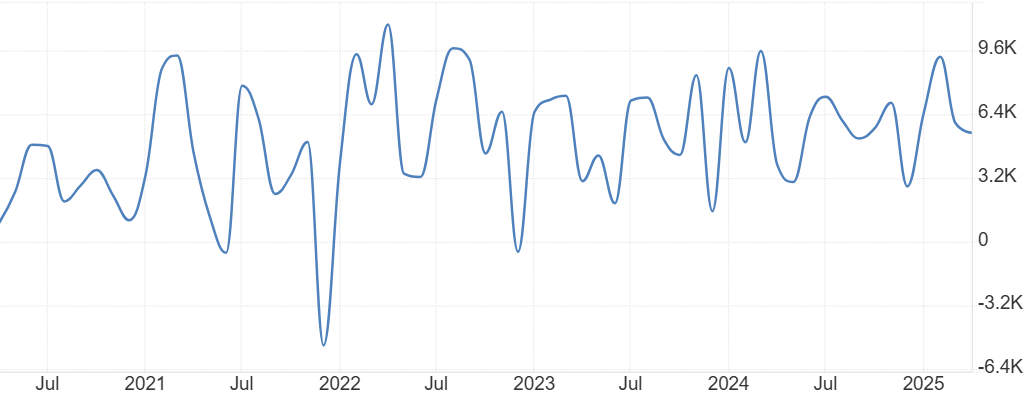
As per the FocusEconomics report, Brazil received USD 71.07 billion in Foreign Direct Investment, of which the US held a significant part, representing an upward movement in the last five years.
Image source: tradingeconomics.com
With such a good relationship, what will the impact of the tariff be on Brazil and the US?













_md.webp)
_md.webp)