The United States and China are edging closer to a landmark Boeing aircraft deal that could anchor a broader trade agreement between the two powers. US Ambassador to China David Perdue, said the negotiations are in their “final days,” signalling a breakthrough that has been long in the making.
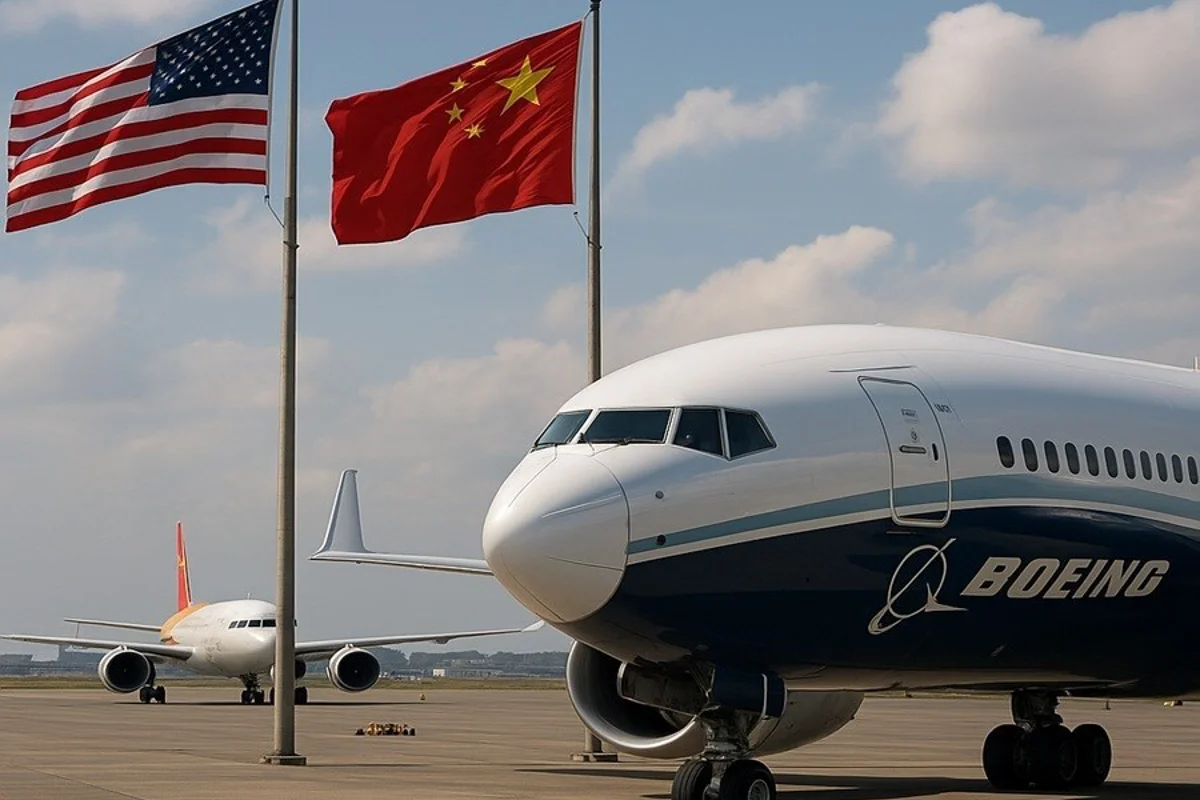
Image for representational purpose
According to Bloomberg, Boeing is working toward the sale of as many as 500 jets — a transaction that would end a sales freeze stretching back to Donald Trump’s 2017 visit to China.
Diplomacy and trade backdrop
The talks are unfolding at a moment of renewed diplomatic engagement. In recent weeks, Trump spoke by phone with President Xi Jinping, while negotiators reached a framework for ByteDance to divest its US-based TikTok operations, easing a major flashpoint.
Against this backdrop, a Boeing announcement could serve as a symbolic centerpiece, potentially timed with the United Nations General Assembly in New York. For Trump, such “plane diplomacy” has been a favoured tool to signal progress in international relations.
Tariffs and metals at the core
The importance of the Boeing deal extends far beyond commercial aviation. Large aircraft are intensive consumers of aluminium and titanium, tying any major order directly to global metals trade. Tariffs imposed in April 2025 — as high as 145 per cent by the US and 125 per cent by China — ended four decades of tariff-free civilian aircraft exchange.
The consequences were swift: Chinese airlines halted deliveries, returned two aircraft, and suspended about 50 handovers scheduled for that year.
A temporary truce in September lowered tariffs on aircraft and metals to 10 per cent, but the easing is due to expire on November 10. Both sides have made it clear that keeping the lower tariffs will depend on whether the Boeing deal is finalised, showing how a big product agreement can also influence tariffs on raw materials like metals.
The potential agreement is particularly critical for Boeing, which is struggling with supply chain bottlenecks and financial strain. The company’s global backlog now exceeds 6,000 aircraft, with about 10 per cent historically tied to Chinese carriers.
The suspension of deliveries deepened uncertainty for one of Boeing’s most important markets, forcing it to redirect jets to other regions such as India and Southeast Asia and complicating production schedules.
China’s aviation market remains one of the largest prizes in the industry. According to sources, its fleet will more than double by 2043, creating enormous opportunity but also fierce competition. Airbus has overtaken Boeing in market share in recent years, while China’s state-backed COMAC is slowly expanding with strong government support.
Finalising a deal in Beijing for up to 500 jets is therefore vital for Boeing to restore cash flow, regain competitiveness, and reaffirm its presence in the fast-growing Asia-Pacific region.
China’s aviation industry and COMAC
The tariff standoff has reshaped China’s aviation sector. Higher acquisition costs — up more than 10 per cent due to tariffs — slowed modernisation plans and pushed airlines toward Airbus.
Meanwhile, COMAC has gained ground at home with its C919 narrow-body and ARJ21 regional jet. Despite steady growth, the company still lacks the global reach to compete with Boeing and Airbus, leaving China reliant on foreign suppliers for large-scale fleet expansion.
From trade war to tentative truce
The roots of the current negotiations stretch back nearly a decade. Talks for a major Boeing sale began well before 2025 but were repeatedly derailed by escalating tariffs, political disputes, and the grounding of the 737 MAX. China was the first country to ground the jet in 2019 after two fatal crashes and the last to recertify it, compounding Boeing’s difficulties and further delaying deliveries.
Trade tensions under both Trump and Biden worsened the impasse, as tariffs and sanctions blocked sales that had once defined the US-China commercial relationship. Boeing, which had historically dominated the Chinese market, found itself sidelined after 2017 as retaliatory measures dismantled more than 40 years of tariff-free aircraft trade.
Now, the impending deal is seen as central to US-China trade diplomacy — a move that could stabilise metals flows, ease tariffs, and restore momentum to the global aviation sector.












_md.webp)
_md.webp)
_md.webp)







