Beyond the tariff wall: Will Washington’s new aluminium incentive programme succeed where tariffs alone failed?
The images used in this article is generated with an AI tool and does not depict any real-time moment
Seven years after Section 232 tariffs first shielded US aluminium producers, America still imports 60 per cent of the primary aluminium it consumes. That single statistic, buried in the US Geological Survey’s 2026 Mineral Commodity Summary, is the uncomfortable backdrop to President Trump’s latest move. On July 20, Trump signed a proclamation directing the Commerce Secretary to build an incentive programme around the existing aluminium tariff regime, alongside an executive order tightening critical mineral sourcing rules for defence contractors.
The headlines called it tariff policy. The real question is narrower and more interesting: can a tariff discount, offered only to companies that build new smelting capacity, do what a decade of tariff walls could not?
Why America still cannot feed its own smelters
The arithmetic is stark. US primary aluminium production fell to an estimated 660,000 tonnes in 2025, down 26 per cent from 889,000 tonnes in 2021, even as Section 232 tariffs sat at 25 per cent and then 50 per cent. Three companies now run just six primary smelters across five states, against 23 smelters operated by 12 companies in 2000.
Installed capacity is 1.31 million tonnes a year, meaning the country's smelters are running at barely 50 per cent utilisation — two of six lines, at Hawesville, Kentucky, and New Madrid, Missouri, have sat idle since 2022 and 2024 respectively. The reason is not metallurgy but electricity, wherein power accounts for roughly 30-40 per cent of primary aluminium production costs, and Canadian smelters running on Quebec hydropower pay USD 26.50-41 per megawatt-hour against far higher US industrial rates.
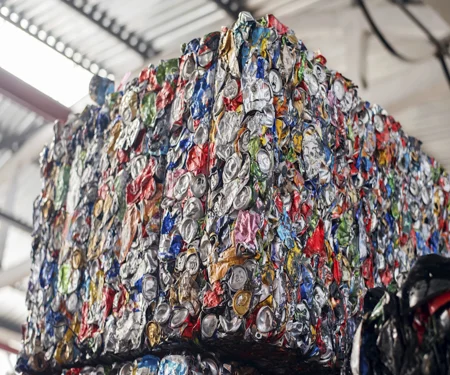
Against domestic demand of 5.7 million tonnes of apparent consumption, US smelters supply barely a tenth of the aluminium the country actually needs, and the remainder comes from imports and from 3.6 million tonnes of secondary (recycled) production, which now does the heavy lifting that primary smelting once did.
What the proclamation actually changes
The 2018 aluminium tariff started at 10 per cent, rose to 25 per cent in March 2025 once all country exemptions were terminated, and reached 50 per cent in June 2025. What is new is not the rate but the mechanism sitting alongside it.
Companies that submit an approved "onshoring plan" to build, expand or refurbish a US smelter can import a matching volume of primary aluminium at half the standard Section 232 rate, 25 per cent instead of 50 per cent, with construction required to begin by 20 January 2029.
Commerce will monitor compliance and can claw back the benefit, retroactively, if a company misses its commitments.
Explore: The most comprehensive and forward-looking industry-focused report – Global Bauxite & Alumina Market Forecast to 2036: Supply–Demand, Trade Flows & Price Outlook
Who benefits first
Century Aluminum and Alcoa are the obvious winners, and markets reacted accordingly: Century's stock (CENX) is up roughly 11 per cent year-to-date, Kaiser Aluminum (KALU) has gained 35 per cent, while Alcoa (AA), more exposed to the tariff-inflated cost side of the ledger, is down about 17 per cent. The project the policy is really built around already exists: Century and Emirates Global Aluminium announced in February 2026 a joint venture to build a 750,000-tonne smelter in Inola, Oklahoma, more than doubling current US primary output and described by Century as the largest single investment ever made in the sector.
Century has separately restarted 50,000-plus tonnes of idled Mt Holly capacity in South Carolina, lifting national primary output by almost 10 per cent. Downstream manufacturers and Canadian suppliers face a more mixed picture, as the Aluminum Association estimates restarting every idled US smelter would still only meet 15-20 per cent of current import volumes, so the country remains structurally reliant on foreign metal, and increasingly on recyclers, for years to come.

Critical minerals: The quieter half of the story
The accompanying executive order tightens Pentagon waivers for critical minerals sourced from China, Russia, Iran and North Korea, and it matters because aluminium alloys for armoured vehicles, naval vessels, spacecraft and missiles depend on the same fragile supply chains as semiconductors.
China controls roughly 94-99 per cent of refined gallium, up to 83 per cent of germanium, and around half of mined antimony; a December 2024 export ban on all three to the US, only suspended until 27 November 2026 under a fragile truce, was estimated by the USGS to risk a USD 3.4 billion hit to the US economy. Linking aluminium reshoring to critical mineral security is deliberate: Washington is treating light metals and rare inputs as one strategic supply chain, not two separate trade disputes.
Global ripples: Canada squeezed, China watching
Canada still supplied 56 per cent of US aluminium imports on average between 2021 and 2024, but that share slid from roughly 75 per cent in 2024 to about 54 per cent in the first quarter of 2026 as Canadian producers, including Rio Tinto, redirected metal to Europe.
The cost of that redirection is now visible in the price: the US Midwest premium, the surcharge Americans pay above the LME benchmark, broke USD 1 per pound in January 2026 and peaked near USD 2,182 per tonne in February, pushing all-in US prices roughly 70 per cent above global levels even as the LME itself has traded a comparatively modest USD 3,100-3,150 a tonne through July, up about 21 per cent on the year.
China, meanwhile, is capped at 45 million tonnes of production under its own domestic policy and produced 45.02 million tonnes in 2025, around 61 per cent of world primary output of 74 million tonnes, making it structurally irrelevant to direct US import flows but decisive for global price direction.
Can America actually rebuild this industry?
The obstacles are the same ones that have defeated every restart plan since 1980, a new smelter can cost up to USD 4 billion per million tonnes of annual capacity outside China, requires roughly a gigawatt of firm power, and takes years to permit and build even with federal backing — Century's Kentucky project needed a USD 500 million Department of Energy grant before it stalled on power contracts, and the Oklahoma joint venture is still years from first metal.
The 2029 construction deadline built into the new incentive programme is itself an acknowledgement that this cycle, unlike 2018's, is measured in plant construction schedules, not tariff-announcement news cycles.
Unlock key insights from leading companies and experts across the aluminium ecosystem with our e-Magazine - Mine to Market: ALuminium Producers & Manufacturers 2026
Geopolitical tensions keep aluminium prices volatile, while long-term demand outlook remains firm
Next articleLME aluminium price climbs to USD 3,183.5/t on July 21; alumina Platts price up 0.79%
Grow with
AL Circle