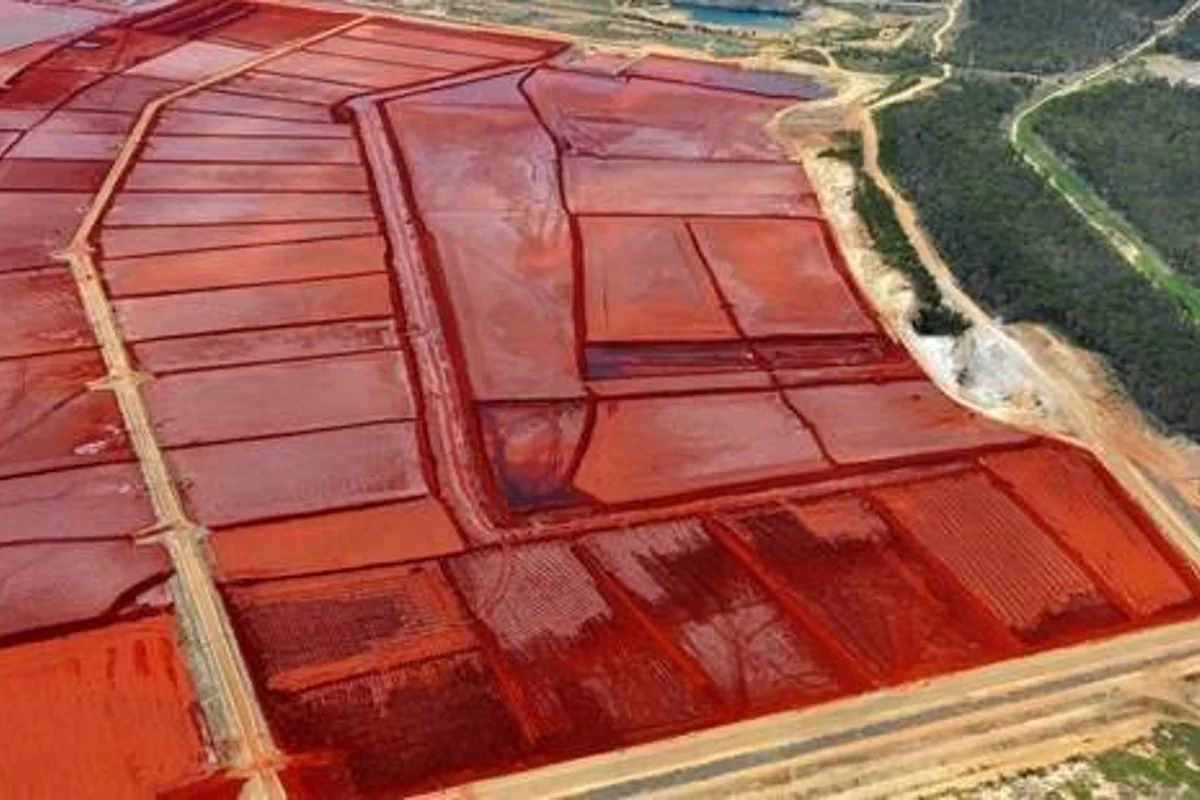
Alumtek Minerals (AM), an Australian-based company, has recently concluded extensive research and development focused on bauxite residue waste, also known as red mud. This endeavour has led to the creation of cutting-edge technology capable of extracting critical raw materials from this waste.
AM has successfully developed a supplementary cementitious material (SCM) that meets the rigorous Australian Standard AS3582.4 through a collaborative effort with Cement Australia. This innovative material holds great promise in significantly reducing CO2 emissions within the cement industry.
Alumtek Minerals specialises in processing mining tailings, particularly bauxite residue. Leveraging proprietary technical methods, it is advancing commercialisation efforts to extract rare earth elements and metals from bauxite residue, generating dual revenue streams.
AM has developed a groundbreaking technology to tackle the environmental and community hazards posed by red mud, an alkaline by-product of the alumina industry typically stored in tailing dams. This innovative approach facilitates the extraction of critical minerals like vanadium, titanium, gallium, aluminium hydroxide (essential for primary aluminium production), and high-purity iron oxide.
Through a fruitful partnership with Cement Australia, AM conducted further research to explore the application of this technology in the cement industry. This collaborative effort, supported by a Cooperative Research Centres Project (CRCP) grant, spanned two years and produced remarkable outcomes. AM's technical process effectively removed alkalinity and chloride impurities from red mud, leading to the creation of a unique supplementary cementitious material (SCM) product, demonstrating the potential of this technology in the cement industry.
AM's supplementary cementitious material (SCM) stands out not only as a feasible alternative to fly ash and slag but also as a notable environmental benefit. These advantages include:
Reduction in CO2 emissions
Utilising red mud, which requires less processing compared to clinker, significantly reduces the total CO2 emissions from the cement manufacturing process.
Conservation of resources
By incorporating a by-product from other industrial processes, the cement industry can lessen its demand for virgin raw materials, contributing to the conservation of natural resources.
The SCM diverts industrial waste from landfills by utilising red mud, mitigating the environmental impact of waste disposal.
The production of the SCM is more energy-efficient than traditional clinker production, resulting in energy savings and reduced greenhouse gas emissions.
Utilised as a substitute for a portion of clinker in cement production, this supplementary cementitious material (SCM) holds significant potential for substantial reductions in CO2 emissions. Moreover, its application in concrete green output has effectively addressed drawbacks such as delayed setting times and reduced initial strength.
With the closure of coal-fired power stations leading to a decline in fly ash availability and the decarbonisation of steelworks impacting ground granulated blast furnace slag (GGBFS) availability, the outlook for these traditional SCMs is diminishing. In response, a novel SCM has emerged as a sustainable local alternative, presenting Australian cement and concrete companies with an opportunity to cut CO2 emissions, decrease reliance on imports, and support local manufacturing.
Actively seeking joint venture partnerships, AM is dedicated to advancing this innovative SCM solution, underscoring its commitment to fostering sustainability within the cement industry.