Aluminium industry watch: Production trends, billion-dollar deals, supply chain moves
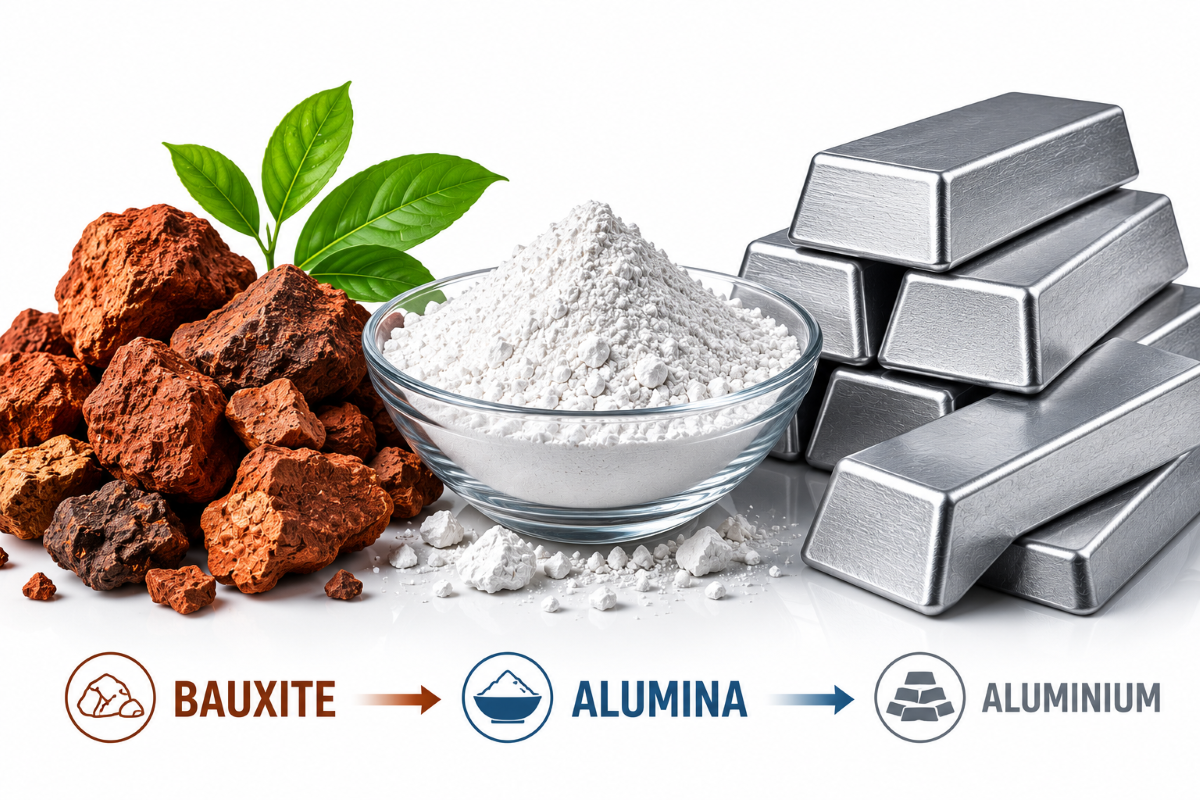
The image used in this article is generated with an AI tool and does not depict any real-time moment
The global aluminium value chain continued to witness a mix of shifting market dynamics, strategic investments, supply chain realignments, and policy developments over the past week. From evolving raw material trends and production updates to new mining projects, trade partnerships, corporate expansions, and smelter restarts, the industry remained focused on strengthening supply security while navigating changing market conditions and sustainability challenges.
Market trends and industry outlook
China’s bauxite inventories continued to increase last week despite higher prices and ongoing concerns over supply from Guinea. Stocks held at Chinese ports reached 32.4 million tonnes, up 24 per cent year-on-year and the highest level recorded since 2022. The price of Guinea’s 45 per cent grade bauxite rose by USD 1 per tonne week-on-week to USD 69.5 per tonne CFR China. Despite the price increase, the rise in inventories indicates that the Chinese market remains well supplied.
The Americas produced approximately 6.97 million tonnes of alumina in H1 2026, with South America accounting for the overwhelming majority of 86.4 per cent of the output. Brazil’s large-scale refining capacity helped the region maintain a relatively stable supply, while North America recorded an 8.35 per cent Y-o-Y decline amid operational adjustments, high energy costs and maintenance disruptions.
Indonesia's rapid expansion of its alumina refining and aluminium smelting sectors could trigger another wave of captive coal-fired power development, according to the Centre for Research on Energy and Clean Air (CREA). CREA warns that aggressive downstream expansion may outpace both bauxite reserves and electricity infrastructure, increasing environmental and economic risks. Though the country attracts billions in aluminium-related investments and builds an integrated value chain, CREA cautions that continued reliance on off-grid coal power could undermine Indonesia's climate goals.
Weekly Aluminium Upstream Recap by AL Circle Pvt Ltd
Mining, refining and project developments
Canyon Resources has announced the delivery of locomotives to its Cameroonian subsidiary, Camalco Cameroon SA. The milestone follows the company's decision to increase its stake in Camrail, Cameroon's national rail operator, from 9.1 per cent to 26.9 per cent. The newly delivered locomotives will undergo a six- to eight-week commissioning, testing and operator training programme before rail transport between the Inland Rail Facility and the Port of Douala begins. Preparing to begin mining and the first bauxite shipment in the fourth quarter (Q4) of 2026, Canyon appointed Rory McGoldrick as a Non-Executive Director, effective July 2, 2026.
Eurasian Resources Group (ERG) collaborated with German engineering partner BAUER to launch the world's first vertical bauxite mining project. Commissioned at open-pit No. 4 of the Vostochno-Ayatskoye mine, it is operated by the Krasno-Oktyabrskoye Bauxite Mining Unit (KBRU) of Aluminium of Kazakhstan JSC, an ERG subsidiary. Commercial drilling commenced in June 2026. “We are the first in the world to apply this technology in bauxite mining,” said Ivan Lobanov, Chief Mining Engineer at Aluminium of Kazakhstan JSC.
Andromeda Metals has started commissioning its high-purity alumina (HPA) pilot plant. The pilot plant will allow the company to test continuous production rather than batch processing and is to operate through Q3 2026, with plans for commercial-grade 4N HPA samples production in H2 2026. It marks another step towards commercial production using Great White kaolin and its proprietary processing technology.
The Irish High Court recently overturned expansion approval for Aughinish Alumina’s Bauxite Residue Disposal Area (BRDA) by 8 million cubic metres, halting plans to increase residue storage capacity. Meanwhile, the Irish government has pledged to ensure alumina produced at the refinery is not used for Russia's defence purposes, following calls from Ukrainian President Volodymyr Zelenskyy for EU sanctions.
Explore the relevance of red mud in the sustainable aluminium industry in A Comprehensive Analysis of Bauxite Residue (Red Mud): Sustainability, Resource Recovery and Strategic Recommendations
Trade, supply chains and strategic partnerships
Tajikistan and Azerbaijan are exploring a strategic aluminium partnership, including Tajikistan importing alumina from Azerbaijan while exporting aluminium to meet growing Azerbaijani demand. The proposal is related to the potential revival of Azerbaijan's Ganja Alumina Plant, which could provide a new feedstock source for Tajikistan's aluminium industry. The initiative also builds on the long-standing cooperation between TALCO and Azeraluminium.
Century Aluminum and Brimstone have signed a memorandum of understanding (MoU) aimed at creating what could become the first fully domestic US "mine-to-metal" aluminium supply chain. Under the proposed agreement, Brimstone will supply alumina to Century Aluminum from its planned production facility. This would enable the establishment of a US-based aluminium value chain replenished by domestic feedstock.
India's aluminium sector is poised for major expansion, as the Adani Group and Abu Dhabi-based International Holding Company (IHC) have signed an MoU to jointly develop an integrated aluminium complex in Odisha with an estimated investment of USD 11.5 billion. Both partners will hold equal 50 per cent stakes in the project, which is expected to become the largest foreign investment in India's metals sector. It will include an alumina refinery, an aluminium smelter, a captive power plant and a downstream aluminium manufacturing park.
Canada’s primary aluminium export to the world follows a significant year-on-year declining streak. The Q1 2026 shipment volume of 579,279.8 tonnes has declined19.7 per cent Y-o-Y from 721,400.36 tonnes shipped in Q1 2025. The shipment value dropped 14.07 per cent from USD 2.27 billion earned in Q1 2025 to USD 1.95 billion. Despite higher import tariffs, Canada remains the dominant supplier of primary aluminium to the US. Trade data show American buyers rely heavily on Canadian metal due to limited domestic smelting capacity. While imports from some countries have declined, the overall dependence on Canada remains largely intact.
The UK government has pledged GBP 50 million (USD 66 million) to strengthen its critical minerals sector, supporting projects that enhance supply chain resilience and reduce reliance on overseas sources. While the programme spans several strategic minerals, aluminium is expected to benefit through improved resource security and industrial capability. The investment aligns with the UK's broader ambitions to support clean energy, advanced manufacturing and national economic resilience through secure access to essential raw materials.
Unlock key insights from leading companies and experts across the aluminium ecosystem with our e-Magazine - Mine to Market: ALuminium Producers & Manufacturers 2026
Corporate expansion and investments
Alcoa Corporation announced plans to acquire South32's major alumina, bauxite and aluminium assets in a transaction with an upfront value of approximately USD 4.1 billion, significantly expanding its upstream aluminium portfolio. Alcoa will pay USD 3.1 billion in cash and issue approximately 17 million new Alcoa common shares, valued at around USD 1 billion, bringing the total upfront consideration to USD 4.1 billion. However, the announcement received a cautious reaction from investors as Alcoa shares (NYSE:AA) dropped 4.7 per cent in pre-market trading, finally closing at USD 47.48 per share.
Vedanta Aluminium continued to advance its standalone identity ahead of the proposed demerger, with its business strategy centred on expanding aluminium production and strengthening its presence in critical minerals. The company is also expected to attain large-cap status in the upcoming AMFI reclassification, potentially attracting greater institutional investment.
Smelter reopenings
The American Primary Aluminium Association (APAA) has welcomed the decision by Magnitude 7 Metals to reopen its primary aluminium smelter in Marston, Missouri, calling the move a significant positive development for domestic aluminium production and US manufacturing. The company is targeting to bring an extra 75,000 tonnes of annual primary aluminium production onstream by the end of 2026, reactivating potline one at the plant. The restart is anticipated to bring back some of the US primary aluminium capacity that has been lost in recent years.
Emirates Global Aluminium (EGA) has confirmed it is running ahead of its internal timeline in restoring production at the Al Taweelah aluminium complex, with 89 of the site’s 1,262 reduction cells already restarted following the March 28 attack that forced an emergency shutdown of the facility. Repairs to critical infrastructure at Al Taweelah have reportedly progressed rapidly since the incident, with basic utilities restored across the site and natural gas and electricity supply set to scale up in line with the restart programme.
Canyon Resources strengthens governance ahead of first bauxite shipment
Next articleAlcoa targets a larger aluminium, alumina and bauxite portfolio with the South32 acquisition
Grow with
AL Circle