AL Circle
  • About us
  • Team
  • Careers
  • Blog
  • Interviews
  • FAQs
  • News
  • Promote With Us
  • Reports
  • e-Magazine
  • Business Leads
  • Featured Companies
  • Press Release
  • Contact Us
  • Terms & Conditions
  • Testimonials
  • Privacy Policy
  • Refund & Cancellation Policy
Aluminium Ecosystem App
app storegoogleplay
Aluminium Ecosystem App
app storegoogleplay
asi
MEMBER

A proud
ASI member

AL Circle Private Limited | CIN: U72200WB2017PTC221175

Registered Office: Ecospace Business Park, Block 3A, Unit 401A, New Town, Rajarhat, Kolkata, WB 700160

Corporate Office: Ecospace Business Park, Block 3A, Unit 401A, New Town, Rajarhat, Kolkata, WB 700160

© 2026 AL Circle. All rights reserved. AL Circle is not responsible for content from external sources.

alcircle logo
asi
MEMBER

A proud
ASI member

  • About us
  • Team
  • Careers
  • Blog
  • Interviews
  • FAQs
  • News
  • Promote With Us
  • Reports
  • e-Magazine
  • Business Leads
  • Featured Companies
  • Press Release
  • Contact Us
  • Terms & Conditions
  • Testimonials
  • Privacy Policy
  • Refund & Cancellation Policy
AL Circle: Aluminium Ecosystem App
app storegoogleplay

AL Circle Private Limited | CIN: U72200WB2017PTC221175

Registered Office: Ecospace Business Park, Block 3A, Unit 401A, New Town, Rajarhat, Kolkata, WB 700160

Corporate Office: Ecospace Business Park, Block 3A, Unit 401A, New Town, Rajarhat, Kolkata, WB 700160

© 2026 AL Circle. All rights reserved. AL Circle is not responsible for content from external sources.

AL Circle Logo
AL Circle
AL NewsAL BizAL Learn
AL NewsAL BizAL LearnAbout us
SIGN IN
Or

By clicking sign in, join free or continue with Linkedin, Google, I agree to the T&C and the Privacy Policy

Profile

U
0%

—

View & Update Profile
DashboardSaved ContentBlogFAQs
NewsBauxiteAfrica's potential to process 25% of global bauxite production to aluminium with green power may save 335 MT of CO2
18 DECEMBER 2023AlCircle.com

Africa's potential to process 25% of global bauxite production to aluminium with green power may save 335 MT of CO2

Edited by : Rupankar Majumder
5 min read
Africa's potential to process 25% of global bauxite production to aluminium with green power may save 335 MT of CO2

Yemi Osinbajo, the former Vice President of Nigeria, the largest economy in Africa with a GDP of $477.38 billion, contends that by prioritising renewable energy resources, both Nigeria and the broader African continent could potentially slash energy expenses by 30 per cent and significantly decrease carbon emissions by 90 per cent.

Advertisement

Africa's potential to process 25% of global bauxite production to aluminium with green power may save 335 MT of CO2

Yemi Osinbajo, serving as the global advisor for the Global Energy Alliance for People and Planet (GEAPP), emphasised key points during his address, aptly titled, “Climate Positive Growth: Africa as a Climate Action Partner for the UAE And the World,” at the New York University (NYU), Abu Dhabi Campus, UAE.

The GEAPP stands as a global organisation dedicated to assisting the international community in achieving crucial climate objectives over the next decade. The former university lecturer, Osinbajo, outlined four prerequisites for achieving climate-positive growth and establishing a green industrial hub on a global scale. He emphasised the importance of African nations directing their economic growth and development strategies toward environmentally sustainable opportunities.

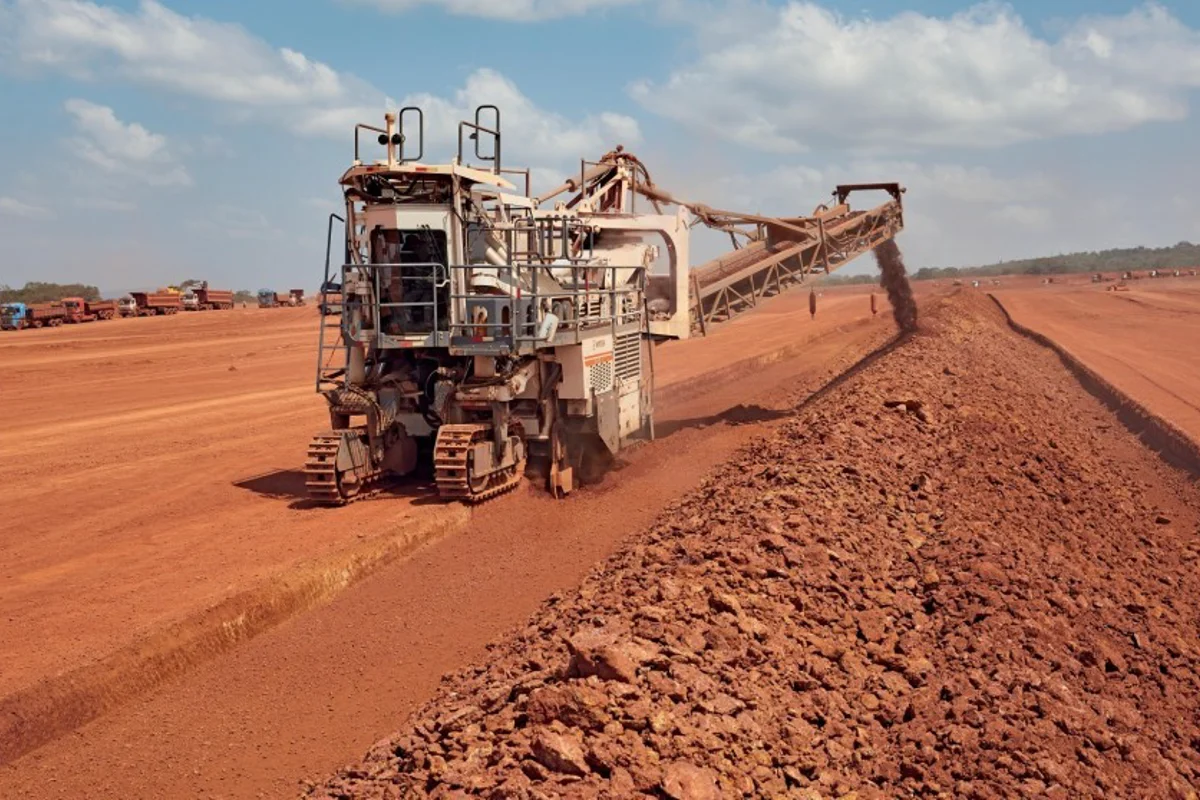
Bauxite processing in Africa with renewable energy promotes social development and cuts carbon emissions

He suggested that if Africa were to process the 25 per cent of global bauxite production it mines into aluminium using renewable energy before exporting, the continent could potentially save 335 million tonnes of CO2 annually. Additionally, this approach could lead to the creation of 280,000 jobs and generate an extra $37 billion in revenue for Africa.

Furthermore, by proactively harnessing its renewable energy resources, Africa has the potential to provide energy to its entire population, addressing the needs of the 600 million individuals currently without access and the 150 million with unreliable access. This strategy could be achieved at a 30 per cent lower cost and with over 90 per cent lower emissions per kilowatt-hour (KWH) compared to the current stated policy.

The former Vice-President said, “Africa’s renewable energy is abundant and has very low seasonality, or intermittency, which makes it possible to provide renewable base-load, to power continuous industrial production reliably. Strikingly, the lowest-cost set-up of solar, wind, and battery storage to get a reliable base load to the power industry is twice as expensive in Germany as in Nigeria.

Africa: A continent with enormous untapped renewable energy capacity

Osinbajo argued that African nations' economic growth and development strategies should prioritise green opportunities. He emphasised the importance of aligning policies and regulations to facilitate green industrialisation.

Highlighting that Africa possesses 60 per cent of the world's optimal solar resources, along with abundant wind, geothermal, and hydro potential, Osinbajo pointed out that the continent's untapped renewable energy capacity is 50 times greater than the projected global electricity demand for 2040.

Africa's potential to process 25% of global bauxite production to aluminium with green power may save 335 MT of CO2

Osinbajo said, “In other words, Africa is perhaps the only region today, ironically on account of its low development base, that can truly achieve green growth and economic growth without growing emissions, or even keeping emissions constant, but actively addressing the reduction of emissions and the concentration of greenhouse gases in the atmosphere.”

He advocated for a fair and just market entry to satisfy the worldwide need for environmentally friendly goods, services, and carbon credits. Given the existing rate of 50 cents to a few dollars per tonne in the voluntary carbon market, the former second-in-command of Nigeria asserted that producing high-quality credits under such conditions was practically unattainable.

Costs of developing a project

"Price needs to cover the costs of developing a project, generating and trading the credit, conducting proper monitoring and evaluation, paying taxes and generating viable returns for all stakeholders involved, from local communities to project developers to the providers of risk capital", he added.

Regarding financing, he mentioned that in order to secure the appropriate amount of capital, given the persistently high cost of capital in Africa, African governments end up paying five times the interest in the bond market compared to what they would pay if the multilateral development banks were adequately capitalised.

"The cost of borrowing for African countries is probably the highest of any region. Those seeking investments for private projects face high costs of capital and unhelpfully short tenures, driven by both real and perceived risk factors," he illustrated.

Addressing this issue demands a comprehensive set of actions, encompassing fulfilling previous commitments, the effective implementation of the Loss and Damage Fund established during COP27 last year, and the dedication to providing $100 billion annually in climate finance for developing nations.

Additionally, he emphasised the need to revamp the international financial system, focusing on directing a greater portion of resources to emerging and frontier economies. The goal is to channel more investments towards initiatives aligned with climate objectives.

Technology and financing can change Africa’s mining economy

The future of Africa's mining economy holds tremendous promise, poised for transformation through the synergistic impact of advanced technology and innovative financing models. These innovations optimise production and contribute to environmental conservation and worker safety. Concurrently, new financing mechanisms, including blockchain-based solutions and sustainable investment frameworks, are reshaping the funding landscape for African mining projects. These financial innovations facilitate transparent transactions, mitigate risks, and attract responsible investments, fostering a more resilient and equitable mining sector. The convergence of cutting-edge technology and progressive financing approaches empowers African nations to unlock the full potential of their mineral resources and pave the way for a sustainable and socially responsible mining future on the continent.

Tagged with:Bauxite projectRenewable energyMiningAluminium

Grow with
AL Circle

KNOW MORE
Previous article

First Half 2023 marks 168% spike in USA’s crude bauxite exports with negative growth in third quarter; Imports keep dwindling

Next article

Mytilineos becomes the largest bauxite producer in the EU

Grow with
AL Circle

KNOW MORE

Responses

Related News

Bauxite

Metro Mining builds bauxite momentum with record output, lower costs and broader sales

Bauxite

Australian bauxite forecast at $39/t vs Guinea at $34-46/t: How ore quality, freight and oversupply are shaping prices

Bauxite

Why aluminium scrap grade matters when buying secondary aluminium in India

Bauxite

Rio Tinto's evolving commodity mix reshapes its investment story

Bauxite

Mysteel: Seaborne bauxite prices edge higher, but near-term gains remain capped

Bauxite

Ghana’s 920Mt of bauxite reserves catch global investors’ attention amid aluminium push

Bauxite

Canyon Resources fights back against A2MP's low-ball takeover bid

Bauxite

Indonesia seizes $19.1m in assets in bauxite mining corruption case

Bauxite

Global bauxite flows climb 3% in July as Guinea shipments surge ahead of potential export curbs

Bauxite

Wells Fargo raises Alcoa price target to $68 as Middle East energy risks ease

E-magazines

VIEW ALL
ALuminium LeaderSpeak 2024

ALuminium LeaderSpeak 2024

APRIL 2024, EDITION NO.23

ALuminium Casting Industry: Creating Opportunities for Future

ALuminium Casting Industry: Creating Opportunities for Future

FEB 2024, EDITION NO.22

ALuminium Middle East Focus 2024

ALuminium Middle East Focus 2024

JAN 2024, EDITION NO.21

Digital Transformation of the ALuminium Industry: Drivers and Changemakers of 2023

Digital Transformation of the ALuminium Industry: Drivers and Changemakers of 2023

DEC 2023, EDITION NO.20

Digital Transformation in the ALuminium Industry: Drivers and Changemakers of 2024

Digital Transformation in the ALuminium Industry: Drivers and Changemakers of 2024

JAN 2025, EDITION 29

ALuminium Industry: Focus Europe

ALuminium Industry: Focus Europe

NOV 2024, EDITION NO.28

The Modern-day world of ALuminium Flat Rolled Products

The Modern-day world of ALuminium Flat Rolled Products

OCT 2024, EDITION NO. 27

ALuminium Industry: Focus Asia

ALuminium Industry: Focus Asia

SEP 2024, EDITION NO. 26

Advanced Industrial Technologies in the ALuminium Industry

Advanced Industrial Technologies in the ALuminium Industry

JULY 2024, EDITION NO. 25

ALuminium Extrusions: Shaping the Future

ALuminium Extrusions: Shaping the Future

JUNE 2024, EDITION NO. 24

ALuminium LeaderSpeak 2024

ALuminium LeaderSpeak 2024

APRIL 2024, EDITION NO.23

ALuminium Casting Industry: Creating Opportunities for Future

ALuminium Casting Industry: Creating Opportunities for Future

FEB 2024, EDITION NO.22

ALuminium Middle East Focus 2024

ALuminium Middle East Focus 2024

JAN 2024, EDITION NO.21

Digital Transformation of the ALuminium Industry: Drivers and Changemakers of 2023

Digital Transformation of the ALuminium Industry: Drivers and Changemakers of 2023

DEC 2023, EDITION NO.20

Digital Transformation in the ALuminium Industry: Drivers and Changemakers of 2024

Digital Transformation in the ALuminium Industry: Drivers and Changemakers of 2024

JAN 2025, EDITION 29

ALuminium Industry: Focus Europe

ALuminium Industry: Focus Europe

NOV 2024, EDITION NO.28

The Modern-day world of ALuminium Flat Rolled Products

The Modern-day world of ALuminium Flat Rolled Products

OCT 2024, EDITION NO. 27

ALuminium Industry: Focus Asia

ALuminium Industry: Focus Asia

SEP 2024, EDITION NO. 26

Reports

VIEW ALL
Global Aluminium Casting Market Report
ACCESS
Global Bauxite & Alumina Market Forecast to 2036
ACCESS
Global Aluminium Industry Outlook 2026
ACCESS
Global Aluminium Casting Market Report
ACCESS
Global Bauxite & Alumina Market Forecast to 2036
ACCESS
Global Aluminium Industry Outlook 2026
ACCESS
Global Aluminium Casting Market Report
ACCESS
Global Bauxite & Alumina Market Forecast to 2036
ACCESS
Global Aluminium Industry Outlook 2026
ACCESS

Interviews

→
Daniel Vaknine

Daniel Vaknine

European aluminium EPR fees vary by country, PRO, packaging and recyclability

Secondary Aluminum Coalition for America

SACA bets on secondary aluminium to close US supply gap faster and at lower cost

Secondary Aluminum Coalition for America
Daniel Vaknine

Daniel Vaknine

European aluminium EPR fees vary by country, PRO, packaging and recyclability

Secondary Aluminum Coalition for America

SACA bets on secondary aluminium to close US supply gap faster and at lower cost

Secondary Aluminum Coalition for America

Diego Daluisio

China’s aluminium extrusion industry is going through a real transition, and I do not think the West has fully absorbed what it means

Diego Daluisio

Business Leads

VIEW ON AL BIZ
Aluminium Extrusion 6063 ScrapSELLING LEAD

Aluminium Extrusion 6063 Scrap

Aluminium Taint Tabor ScrapSELLING LEAD

Aluminium Taint Tabor Scrap

Aluminium UBC ScrapSELLING LEAD

Aluminium UBC Scrap

Aluminium Solar Panel FrameSELLING LEAD

Aluminium Solar Panel Frame

Diesel OilSELLING LEAD

Diesel Oil

Aluminium extrusions

Turn marketplace visibility into more relevant buyer enquiries.

Boost Your Listing

Business Cards

FEATURED

VIEW ALL