2026 Middle East aluminium outlook: 5% of global supply, USD 7 million insurance and the Hormuz effect

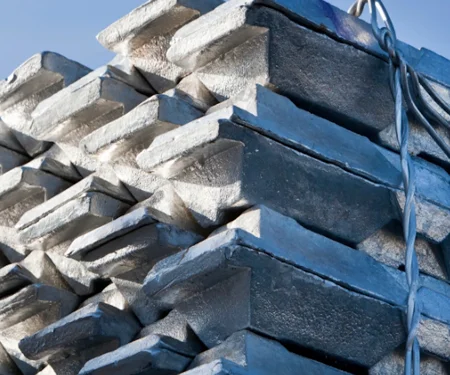
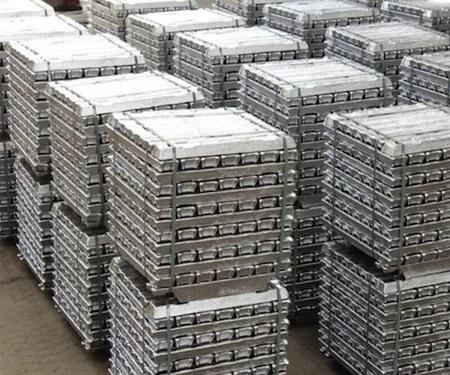
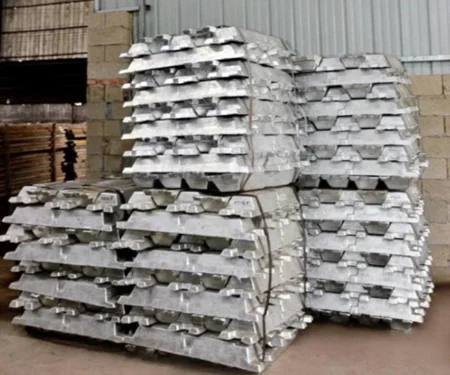
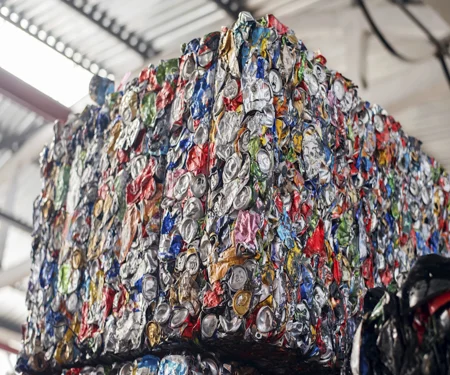
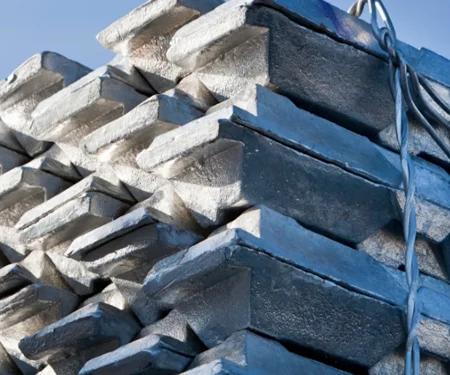
The images used in this article is generated with an AI tool and does not depict any real-time moment
On March 28, the US-Iran tension took a new turn as Iranian missiles struck the Khalifa Economic Zone in Abu Dhabi, damaging the alumina refinery that feeds Emirates Global Aluminium’s Al Taweelah smelter, the largest aluminium production complex in the Gulf. Four hundred kilometres south-west, Aluminium Bahrain declared force majeure and shut roughly a fifth of its capacity, citing the same conflict.
Neither company builds weapons, ships crude, or has any stake in the war between the United States, Israel and Iran. For several weeks this spring, two of the world’s most competitive aluminium producers became collateral damage in someone else's fight.
That is the detail worth sitting with, because it reframes the question the industry has been asking since renewed US-Iran hostilities put the Strait of Hormuz back on every trading desk's screen in July. The story was never really about whether Hormuz closes.
Tankers, oil majors and the US Navy own that question. The question for aluminium is narrower and more uncomfortable: has geopolitical instability stopped being an occasional shock and become a permanent input cost, sitting alongside electricity, alumina and carbon pricing as a line item that procurement teams now budget for by default?
The early evidence says yes. Global primary aluminium output reached roughly 73.8 million tonnes in 2025, according to International Aluminium Institute (IAI) data, with the five GCC smelters contributing around 6.16 million tonnes, or roughly 8 per cent of world supply.
That share matters disproportionately because, in AL Circle’s earlier reporting, more than 80 per cent of Gulf metal is exported. It is a region built to sell into global markets, which is precisely why the March strikes rippled so far beyond the smelters themselves. EGA's Al Taweelah refinery, which produced 2.4 million tonnes of alumina in 2025 and met 46 per cent of the company's feedstock needs, went dark for more than three months before restarting in July.
EGA does not expect full capacity back until year-end. Simultaneously, as Alba’s outage removed close to a fifth of Bahrain’s output, analysts covering the region have pencilled in industry-wide losses of 3 to 3.5 million tonnes through 2026, equivalent to roughly 5 per cent of global primary supply, at a time when LME warehouse stocks had already fallen by close to a third since January, dropping below the psychologically important 300,000-tonne threshold by mid-year and helping push benchmark prices to four-year highs.
Explore: The most comprehensive and forward-looking industry-focused report – Global Bauxite & Alumina Market Forecast to 2036: Supply–Demand, Trade Flows & Price Outlook
A pattern, not an anomaly
None of this happened in isolation. What makes the 2026 US-Iran tension different from a standard supply shock is that buyers have now lived through four in five years, each teaching the same lesson through a different mechanism. The 2020-21 pandemic showed how a demand-side scramble for containers could strand metal at ports for months.
The Red Sea attacks that began in late 2023 forced roughly 15 per cent of global maritime trade, and close to 30 per cent of containerised trade, away from the Suez Canal and around the Cape of Good Hope, adding ten to fourteen days of transit time and, at the crisis’ peak, more than tripling Asia-Europe container rates. Western sanctions on Russian metal, tightened in April 2024 when the US and UK barred the LME and CME from accepting new Russian-origin aluminium, forced Rusal, still responsible for roughly 5.5 per cent of global supply, to reroute the bulk of its exports toward China and swing to a USD 455 million net loss in 2025.
And Section 232 tariffs, doubled to 50 per cent on US aluminium imports in mid-2025 and extended to a wider set of derivative products in April 2026, have permanently split the market between a US price and everyone else’s price.
Each episode was framed at the time as a one-off. Together, they have step by step revised how the aluminium industry’s various procurement teams think about cost. The US Midwest premium, the surcharge American buyers pay over the LME benchmark, broke USD 2,000 a tonne for the first time in January 2026 and has since traded above USD 2,400, meaning the all-in delivered cost to a US manufacturer now regularly clears USD 5,500 a tonne even when the LME price itself is comparatively calm.
Rotterdam’s duty-paid premium and Japan's CIF premium have moved in the same direction, the latter rising 127 per cent quarter-on-quarter in early 2026. When four separate premiums across four separate continents all trend upward through unrelated events, that is buyers, collectively, pricing origin risk, freight risk and financing cost into the metal itself, well before the three-month LME contract ever reflects it.

Freight, insurance and financing become the real story
The clearest evidence of this repricing sits in shipping. War-risk insurance for vessels transiting the Gulf stood at roughly 0.25 per cent of hull value before February's escalation. It quadrupled within three weeks of the first strikes, climbed toward 3 per cent by early July as fighting resumed, and by mid-month was being quoted in a 3-10 per cent range, according to industry sources cited by Reuters and The National.
On a USD 100 million vessel, that is the difference between a USD 250,000 premium and one exceeding USD 7 million for a single transit. Marine underwriters at Lloyd's have said coverage remains technically available; the practical effect has been the same regardless, with traceable large-vessel crossings on the main safe-transit corridor grinding close to a halt in July. None of this shows up on an aluminium invoice as a line item marked “Hormuz”. It shows up as a wider bid-offer spread, a longer lead time, and a trader who suddenly wants payment terms renegotiated.
This is why the more interesting conversation inside procurement departments might have moved away from the LME screen entirely. Buyers are increasingly underwriting origin risk (is this smelter in a conflict-adjacent jurisdiction), freight risk (which strait or canal does this cargo transit), insurance cost (has war-risk cover on this route repriced), financing cost (does this contract require a letter of credit from a bank willing to touch Gulf-linked trade), and inventory cost (how much safety stock justifies itself against a lead-time shock).
From lowest-cost to resilient-cost sourcing
The natural consequence to the middle-east conflict is a quiet retreat from pure least-cost sourcing. It is not that buyers have stopped caring about price; margins in packaging, automotive and construction remain thin enough that nobody can afford to. It is that "cheapest" has been redefined to include the probability of non-delivery.
Diversified supplier panels, longer-standing counterparty relationships and regionally balanced logistics now carry a value that shows up not on the invoice but in the insurance and hedging budget behind it. That shift did not start in 2026. It started with Red Sea rerouting in 2023, hardened through the Russia sanctions of 2024, and has simply been reinforced, not invented, by this year's Hormuz disruption.
The operational cost of that shift is real and, until now, under-discussed. Dual and triple sourcing arrangements, additional warehousing near end markets, multiple qualified shipping routes, real-time supply-chain visibility software, higher insurance limits, and expanded freight hedging books all cost money that a lean, single-source, just-in-time model never had to spend.
Just-in-time production, the dominant paradigm in aluminium-intensive manufacturing for three decades, is giving way to something closer to just-in-case, i.e., a deliberate willingness to hold more inventory and pay more for optionality, in exchange for a supply chain that survives a chokepoint closure without stopping a production line. That trade-off is now a standing cost of doing business, not a one-time adjustment.
A concentration question, not a competitiveness one
None of this makes Gulf aluminium less competitive. EGA and Alba remain among the lowest-cost, most efficient integrated producers in the world, and their alumina and hot-metal restart timelines this year, months rather than years, are themselves evidence of operational resilience. What has changed is a question procurement teams are now obliged to ask that they did not ask five years ago: how much of our supply is concentrated behind a single strait?
A buyer sourcing 40 per cent of annual volume from Gulf smelters is not making a bad decision by continuing to do so; they are making a decision that now requires an explicit answer to a concentration question their board, insurer or auditor is increasingly likely to raise. That scrutiny is itself a cost, even when the answer is "we are comfortable with this exposure."
This concentration lens is starting to shape where capital goes next. Investment decisions that once weighted almost entirely toward the lowest all-in production cost are now visibly factoring in jurisdictional stability and route diversification alongside it.
EGA's USD 4 billion primary smelter under development in Oklahoma, alongside its existing recycling operations in Minnesota, is one example of a Gulf producer diversifying geographically rather than simply expanding at home.
Rio Tinto's exploratory low-carbon smelter project in India and Colombia's renewable-powered GALTCO development point the same way: new primary capacity increasingly being sited for supply-chain diversification and downstream proximity, not purely for the cheapest megawatt-hour. None of this displaces the Gulf's role as a cost-efficient producer.
For more in-depth insights and exclusive analysis on the global aluminium industry, explore the e-Magazine - Mine to Market: ALuminium Producers & Manufacturers 2026
How traders and insurers are already adapting
The insurance market is arguably the least-covered part of this story and the one doing the most quiet reshaping. War-risk marine cover, trade finance terms tied to vessel routing, and the vessel charter rates that follow both can move aluminium trade flows without a single additional tonne of smelting capacity ever going offline.
When 90 per cent of the ocean-going tonnage covered by the International Group of P&I Clubs faces cancellation-and-repricing clauses on short notice, as it did in March, the effective cost of moving metal through a contested strait rises well before any cargo is actually damaged.
The green aluminium paradox
Layered on top of all this is a genuine tension the industry has mostly avoided discussing openly. Demand for low-carbon aluminium, metal smelted using renewable or low-emission power, has grown into roughly a 20-million-tonne global market as of 2025, and the EU's Carbon Border Adjustment Mechanism is phasing out free emissions allowances for the sector through 2026, pushing buyers toward documented, traceable, low-carbon supply.
Gulf producers, running captive gas and increasingly renewables-linked power, have positioned themselves as credible suppliers into that demand. But a buyer chasing a lower Scope 3 footprint by sourcing more heavily from the Gulf is, by definition, increasing exposure to the same regional concentration risk this year's disruption just demonstrated.
Sustainability strategy and supply-chain resilience strategy, which for years pointed in roughly the same direction, are starting to pull against each other. Neither corporate procurement teams nor their ESG counterparts have fully reconciled that yet, and it is likely to be one of the more consequential sourcing debates of the next two years.

The outlook: resilience becomes the next competitive advantage
The Strait of Hormuz is unlikely to remain in a state of continuous disruption, but that is increasingly beside the point. Even if regional tensions ease, few procurement teams, insurers or financiers are expected to revert to pre-2023 assumptions about supply-chain risk. Instead, the industry is entering a period where geopolitical resilience is becoming as important as production efficiency.
Gulf producers are likely to remain indispensable to global aluminium supply, thanks to their low-cost operations, expanding renewable energy integration and growing portfolio of low-carbon metal. Yet they will also face greater scrutiny from customers seeking to balance carbon objectives with concentration risk. Across the wider market, investment is expected to accelerate in geographically diversified smelting, recycling capacity, strategic inventories and digital supply-chain visibility, while freight, insurance and financing premiums remain embedded in commercial negotiations.
For the Middle East, the challenge will be to reinforce its reputation as a reliable supplier despite regional instability. For the global aluminium industry, the lesson is broader: the next competitive edge will no longer belong solely to the producer with the lowest cost curve, but to the supply chain that can deliver metal consistently through an increasingly fragmented geopolitical landscape.
LME aluminium chart on the decline: Cash dips below $3,200/t as stocks lose 0.54%
Next articleLME aluminium price chart declines further: Cash at $3,175/t; stocks dip nearly 1%
Grow with
AL Circle