您想继续阅读英文文章还
是切换到中文?
是切换到中文?

THINK ALUMINIUM THINK AL CIRCLE

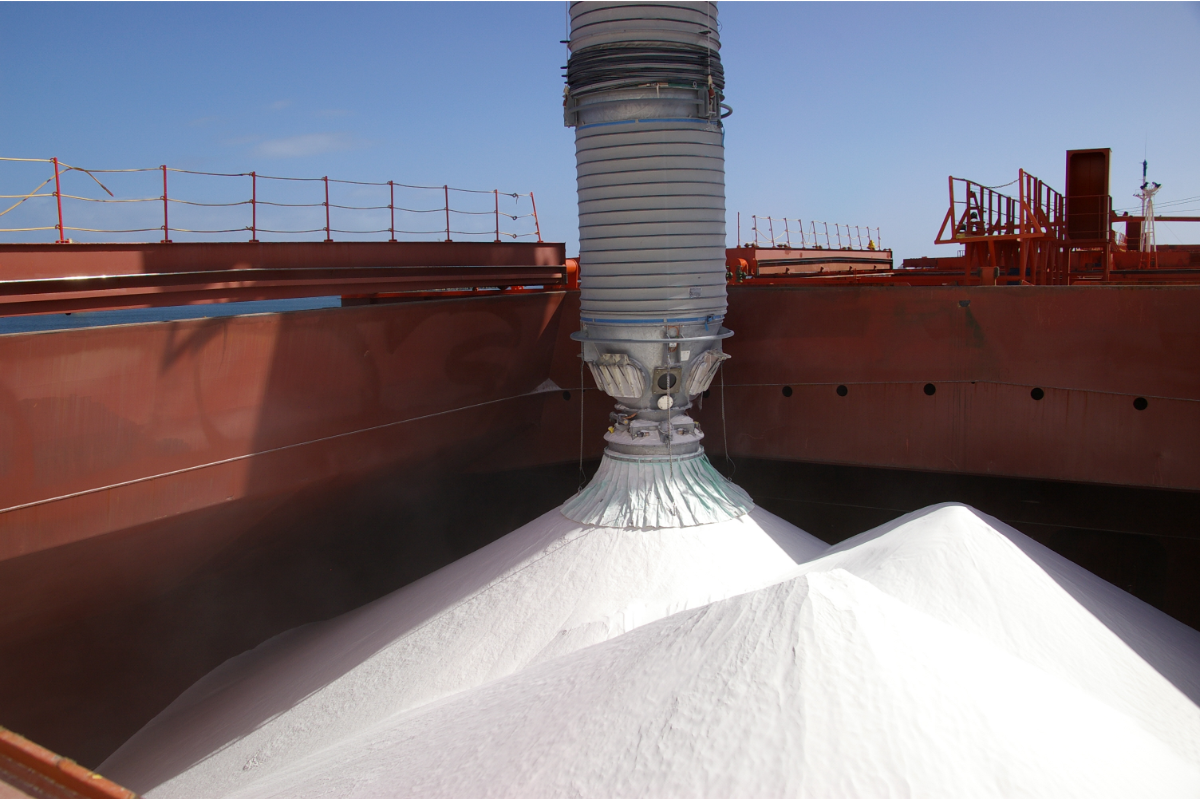
Stock image for referential purposes only
Last week, domestic spot alumina prices moved steadily with a weak bias, and market trading sentiment was muted. As of July 24, the weighted national average spot price for smelter-grade alumina with a minimum purity of 98.6 per cent stood at RMB 2,744 per tonne, dropped RMB 6 per tonne from a week earlier, according to Mysteel's price assessment.
{alcircleadd}On the supply side, China's domestic alumina operating capacity stands at approximately 95.9 million tonnes per year. Recently, an alumina refinery in Guizhou commenced scheduled maintenance on one of its calciners, expected to last around 10 days and affecting 0.8 million tonnes per year of capacity. Meanwhile, another refinery in Guangxi has concluded its maintenance and will shortly resume normal operations, restoring about 2.5 million tonnes per year of capacity. Additionally, a separate plant in Guangxi plans to begin maintenance on one calciner starting August 8th next month; this is estimated to take roughly 15 days and will impact approximately 0.8 million tonnes per year of capacity.
To know the futuristic market and value proposition of red mud, explore the report A Comprehensive Analysis of Bauxite Residue (Red Mud): Sustainability, Resource Recovery and Strategic Recommendations
As market supply continues to be released, both spot and futures prices have come under further downward pressure, with available spot volume gradually becoming more abundant. Furthermore, driven by the current price spread between northern and southern regions, cross-regional shipments continue to rise. This has strengthened regional price linkages and created a mutually restrictive effect.
As of last Thursday (July 31, 2026), the national alumina capacity utilisation rate was 79.77 per cent on average, down 0.35 percentage points from the previous week. According to Mysteel's research, recent capacity fluctuations were primarily due to routine maintenance, which limits short-term output but has minimal impact on the medium-to-long term. Separately, the resumption progress at a large alumina plant in Guangxi is proceeding relatively smoothly, and it is expected to reach its full production capacity of around 4 million tonnes per year in August.
Explore buying & selling leads of alumina and trade opportunities on AL Biz
Last week, domestic traders' inventory of alumina stood at 6.4 million tonnes, increasing by 26,000 tonnes week-on-week. The surge in cross-regional transportation volumes has facilitated the gradual shift of raw material inventories at downstream aluminium smelters toward ports and goods in transit. Concurrently, widening regional price spreads have exacerbated spot sales pressure in certain markets, leading to a slight accumulation of on-site inventories at alumina refineries.
According to Mysteel statistics, domestic aluminium enterprises consumed approximately 1.67 million tonnes of alumina last week, showing little change from the prior week. Currently, domestic aluminium capacity remains largely stable, operating at around 45.4 million tonnes per year. Some smelters are restocking based on immediate needs, and their willingness to suppress procurement prices in the short term persists.
Unlock key insights from leading companies and experts across the aluminium ecosystem with our e-Magazine - Mine to Market: ALuminium Producers & Manufacturers 2026
Recently, cross-regional cargo flows across the industry have increased significantly. Mounting sales pressure is driving spot prices to continue their mild downward trend. Moreover, as some new and resumed production capacities in the south gradually stabilise, regional supply capabilities have improved. Consequently, inventory pressure at individual plants has also risen. Additionally, some traders remain pessimistic about the market outlook and are still willing to sell at discounts.
In the short term, there are no signs of large-scale production cuts or maintenance in either the north or the south. Given that a weak fundamental pattern is unlikely to see significant improvement, spot prices are expected to maintain a soft trend. The mainstream trading range is projected to be RMB 2,600-2,750 per tonne.
Note: This news is published under a content and exchange agreement with Mysteel
Responses


A proud
ASI member
AL Circle Private Limited | CIN: U72200WB2017PTC221175
Registered Office: Ecospace Business Park, Block 3A, Unit 401A, New Town, Rajarhat, Kolkata, WB 700160
Corporate Office: Ecospace Business Park, Block 3A, Unit 401A, New Town, Rajarhat, Kolkata, WB 700160
© 2026 AL Circle. All rights reserved. AL Circle is not responsible for content from external sources.