您想继续阅读英文文章还
是切换到中文?
是切换到中文?

THINK ALUMINIUM THINK AL CIRCLE

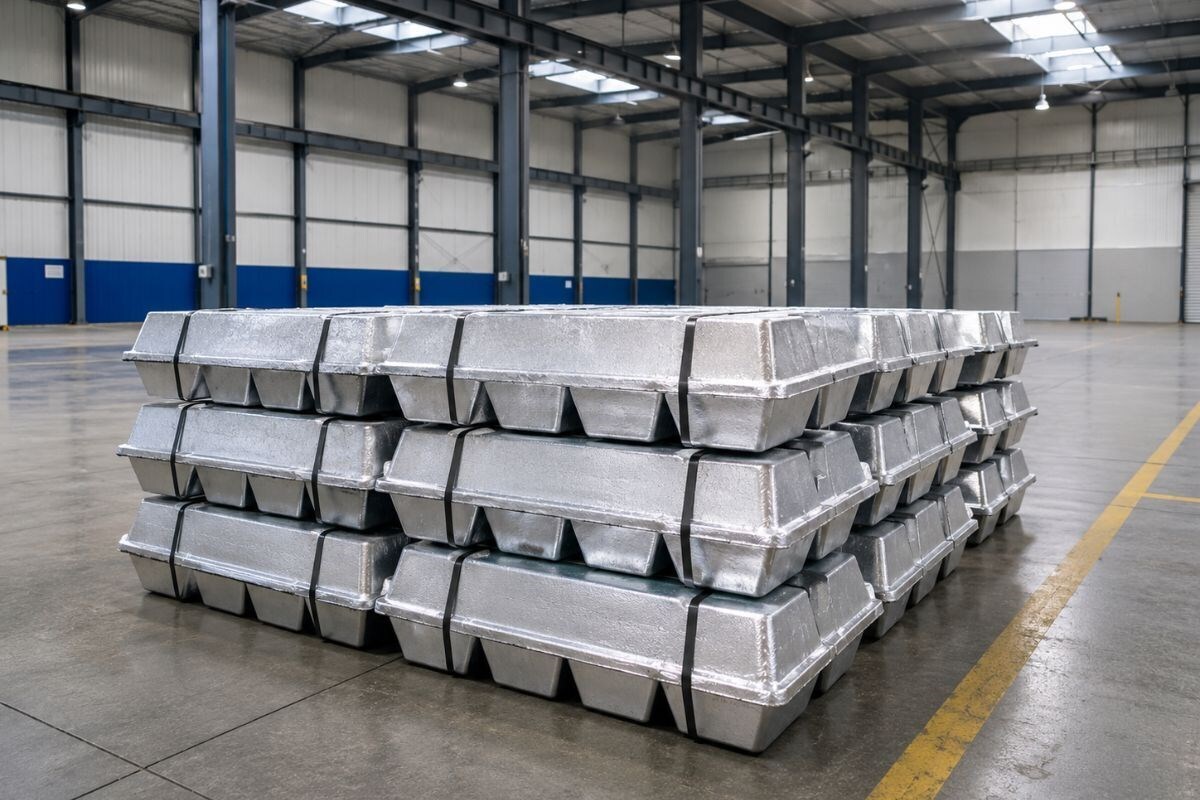
The image used in this article is generated with an AI tool and does not depict any real-time moment
SHFE aluminium closed at RMB 23,955 per tonne in the daytime session, down 0.27 per cent, with the price above the MA5 (23,951.01) but below the MA10 (24,016.00), MA30 (24,320.67), and MA60 (24,546.75), remaining below all key moving averages overall, while the bearish alignment of moving averages from top to bottom persisted. On the MACD indicator, DIF = -157.2476, DEA = -148.8593, the bearish crossover moved downward, and the negative histogram value was -16.7766. Although bearish momentum slightly eased, the bearish dominance remained unchanged.
{alcircleadd}Trading volume stayed low at 38,029 lots, reflecting sluggish market participation. The recommended core trading range for SHFE aluminium is RMB 23,300-24,000 per tonne. LME aluminium closed at USD 3,360 per tonne, falling below the MA60 (3,542.64) and remaining below all moving averages (MA5 = 3,387.10, MA10 = 3,427.10, MA30 = 3,568.60).
The moving average system has turned bearish, and the medium-term trend weakened. On the MACD indicator, DIF = -60.1064, DEA = -34.3315, the bearish crossover continued, and the negative histogram widened to -51.5498, with bearish momentum strengthening further. The recommended core trading range for LME aluminium is USD 3,250-3,450 per tonne.
Macro front: The first round of negotiations following the signing of a memorandum of understanding between Iran and the US achieved five key points, making good progress on topics such as ensuring the opening of the Strait of Hormuz, preparatory work for launching final agreement talks, ending the war in Lebanon, allowing Iranian oil sales, and unfreezing Iranian assets. US Vice President Vance stated that the US-Iran talks in Switzerland have laid the foundation for reaching a final agreement.
The US Treasury issued a general license temporarily easing sanctions on Iranian oil for 60 days. US Vice President Vance also said that approximately 15 million barrels of oil were seen being shipped from the Strait of Hormuz, and mechanisms will be established to ensure the strait remains open. The head of the Iranian negotiating delegation and Speaker of the Iranian Parliament, Kalibaf, stated that management of the Strait of Hormuz will never return to the pre-war state.
On the premise of complying with international law, the Strait of Hormuz will be managed by Iran under mechanisms established by Iran. ECB President Lagarde said that despite the impact of the Middle East conflict, the ECB does not currently need to adopt stronger countermeasures, as inflation is expected to return to target over the medium term. Meanwhile, several officials from the bank warned that inflationary pressures are spreading to broader economic sectors.
Fundamentals: Outside China, expectations of the resumption of navigation through the Strait of Hormuz are reshaping the supply dynamics of the global aluminium market. The opening of the Strait of Hormuz will bring some improvement to the physical shipment of aluminium products from the Middle East in the short term, but the substantial boost to the recovery of local smelting capacity will be limited, while high aluminium prices are also prompting the early release of new capacity outside China. In China, the operating rate of downstream aluminium processing industry leaders recorded 63.4 per cent last week, down 0.2 percentage points W-o-W.
Aluminium semis exports continued to show strong momentum, but not enough to offset the impact of the off-season, weakening domestic demand, and adverse effects from the raw material cost side. Regarding domestic aluminium ingot inventory, the destocking pace continued. On Monday this week, China's social inventory of aluminium ingots stood at 1.242 million tonnes, down 13,000 tonnes from last Thursday.
Primary aluminium market: In early trading, the SHFE aluminium 2606 contract fluctuated downward, with the overall trading centre after opening higher than that during the same period of the previous trading day. Affected by higher aluminium prices, downstream mostly stood on the sidelines yesterday, and buying sentiment declined. Market supply was ample, and seller quotes and transaction prices continued to move lower.
The mainstream spot transaction price was at a discount of RMB 40-50 per tonne against the SHFE July contract. Yesterday, the shipment sentiment index in east China was 2.95, up 0.04 from the previous trading day; the purchasing sentiment index was 2.93, down 0.27 from the previous trading day.
On the first day after the holiday, aluminium prices rebounded. In the central China market, downstream processing enterprises had low buying sentiment, while suppliers were active in selling with little willingness to hold prices firm. The market traded in a subdued manner, mostly for trader stockpiling.
The actual transaction price range in the central China market was around a discount of RMB 90-110 per tonne against the SHFE July contract. Yesterday, the shipment sentiment index in central China was 2.94, up 0.01 from the previous trading day; the purchasing sentiment index was 2.22, down 0.01 from the previous trading day.
Aluminium scrap: Yesterday, the SMM A00 price was flat from the previous trading day at RMB 23,870 per tonne, and the aluminium scrap market remained largely stable. Regarding the price difference between A00 aluminium and aluminium scrap, on June 22, the price difference between A00 aluminium and mixed aluminium extrusion scrap free of paint in Foshan stood at RMB 2,337 per tonne, and the price difference between A00 aluminium and shredded aluminium tense scrap was RMB 1,686 per tonne, narrowing by RMB 251 per tonne and RMB 364 per tonne respectively from last Thursday.
Corporate tax costs increased by over 2 per cent Y-o-Y. The continuous narrowing of the price spread reflects relatively strong underlying support for aluminium scrap.
Supply side, oversight of the "reverse invoicing" policy continued to tighten. In some provinces, the cancellation of tax rebates and intensified tax audits caused the cost of invoice-included raw materials to climb.
The price spread between Chinese and overseas markets remained inverted, and cheap, high-quality import sources were scarce, further weakening their supplement to the domestic market. Demand side, the off-season effect deepened. Operating rates at downstream scrap utilisation enterprises hovered at low levels, end-user orders followed weakly, and enterprises maintained a strategy of purchasing as needed and keeping low inventory, with cautious purchasing sentiment.
The aluminium scrap market is expected to continue hovering at high levels with a weak bias. The tightness in compliant, invoice-included supply will persist. Coupled with an expansion of production cuts and shutdowns, expectations of shrinking aluminium scrap supply are strengthening, providing a bottom support for prices. Demand side, orders for downstream secondary cast aluminium alloy remain sluggish, while purchasing support from wrought aluminium alloy is also weakening. End-use consumption is unlikely to see substantial improvement. The weak supply-demand pattern in the aluminium scrap market is hard to reverse in the short term.
Secondary aluminium alloy: Spot market: Yesterday, ADC12 market quotes overall remained stable, with SMM ADC12 unchanged from the previous trading day at RMB 24,100 per tonne. Yesterday, spot aluminium prices and aluminium alloy futures saw limited fluctuations, having a relatively small impact on market sentiment, while the cost side has yet to provide new drivers.
Meanwhile, supply-demand fundamentals changed little. Downstream enterprises continued to purchase mainly for restocking immediate needs, and market transactions remained relatively stable. In the short term, ADC12 prices are expected to mainly move sideways. Attention should later be paid to the impact of aluminium price trends, aluminium scrap supply, and downstream order recovery on the market.
Aluminium market summary: After Iran and the US signed a memorandum of understanding, the first round of negotiations reached an agreement, coupled with expectations of new project startups outside China, LME aluminium remained under pressure in the short term. Domestically, the destocking pace continued, but absolute inventories remained in a relatively high range.
SHFE aluminium, in the absence of new macro positives, followed LME aluminium lower under pressure, but the decline was relatively contained supported by China's destocking. Going forward, continuous attention is needed on: the progress of actual production resumptions at Middle Eastern aluminium enterprises after the full resumption of navigation in the Strait of Hormuz; the US dollar's movement and its transmission to commodities after hawkish signals from the US Fed materialise; and whether domestic inventory destocking continues to accelerate. Aluminium prices are expected to be in the doldrums in the short term.

Responses