您想继续阅读英文文章还
是切换到中文?
是切换到中文?

THINK ALUMINIUM THINK AL CIRCLE

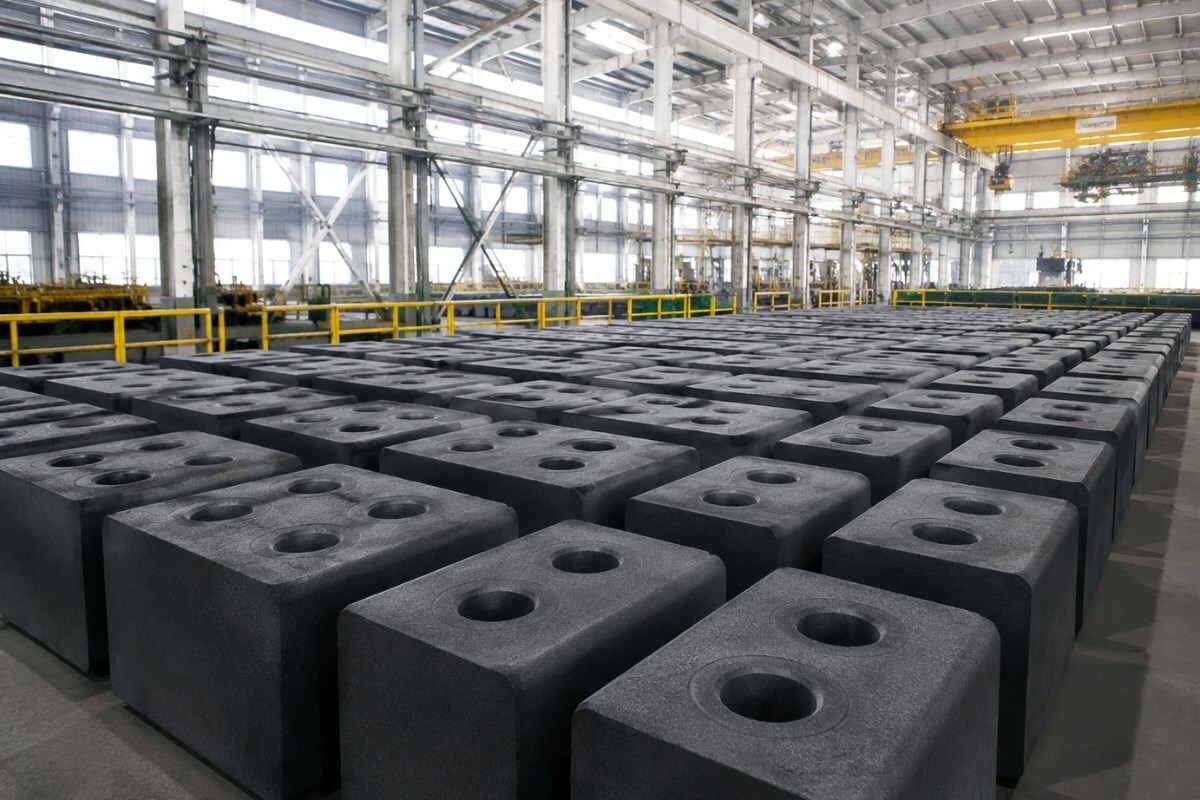
The image used in this article is generated with an AI tool and does not depict any real-time moment
According to customs data, China's prebaked anode exports in July 2026 totalled 211,700 tonnes, up 21.86 per cent Y-o-Y and down 24.40 per cent M-o-M. In terms of price, the average export price of prebaked anode in July was approximately USD 1,031.80 per tonne, up 24.94 per cent Y-o-Y and up 12.34 per cent M-o-M. From January to July 2026, China's cumulative prebaked anode exports reached 1.5183 million tonnes, up 23.47 per cent Y-o-Y, continuing the expansion trend. Both export volume and average price strengthened, keeping industry sentiment high.
{alcircleadd}Domestic export regions
From the perspective of domestic export regions, industrial agglomeration is notable. On a cumulative basis from January to July, Shandong topped with 989,900 tonnes (up 4.12 per cent Y-o-Y), followed by Hunan with 145,600 tonnes (up 49.0 per cent Y-o-Y), Shanghai with 141,100 tonnes (starting from zero last year), and Jiangsu with 130,900 tonnes (up 34.8 per cent Y-o-Y). Hebei with 50,800 tonnes and Fujian with 16,000 tonnes were new major contributors.
Focusing on July alone, exports further concentrated in Shandong, Shanghai, and Hunan: Shandong exported 87,300 tonnes, accounting for 41 per cent of the total, ranking first; followed by Shanghai with 83,000 tonnes, accounting for 39 per cent; then Hunan with 18,000 tonnes, accounting for 9 per cent. These three regions together contributed nearly 90 per cent of China's prebaked anode exports, with Shanghai's rapid rise as a new export hub particularly noteworthy.
Export destination structure
By destination, China's prebaked anode exports in July 2026 were mainly to Indonesia, Norway, and Malaysia, which together accounted for about 69 per cent of total exports. Among them, exports to Indonesia were approximately 95,400 tonnes, accounting for 45 per cent of total exports, ranking first for the month; exports to Norway were approximately 26,900 tonnes, accounting for 13 per cent; and exports to Malaysia were 22,700 tonnes, accounting for 11 per cent. Under the cumulative basis, export patterns from January to July exhibited significant regional divergence:
The Asian market continued to lead. Malaysia ranked first on a cumulative basis with 303,400 tonnes (up 22.53 per cent Y-o-Y); Indonesia reached 300,000 tonnes, surging 98.49 per cent Y-o-Y, becoming the second largest destination country; Azerbaijan exported 16,800 tonnes, skyrocketing 108.74 per cent Y-o-Y, leading global growth, reflecting the boost effect from new aluminium capacity release in the Caucasus region.
Demand in Europe and the US remained resilient. Canada 218,700 tonnes (+21.75 per cent Y-o-Y), Norway 201,700 tonnes (+40.76 per cent Y-o-Y), Iceland 84,400 tonnes (+46.37 per cent Y-o-Y), Spain 70,100 tonnes (+84.55 per cent Y-o-Y), Belgium 16,700 tonnes (+188.52 per cent Y-o-Y), the European market overall showed a "west strong, east weak" pattern, partially offsetting the gap from Eastern Europe.
Emerging markets accelerated breakthroughs. Angola exported 37,100 tonnes (near zero in the same period last year), and North Africa is gradually becoming an emerging growth source for China's prebaked anode exports; exports to new markets such as Australia and Vietnam grew steadily. Russia and the Middle East market were under pressure.
Due to geopolitical influences, exports to Russia from January to July were 38,200 tonnes, plunging 62.20 per cent Y-o-Y, difficult to reverse in the short term; the Middle East region (UAE, Bahrain, Saudi Arabia, Oman) cumulative exports reached 172,300 tonnes, down 24.12 per cent Y-o-Y, among which UAE dropped 14.99 per cent, Bahrain plunged 33.57 per cent, Saudi Arabia declined nearly 60 per cent, with regional aluminium plant production cuts combined with local supply adjustments, China's exports were under significant pressure.
Overseas aluminium capacity dynamics
Entering H2 2026, the pace of overseas aluminium production resumptions and new capacity release has accelerated significantly, which will directly boost China's prebaked anode export demand:
Europe capacity restart: Hydro's Slovalco aluminium plant in Slovakia reached a production resumption agreement, with 75,000 tonnes of capacity to be restored in Q4 2026; Lista in Norway and San Ciprián in Spain completed production resumptions.
Americas expansion continues: Magnitude 7 Metals restarted line 1 at its Texas aluminium plant in the US; Alcoa's Q2 production was 636,000 tonnes, up 5 per cent Q-o-Q.
Middle East production resumptions advancing: UAE's EGA's Al Taweelah plant made significant progress in production resumptions, with 89 electrolysis cells put into operation as of early July.
Asia new projects ramp up production: New projects in Indonesia and Viet Nam continue to ramp up production; India's Balco produced 168,000 tonnes in Q2, up 10 per cent Q-o-Q. 4. H2 Outlook
Considering the release pace of aluminium capacity outside China and China's prebaked anode export fundamentals, H2 exports are expected to continue a mild growth trend, with full-year cumulative exports expected to maintain a double-digit Y-o-Y growth rate and average export prices expected to remain at a relatively high level.
Key drivers: New capacity continues to be released in Southeast Asia (Malaysia, Indonesia); capacity expansion in the Caucasus region drives demand recovery; concentrated production resumptions at multiple European aluminium plants boost traditional market procurement; and growth contributions from emerging markets (Angola, Australia, Vietnam).
Key concerns: Middle East production resumption progress — geopolitical fluctuations in the Middle East continue, but as of now, market feedback has not caused material disruptions to the production operations of local aluminium plants.
Aluminium projects under construction and resuming production in the Middle East, Indonesia, India and other regions are still in the process of advancement. The subsequent pace of capacity release still needs to be tracked based on local aluminium plant announcements and actual start-up status, which will be transmitted to China's prebaked anode export demand through changes in aluminium production.
Potential risks: Russia's market has a low probability of short-term recovery, and geopolitical constraints are difficult to eliminate; the production cuts trend at aluminium plants in some Middle Eastern countries has not yet fully reversed.
In summary, in H2 2026, China's prebaked anode export market will present the operating characteristics of "volume increase with stable prices, continued regional divergence, and overall mild growth."
Note: This article has been issued by SMM and has been published by AL Circle with its original information without any modifications or edits to the core subject/data.
Responses


A proud
ASI member
AL Circle Private Limited | CIN: U72200WB2017PTC221175
Registered Office: Ecospace Business Park, Block 3A, Unit 401A, New Town, Rajarhat, Kolkata, WB 700160
Corporate Office: Ecospace Business Park, Block 3A, Unit 401A, New Town, Rajarhat, Kolkata, WB 700160
© 2026 AL Circle. All rights reserved. AL Circle is not responsible for content from external sources.