您想继续阅读英文文章还
是切换到中文?
是切换到中文?

THINK ALUMINIUM THINK AL CIRCLE

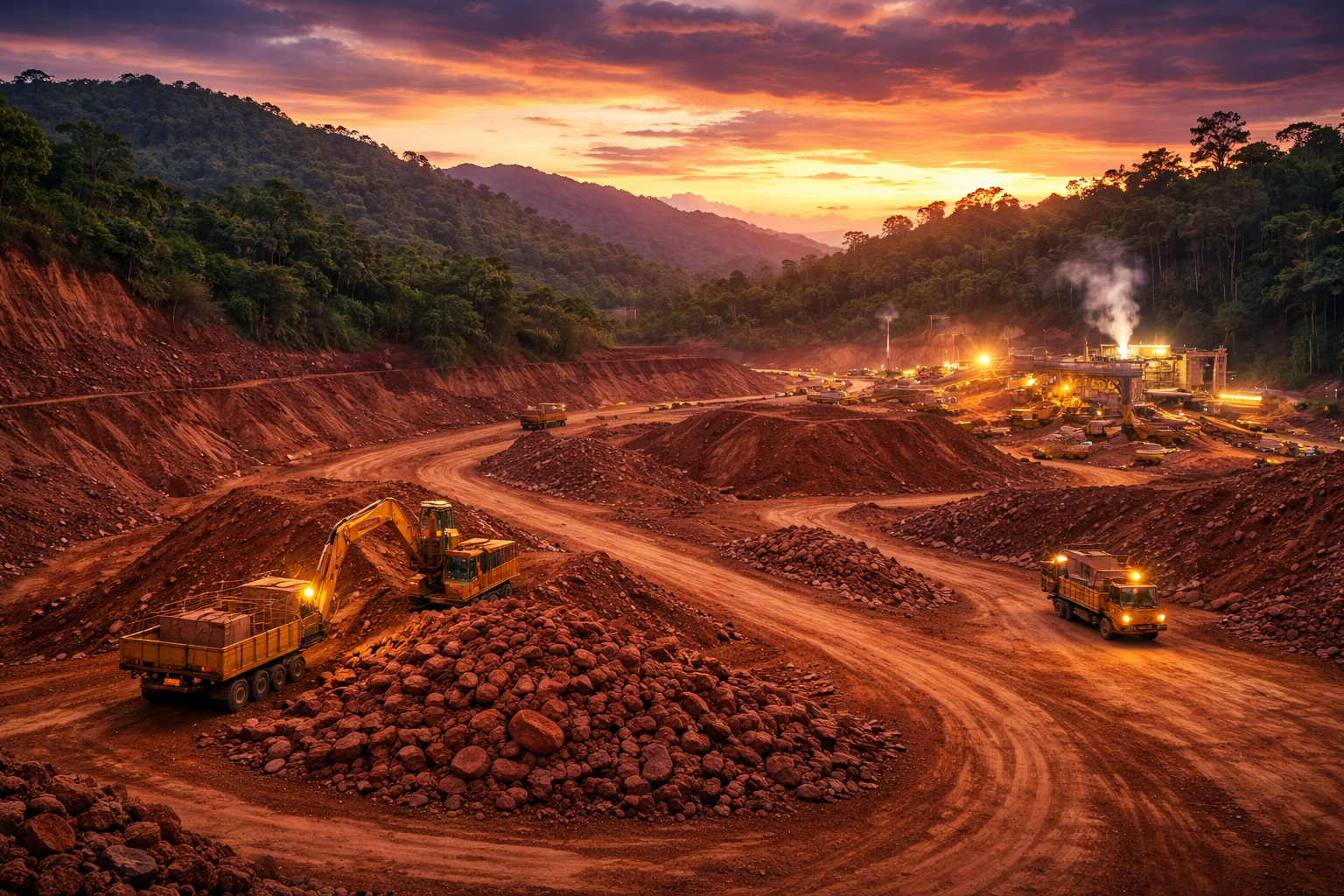
Ghana plans to end exports of raw minerals, including bauxite, within the next five years as part of the West African country's efforts to advance domestic industrialisation and strengthen its economy, Ghana's president, John Dramani Mahama, reportedly told delegates attending a mining summit in the coastal city of Takoradi last week.
{alcircleadd}In China, news of a potential ban on bauxite exports from Ghana met with a mixed response, with some in the aluminium supply chain suggesting any ban would have only a limited impact on China's bauxite imports in the short run, while others believed that a halt to the trade would have strategic implications over the longer term and should not be dismissed, Mysteel notes in a new report on the development.
At the summit, President Mahama identified increasing the value-added processing of mineral resources as one of the six strategic pillars underpinning Ghana's mining transformation agenda, according to local media. He called for shifting away from the traditional model of exporting raw minerals while importing processed products, and instead, advocated building a competitive mining economy.
Also read: Ghana’s bauxite circularity plan: Domestic circulation or leakage leading to Guinea 2.0?
To achieve this goal, he outlined specific actions including establishing refineries and related infrastructure, promoting mineral-based industrial clusters, and expanding downstream processing capacity for bauxite, manganese and lithium.
From a near-term perspective, the impact of Ghana's mining transformation on China's bauxite imports is expected to be minimal, as Ghana is not a mainstream supplier to the country, the report suggested.
In 2025, China's imports of Ghanaian bauxite totaled 918,869 tonnes, lower by a large 21 per cent from 2024 and accounting for just 0.5 per cent of total Chinese imports of the feeds last year, according to data from China's General Administration of Customs.
In addition, Ghanaian ore has relatively limited liquidity in the global market. Strict port loading and settlement requirements imposed by local mines, combined with persistent logistical bottlenecks at ports, have constrained export volumes, according to Mysteel.
To learn about the bauxite market forecast, download our report: Global Aluminium Industry Outlook 2026
Meanwhile, as shipments from major suppliers such as Guinea are projected to increase this year, any reduction in Ghanaian bauxite supply is unlikely to materially affect the global bauxite supply-demand balance at this stage, the report observed.
However, from a medium- to long-term perspective, Ghana's move may signal a broader trend among resource-rich countries toward exercising tighter control over mineral exports, Mysteel pointed out. Such policies could intensify competition for high-quality bauxite resources in West Africa and beyond.
More fundamentally, Ghana's policy direction may reshape the threshold for access to mineral resources. A procurement model based solely on trade could become increasingly unsustainable. Instead, international stakeholders may need to shift toward deeper participation in integrated "mining-refining" value chains through direct investment and localised processing partnerships, the report argued.
Don't miss out- Buyers are looking for your products on our B2B platform
Note: This article has been issued by Mysteel and has been published by AL Circle with its original information without any modifications or edits to the core subject/data.
Responses