Metal packaging leaders call for clarity, competitiveness and collaboration
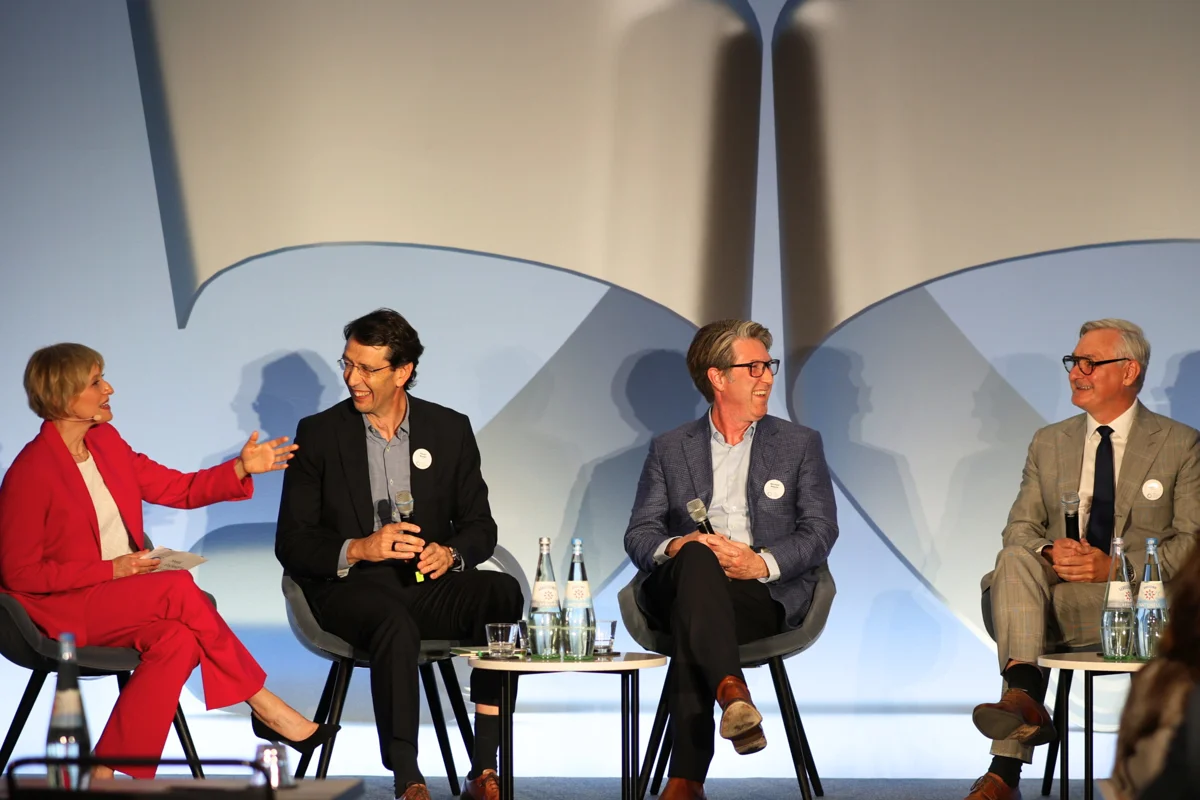
Europe’s metal packaging industry is facing mounting pressure from rising costs, regulatory uncertainty, geopolitical tensions, labour shortages and competition from alternative materials. But according to three industry leaders, its biggest challenge may be internal: moving faster, communicating more effectively and acting with greater unity. Iris Arsic reports.
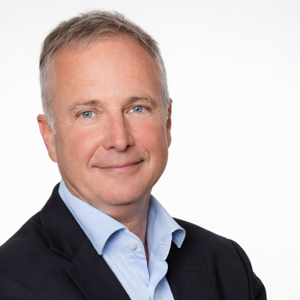
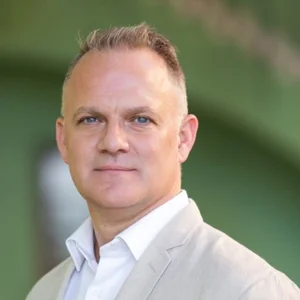
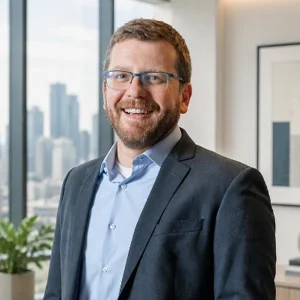
Speaking at the Metal Packaging Europe (MPE) conference in Berlin, Paulo Sousa, CEO of Colep Packaging and president of MPE, Seàn Cairns, president of Sonoco Consumer Packaging EMEA & APAC, and Michael Mapes, CEO of Trivium Packaging, argued that metal packaging enters this period from a position of strength. The industry already has proven circularity and strong sustainability credentials. The challenge, they said, is ensuring those advantages translate into competitiveness, growth and long-term investment.
As Cairns put it: “We’re not victims. We’ve got an amazing product which has stood the test of time. Let’s be proud of it.”
To learn the future of aluminium in the packaging industry, explore our report "ALuminium in Packaging: Consumer Trends and Market Dynamics"
Navigating “the perfect storm”
Asked what keeps them awake at night, the three chief executives pointed to a combination of pressures reshaping the industry.
For Mapes, the concerns centre on people, competitiveness and growth. “We don’t have a business without safe and fully engaged employees,” he said. “The second thing keeping me up at night is competitiveness. We’ve got to be competitive with other substrates, competitive versus other countries’ products being shipped in and, even lately, filled products being brought in.” Growth remains another challenge. “Growth has been a bit elusive for the entire packaging industry for the last couple years post-Covid,” Mapes said. “How do we start as an industry growing the pie?”
Sousa agreed that traditional business pressures have become significantly harder to manage in today’s geopolitical climate. “We now have a slice of trade war in the middle of this, which is just creating the perfect storm,” he said. “It’s shifting completely the way that you play the game.”
He warned that escalating trade tensions are influencing investment decisions and industrial competitiveness across Europe. “At a certain point in time, it may well be a situation that some jobs will be lost, that we need to move production somewhere else. It’s what this trade war and this European, but also global policy and fight for global leadership is bringing to the business.”
For Cairns, however, the industry’s greatest challenge is relevance. “The truth of the matter is, the thing that keeps me awake is making sure we maintain our leadership,” he said. Having returned to the sector after almost two decades away, Cairns said he was struck by how slowly the industry continues to operate. “Our industry already has the circularity, technical expertise and manufacturing capability. Our task now is to innovate faster and communicate those strengths more effectively and faster.”
Explore downstream aluminium suppliers, product listings and trade opportunities on AL Biz
Europe needs clarity
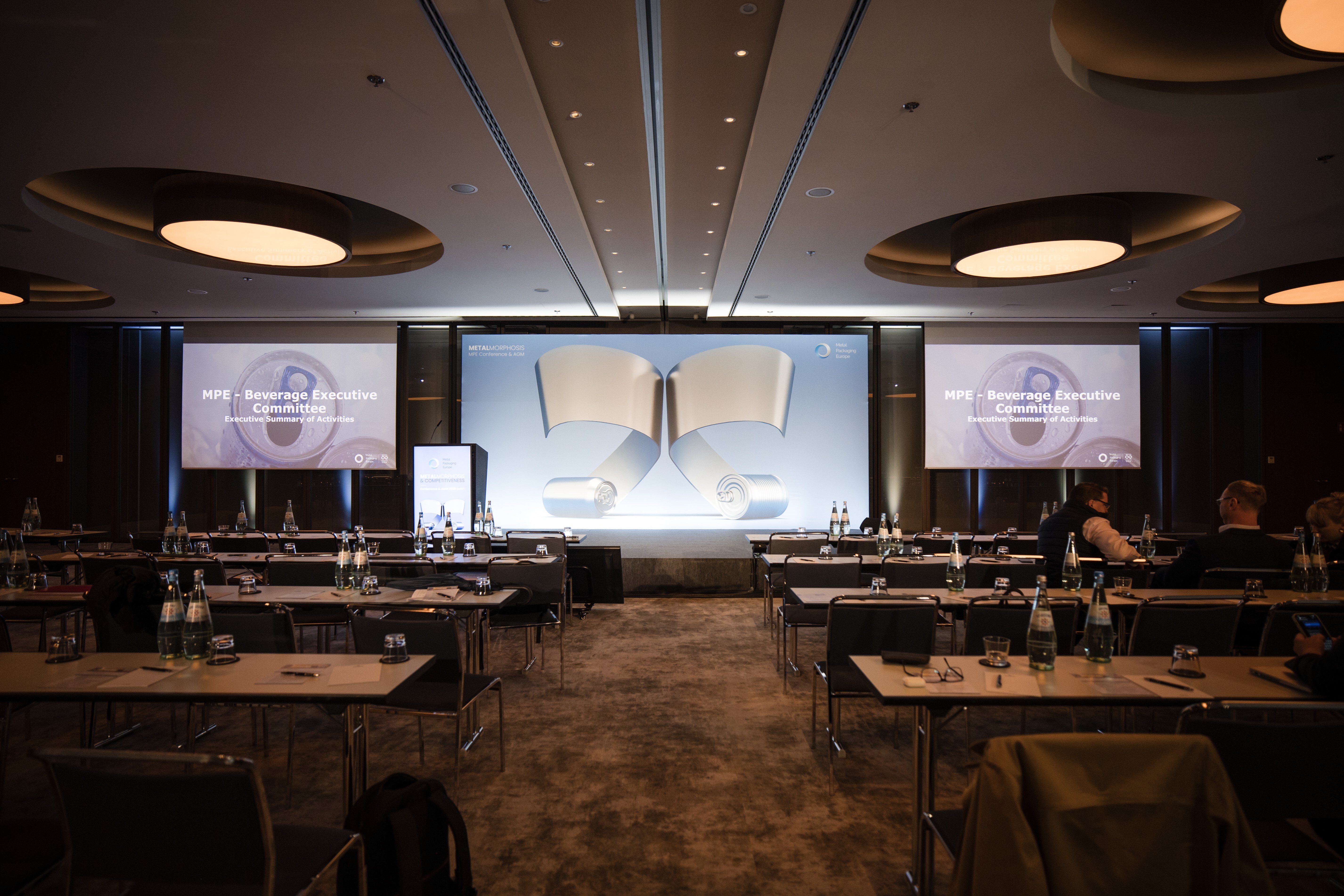
The conference venue in Berlin hosted two days of discussions in June on the challenges and opportunities facing Europe’s metal packaging industry.
Although all three senior executives recognised regulation’s role in advancing sustainability and supporting industry, they raised concerns about uncertainty in Europe’s changing regulatory landscape. “Regulations should make it easier for business to thrive and for investment decisions to be made,” Sousa said. “In the current scenario, the sort of regulations that are coming are creating more uncertainty in the business and making decisions more difficult.”
For manufacturers making long-term investments, predictability is essential. “The one thing I need is clarity,” Cairns said. “For most of us doing investments, you’re talking five, ten years.” He summed up the disconnect between industrial planning cycles and shifting regulation succinctly: “You feel as if you’re playing football and somebody is playing cricket, you just don’t feel you’re playing the same game.”
Mapes argued that regulation can become a source of competitive advantage, but only if it is applied fairly. “It’s super important that we get the framework and the regulatory part right because it can be a source of huge competitive advantage, but it’s got to be fair.” One concern is the treatment of imported products entering the European market. “When you have filled product coming in that’s also not taxed, not only the can, but it’s also coming in and taking jobs away from farmers,” he said. “Our customers are losing out, and so the whole ecosystem is challenged.”
The discussion repeatedly returned to Europe’s industrial competitiveness. “How is it possible that we would let areas like China be able to import filled cans?” Mapes asked. “If the Chinese will subsidise their farmers and get such low costs and create so much capacity and they’re able to dump stuff, at some point we’ve got to wake up.”
Despite these concerns, Sousa remained convinced Europe has the foundations to compete. “We’ve got great education, great engineering, great innovation and tremendous diversity,” he said. “The problem is that we’re not focused enough in getting our heads straight and building the structures that we need to be more competitive than the others. It has nothing to do with the others. It has to do with us.”
Unlock key insights from industry experts on aluminium's applications in end-use with our magazine: End-user Revolution: ALuminium's Impact on Modern Living
Sustainability must deliver value
If there was one topic that united the panel, it was confidence in metal packaging’s sustainability credentials. At a time when policymakers, retailers and brands are increasingly focused on circularity and resource efficiency, the chief executives argued that metal packaging enters the debate from a position of strength.
“Everyone is talking about circular economy,” Sousa said. “Metal has been doing circular economy for more than 200 years, so don’t come and talk to us about circular economy. We already do it.”
Yet he believes that advantage is not always recognised within existing policy frameworks. “It’s completely unfair that metal packaging can be segregated so easily, and recycling is paying a fair amount of the cost, while other materials such as multilayer packaging are heavily subsidised.
“The value that metal brings to the table is not passed on to consumers because of those things. It’s important that we build some muscle, otherwise we may lose a battle that’s ours to win. We can grow, but these things need to be addressed in the market.”
The panel repeatedly stressed, however, that sustainability alone is no longer enough. “Sustainability can only be sustainable if it has an economic purpose for it,” Sousa said. “Sustainability and competitiveness need to be together.”
Mapes agreed. “Sustainability is going to become more and more table stakes,” he said. “At the end of the day, it has to lead to better economics.”
For the three top executives, the challenge is no longer proving that metal packaging is sustainable. The challenge is ensuring that sustainability translates into value. As Cairns noted: “The vast majority of people, as long as it’s cost-effective, they’ll buy it. We can’t kid ourselves. It’s got to be relevant.”
From competitors to advocates
One of the strongest themes to emerge from the discussion was the need for the industry to communicate its advantages more effectively. Despite metal packaging’s strong recycling performance and circular economy credentials, the panel questioned whether the sector has done enough to educate consumers, policymakers and brand owners.
_0_0.png)
From left to right: Paulo Sousa, CEO of Colep Packaging and president of MPE, Michael Mapes, CEO of Trivium Packaging, moderator Marianna Evenstein, and Seàn Cairns, president of Sonoco Consumer Packaging EMEA & APAC.
“It’s up to us, individually and through MPE, to educate,” Cairns said. “That comes down to us to work as an industry.” He challenged the sector to become more proactive. “If you don’t disrupt this industry, somebody’s going to come in and disrupt it for you.”
Innovation remains central to that effort, but Cairns warned against pursuing it without a clear market need. “There’s no point inventing the best thing that nobody wants,” he said. “We’ve got to get our R&D teams and our scientists and our engineers actually inventing stuff that people want to buy.”
For him, sustainability should be viewed as a platform for growth rather than a defensive argument. “Sustainability is actually going to be a big aim for the future, and we’ve got a competitive edge. It’s about being different and continuing to be different.”
MPE needs to “build muscle”
As the discussion drew to a close, attention turned from identifying challenges to defining the industry’s response.
Sousa believes meaningful progress has already been made. “We built bridges,” he said. “We’re now all the members of MPE much more together than we were three years ago.” But he argued that cooperation alone will not be enough. “We need to build strength, resilience and agility. MPE now needs to build muscle to maintain our competitiveness as an industry.”
Mapes agreed. “We’ve got to be more proactive. We’ve got to be more coordinated as a group. We’ve got to take it to a whole new level.” For Cairns, the challenge ultimately comes down to confidence. “It’s time to reinvigorate this industry and actually realise that we can create the future together. But the only people that are going to change this industry are the people in this room. We’ve got an amazing product which has stood the test of time. Let’s be proud of it. Let’s energise our people.”
“We’ve got to make cans cool again,” said Mapes. His final remark drew laughter from the audience but also captured the challenge facing the sector. It may have been delivered with humour, but it reflected a serious point. Metal packaging already has many of the qualities consumers, brands and regulators increasingly demand. The next task is ensuring the market recognises it.
As Europe’s packaging leaders made clear in Berlin, the future of metal packaging will depend not only on how the industry responds to external pressures, but on how effectively it turns its strengths into growth, investment and influence.
A message beyond the panel
_0_0.jpg)
MPE CEO Krassimira Kazashka closes the conference with a call to unite
Closing the two-day conference, MPE CEO Krassimira Kazashka echoed many of the themes raised by the panel, urging delegates to unite behind a common purpose. “We’ve a rich history, a strong foundation, great people and the best packaging on the market. But if we’re the only ones who believe that, we have a problem.”
Calling on the sector to move beyond discussing its challenges, she added: “We need to wake up. We need to stop complaining and actually do something. We need to unite and fight for our business. And we need to do it together.”
Note: The article was originally published by The Metal Packager and republished in full by AL Circle without any modifications or edits to the core subject/data.
China EV sales create record-high penetrate rate in July
Next articleCould kitchen aluminium foil replace costly terahertz polarizers?
Grow with
AL Circle