您想继续阅读英文文章还
是切换到中文?
是切换到中文?

THINK ALUMINIUM THINK AL CIRCLE

Futures: In the night session on March 26, the most-traded SHFE aluminium 2605 contract opened at RMB 23,970 per tonne, hit an intraday high of RMB 23,995 per tonne and a low of RMB 23,850 per tonne, and finally closed at RMB 23,870 per tonne, up 0.61 per cent. Open interest in the night session stood at 259,000 lots, down 884 lots from the daytime session. MA20 (24,526) > MA30 (24,256) > MA10 (24,179) > MA5 (23,727), with short-term moving averages tangled and fierce competition between bulls and bears; medium-term moving averages remained in a bullish alignment, but showed signs of weakening. RSI rebounded from lows to around 50, staying in neutral to slightly strong territory without entering the overbought range, leaving room for further fluctuations. LME aluminium opened at USD 3,240 per tonne, reached a high of USD 3,299 per tonne, a low of USD 3,212 per tonne, and closed at USD 3,254.5 per tonne, up 0.39 per cent. Trading volume was 24,910 lots, an increase of 5,004 lots, while open interest was 68,100 lots, down 3,709 lots.
{alcircleadd}Macro front: Trump said Iran was in talks with the US. The US would wait and see whether an appropriate agreement could be reached and the Strait of Hormuz could be opened; otherwise, Iran would face continued fierce offensives from the US. Trump also said Iran had allowed 10 oil tankers to pass through the Strait of Hormuz as a “gift.” (Neutral) The State Administration for Market Regulation held its first Fair Competition Symposium for Enterprises of 2026, emphasising deeper rectification of “involution-style” competition, and conducted in-depth exchanges with representatives from enterprises including China Minmetals, China State Construction, CATL, BYD, Chery Automobile, Didi, and Meituan. (Neutral)
Fundamentals: This week, the weekly operating rate of leading downstream aluminium processing enterprises in China rebounded 2.1 percentage points W-o-W to 64 per cent, with operating rates across segments showing differentiated recovery. Consumption gradually returned to the peak-season pace, but the overall level still lagged behind the same period last year, as the strength of demand recovery intertwined with disruptions from the macro environment. Overall, most segments in the aluminium processing industry saw operating rates recover under the drive of work resumption, but affected by uncertainty in aluminium price trends and a relatively slow demand recovery, current consumption, though back on the peak-season track, was still weaker than the same period last year, and the sustainability of downstream orders required further confirmation.
Primary aluminium market: In early trading, SHFE aluminium 2604 fluctuated downward. Affected by low futures levels, some sellers still did not quote prices. Yesterday, shipment sentiment weakened somewhat, while some sellers showed a notably stronger willingness to hold prices firm. Yesterday, mainstream transaction prices were mainly concentrated at the average price of the SHFE aluminium 04 contract to a premium of RMB 20 per tonne. Yesterday, the east China market shipment sentiment index was 2.63, down 0.22 M-o-M; the purchasing sentiment index was 3.38, up 0.11 M-o-M. Over the past two days, aluminium prices fluctuated rangebound. In central China, traders and downstream processing enterprises were caught between bullish and bearish sentiment, with overall market purchasing relatively weak. Suppliers showed limited willingness to hold prices firm, and amid sluggish trading, quoted premiums showed a continued weakening trend. Ultimately, actual transaction prices for next-month invoices in the central China market were around premiums of RMB 10 per tonne to discounts of RMB 10 per tonne against central China prices. Yesterday, the shipment sentiment index in the central China market was 2.64, flat M-o-M; the purchasing sentiment index was 2.4, down 0.01 M-o-M.
Aluminium scrap: Yesterday, spot primary aluminium pulled back RMB 250 per tonne from the previous trading day, and the aluminium scrap market generally followed lower. Amid current wild swings in aluminium prices, aluminium scrap yards saw rising willingness to hold back cargoes, highlighting the resilience of aluminium scrap prices. Meanwhile, tighter regulatory oversight under the “reverse invoicing” policy has sharply increased tax compliance costs in the aluminium scrap recycling segment. In some regions, as operating procedures have yet to be fully streamlined, the actual circulation of compliant, invoiced cargoes remained tight, and supply-side elasticity was significantly weakened by policy friction. As for the price difference between A00 aluminium and aluminium scrap, as of March 26, the price difference between A00 aluminium and mixed aluminium extrusion scrap free of paint in Foshan was RMB 2,693 per tonne, and the price difference between A00 aluminium and shredded aluminium tense scrap was RMB 1,403 per tonne. The aluminium scrap market is expected to maintain consolidation at high levels next week, with the mainstream range for shredded aluminium tense scrap (priced based on aluminium content) running around 19,800- RMB 20,500 per tonne (ex-tax). Policy constraints on the supply side are unlikely to ease in the short term, and tight compliant cargoes, coupled with yards holding back cargoes, will continue to underpin prices. Demand side, peak-season recovery fell short of expectations, downstream wait-and-see sentiment amid high prices remained strong, and there was a lack of momentum for large-scale restocking, with just-in-time procurement still dominant. Primary aluminium remains subject to fluctuations driven by geopolitical and macro factors, and the overall tug-of-war between sellers and buyers will continue, warranting vigilance against the risk of wild swings in prices.
Secondary aluminium alloy: Futures side, yesterday the aluminium alloy 2604 contract generally showed a narrow-range, weaker trend, opening at RMB 22,865 per tonne, hitting a high of RMB 22,975 per tonne, dipping to a low of RMB 22,710 per tonne, and closing at RMB 22,820 per tonne, down RMB 50 per tonne, or 0.22 per cent, from the previous settlement price. Trading volume was 3,600 lots, and open interest fell by 1,730 lots to 1,833 lots, indicating a slight outflow of funds. It remains in the doldrums in the short term, though downside support is gradually emerging. Spot side, yesterday the ADC12 market remained in the doldrums, with mainstream enterprises generally cutting quotes by RMB 100-200 per tonne. Current market demand remained weak, order follow-up was insufficient, downstream procurement was mainly just-in-time procurement, and wait-and-see sentiment was relatively strong. At the same time, affected by poor orders, enterprises faced greater shipment pressure, low-priced cargoes gradually increased, market competition intensified, and the price centre moved lower passively. Overall, against the backdrop of no clear improvement in demand, ADC12 prices will remain under pressure, with weak rangebound movement likely in the short term. Markets outside China, current overseas ADC12 quotations remained in the range of USD 3,220-3,260 per tonne, and immediate import losses continued at around RMB 2,000, leaving the theoretical import window closed.
Aluminium market summary: Currently, macro and geopolitical risks in the global aluminium market have yet to fade. The Middle East situation remained in a stalemate, threats to navigation through the Strait of Hormuz were unresolved, and aluminium enterprises in the region faced disruptions to both raw material imports and product exports. The stability of the global aluminium supply chain was under pressure, and the risk premium persisted. However, the earlier risk premium during the week partially pulled back as sentiment eased and bulls took profits. Last week, the US Fed announced the decision of its March policy meeting, keeping the benchmark interest rate unchanged at 3.5-3.75 per cent. Affected by inflation and employment data, market expectations for US Fed interest rate cuts shifted back significantly, and even reignited discussion of further US Fed rate hikes. Fundamentals, supply side, the market heard that Aluminium Bahrain in the Middle East further cut production, involving 320,000 tonnes of capacity, while no other changes occurred for the time being; demand side, downstream operating rates further rebounded, but the proportion of liquid aluminium was relatively stable this week. Entering April, as the peak season deepens, the proportion of liquid aluminium is expected to further rebound. Inventory side, although the centre of aluminium prices pulled back from the previous period during the week, market wait-and-see sentiment remained strong, and downstream buyers mainly made just-in-time procurement on dips. Social inventory of aluminium ingot failed to enter the destocking stage, and as of this Thursday, total social inventory of aluminium ingot still showed an inventory buildup of 10,000 tonnes from last Thursday; finished product inventories of aluminium ingot at aluminium smelters declined further. From late March to early April, attention should be paid to whether aluminium ingot inventory can smoothly enter a destocking cycle under high aluminium prices. Overall, the Middle East situation remained a key concern. If Middle Eastern aluminium smelters further cut production, it is expected to provide upward momentum to aluminium prices in and outside China, but continued inventory buildup in China social inventory and ample supply are expected to bring top-side pressure to SHFE aluminium prices. In the short term, aluminium prices are expected to mainly fluctuate in a range with adjustments.
Note: This article has been issued by SMM and has been published by AL Circle with its original information without any modifications or edits to the core subject/data.
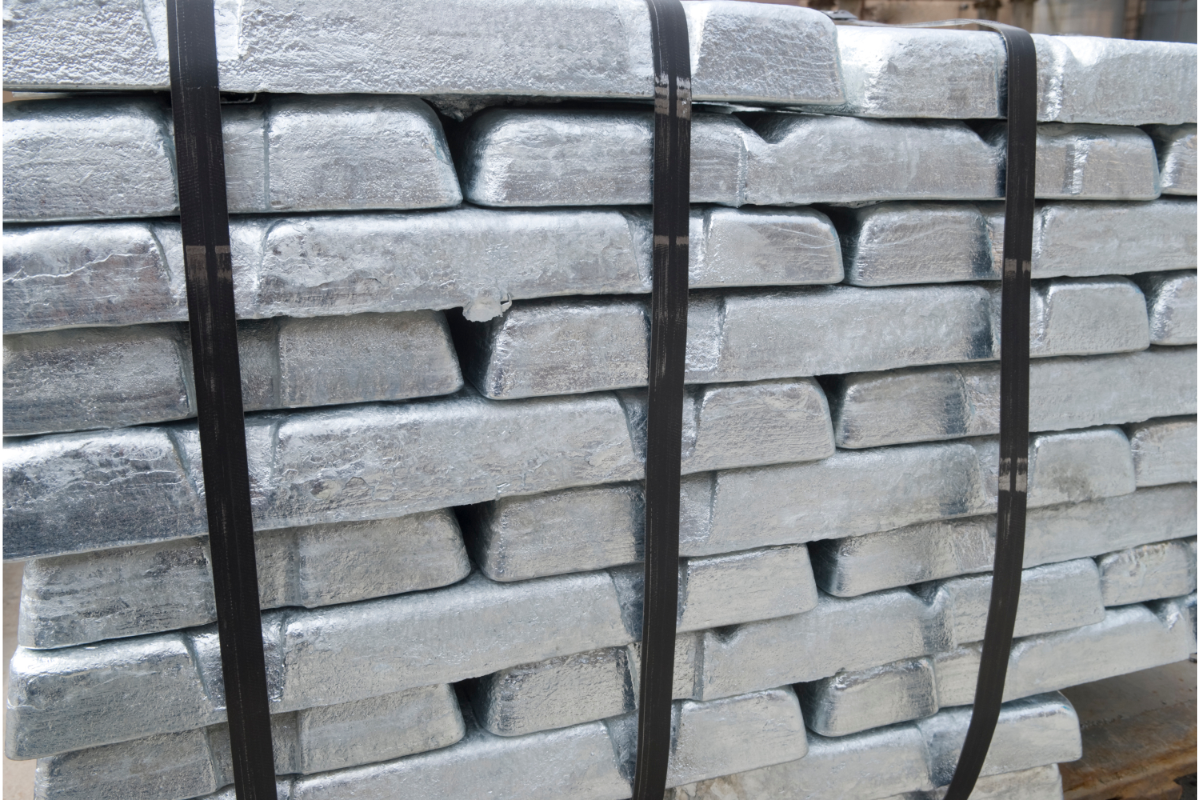
Image for referential purposes only
Responses


A proud
ASI member
AL Circle Private Limited | CIN: U72200WB2017PTC221175
Registered Office: Ecospace Business Park, Block 3A, Unit 401A, New Town, Rajarhat, Kolkata, WB 700160
Corporate Office: Ecospace Business Park, Block 3A, Unit 401A, New Town, Rajarhat, Kolkata, WB 700160
© 2026 AL Circle. All rights reserved. AL Circle is not responsible for content from external sources.