India: Aluminium scrap prices surge w-o-w; geopolitical tensions disrupt flows
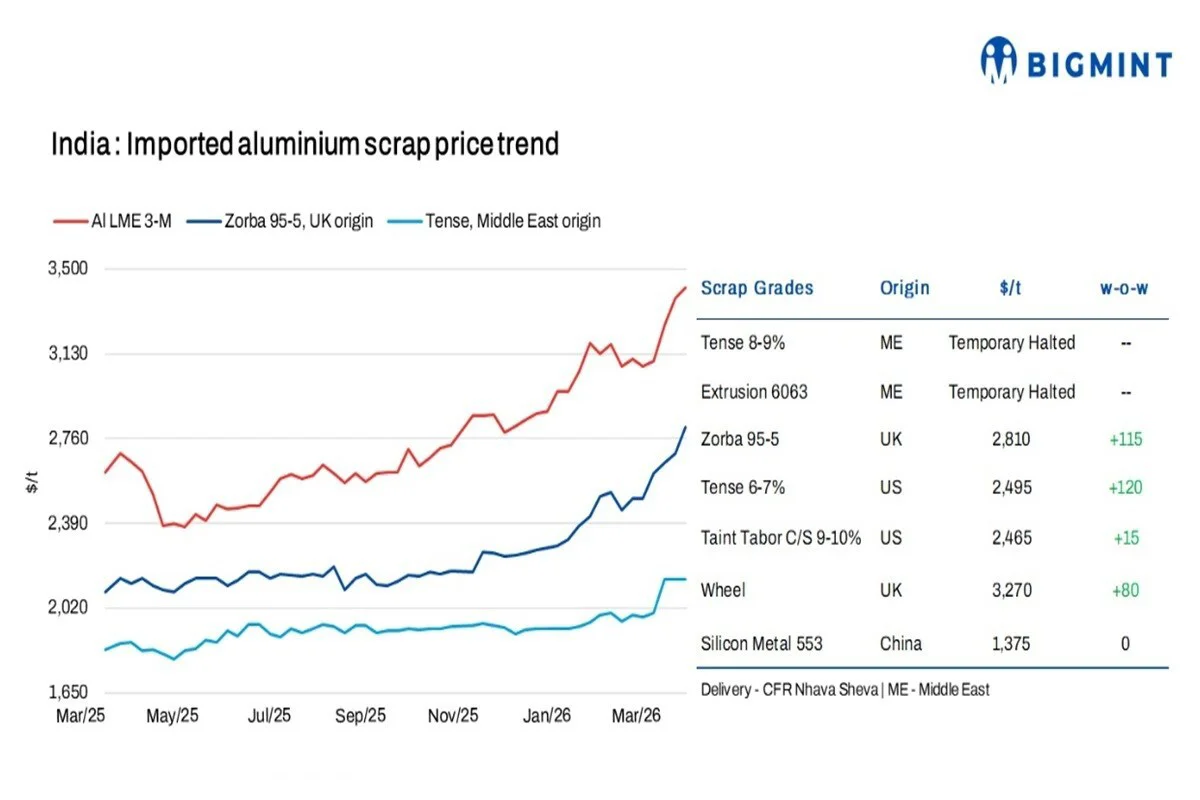
India's imported aluminium scrap prices recorded a sharp week-over-week increase as of 17 March 2026, supported by firm trends on the London Metal Exchange and ongoing geopolitical tensions, which have tightened global supply conditions.
For the global aluminium value-chain 2026 outlook, book our exclusive report “Global ALuminium Industry Outlook 2026"
As per market assessment for CFR Nhava Sheva deliveries, UK-origin Zorba 95-5 scrap rose by USD 115 per tonne w-o-w to USD 2,810 per tonne, while US-origin Tense 6-7 per cent scrap increased by USD 120 per tonne w-o-w to USD 2,495per tonne, reflecting continued strength in imported aluminium scrap prices.
LME aluminium gains w-o-w
Three-month aluminium closing prices on the London Metal Exchange increased by 1 per cent w-o-w to USD 3,417 per tonne on 16 March 2026, up from USD 3,387 per tonne on 9 March 2026. Meanwhile, LME aluminium inventories declined by 2.6 per cent or 11,800 t over the same period, easing from 454,625 t to 442,825 t.
Meanwhile, Aluminium Bahrain (Alba) has shut three smelting lines, representing about 19 per cent of its 1.62 mnt capacity, due to ongoing disruption in the Strait of Hormuz. The move follows shipping constraints and raw material supply issues linked to the US-Israeli conflict with Iran. The Middle East, which accounts for nearly 9 per cent of global aluminium supply, faces rising pressure as LME prices approach four-year highs.
Market insights
India's imported aluminium scrap market has witnessed a sharp w-o-w price increase, supported by stronger LME trends and heightened geopolitical tensions, particularly in the Middle East, which have significantly tightened global supply. While demand remains steady, especially from the automotive sector, supply shortages have intensified due to limited material availability from key regions and disruptions in trade flows.
Market activity has slowed as buyers adopt a cautious, wait-and-watch approach amid elevated prices and uncertainty. Traders noted that bids for US-origin Taint Tabor (TT) scrap continue to remain below offer levels, restricting deal closures. Demand is largely concentrated in automotive alloy scrap grades such as Tense, while trading in other grades remains subdued.
Supply constraints have been further aggravated by logistical challenges, including high freight costs and the imposition of War Risk Surcharges due to ongoing Middle East tensions, which have increased landed costs and discouraged fresh bookings. Additionally, no fresh offers are currently being received from the Middle East, with exports from key hubs, such as the UAE, disrupted, leading to a temporary halt in regional flows. With the upcoming Eid holidays and limited market participation, trading activity is expected to remain muted in the near term.
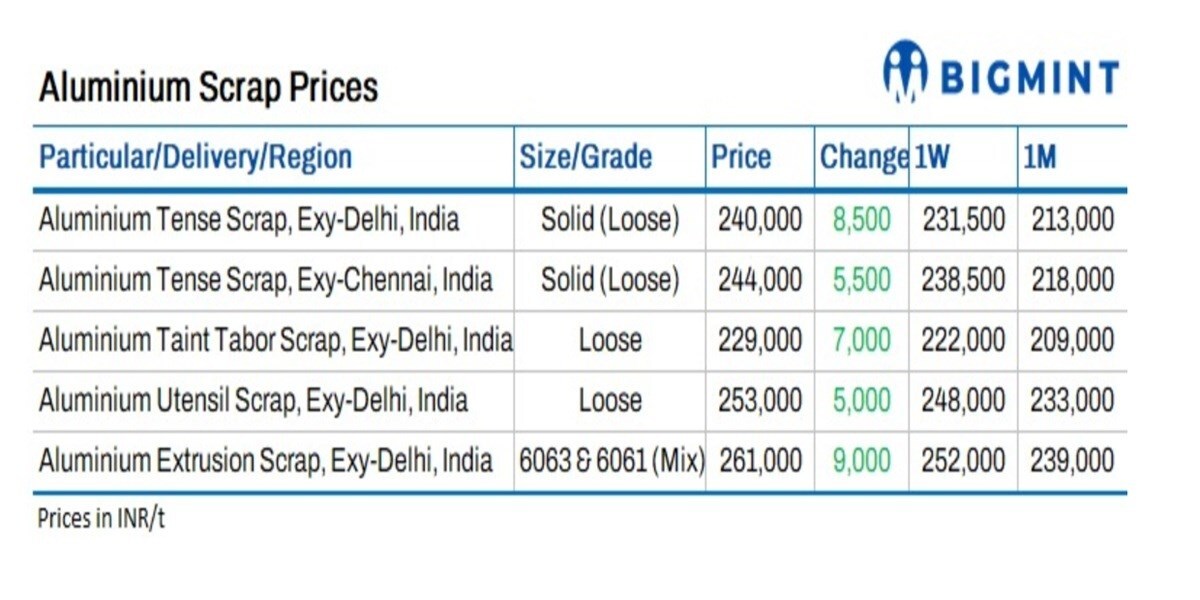
On the domestic front, supply tightness persists despite rising prices. Scrap availability has declined, pushing Tense scrap prices in Chennai to around INR 243,000-245,000 per tonne, maintaining a premium over other regions. Casting scrap and Tense prices in both Delhi and Chennai have also risen by INR 5,000-8,000 per tonne amid ongoing shortages. Some secondary producers are operating at reduced capacity levels, reflecting cautious procurement strategies and raw material uncertainty.
Overall, the market remains firm but slow, with supply shortages outweighing demand strength. Participants are closely monitoring geopolitical developments and supply chain disruptions, with activity likely to remain subdued in the short term until clearer price direction and supply visibility emerge.
Chinese silicon prices
According to BigMint, China-origin silicon metal 553 prices remained stable w-o-w at USD 1,375 per tonne on a CFR Nhava Sheva basis.
Outlook
In the near term, India's aluminium scrap market is expected to remain firm but subdued, supported by elevated LME prices, declining inventories, and ongoing supply disruptions in the Middle East. Tight scrap availability, logistical challenges, and limited offers--particularly amid Eid-related market slowdown--are likely to keep prices elevated. However, cautious buying and persistent bid-offer gaps may restrict trading activity until supply visibility improves and geopolitical uncertainties ease.
Don’t miss out- Buyers are looking for your products on our B2B platform
Note: This article has been issued by BigMint and has been published by AL Circle with its original information without any modifications or edits to the core subject/data.

On global recycling day, Vedanta announces recycling of nearly 15 million tonnes of waste in FY25
Next articlePPG highlights aluminium can recycling urgency with students on World Recycling Day
Grow with
AL Circle