您想继续阅读英文文章还
是切换到中文?
是切换到中文?

THINK ALUMINIUM THINK AL CIRCLE

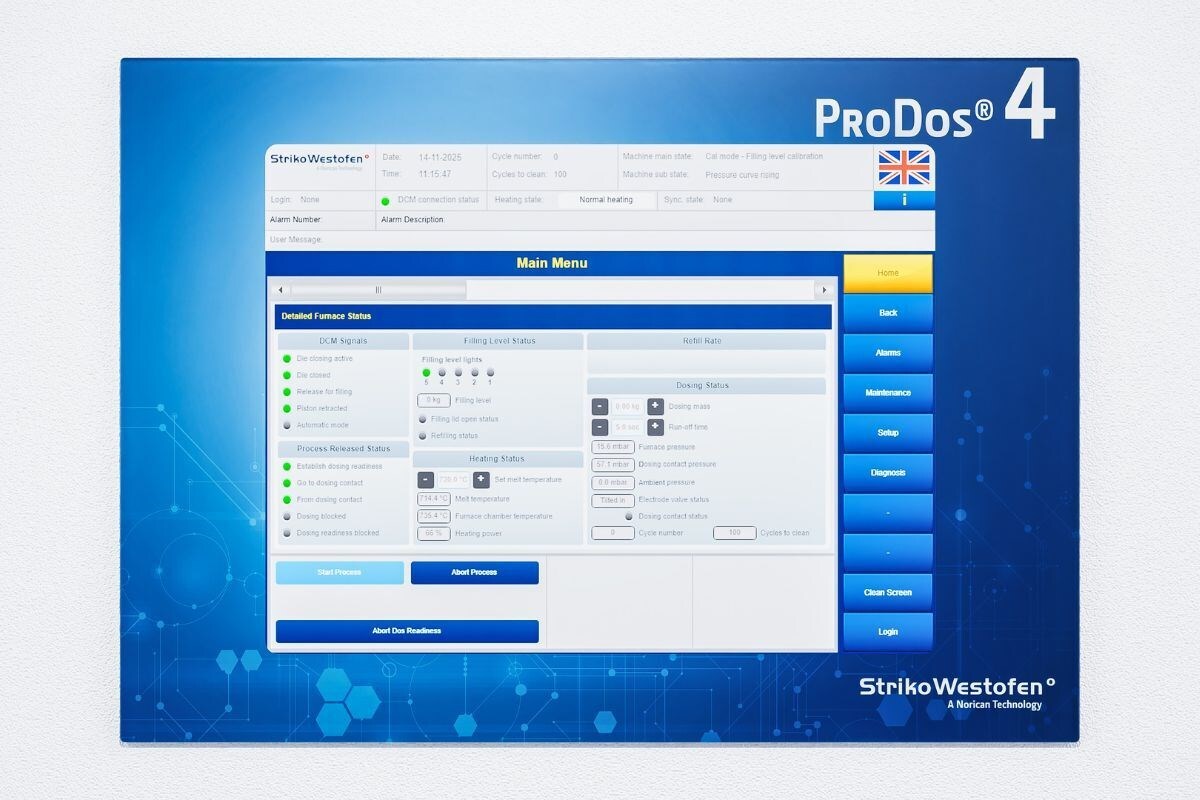
This image has been obtained via official Press Release
Italian aluminium radiator manufacturer Global Radiatori has installed a new Westomat dosing furnace featuring StrikoWestofen’s next-generation ProDos4 control system. The move follows energy savings of up to 30 per cent achieved after replacing gas-fired holding furnaces with Westomat dosing technology.
{alcircleadd}The new Westomat was installed as part of a new automated die casting cell at the company’s Rogno production facility in northern Italy. It follows the successful introduction of two Westomat furnaces in 2021, which delivered immediate improvements in metallurgical performance and energy efficiency.
“It was from the beginning a great success,” says Sandro Panteghini of Global Radiatori. “Coming from old gas-fired holding furnaces, we immediately recognised a great step forward in metallurgical quality. At the same time we significantly reduced energy consumption and our CO₂ emissions went to zero.”
To look for buying or selling leads of, “Downstream aluminium products,” visit our B2B marketplace
Performance drives repeat investment
Founded in 1971, Global Radiatori manufactures aluminium radiators for domestic heating markets worldwide, exporting around 75 per cent of production to approximately 50 countries. The company produces more than 14 million radiators per year, making consistent melt quality and process stability critical to maintaining efficient high-volume production.
Following the performance of the first installations, Global Radiatori made the decision that all future die casting cells would be equipped with Westomat technology – a stance this new addition reflects.
Supporting the shift toward lower-carbon die casting
Across the die casting industry, many manufacturers are moving away from gas-fired holding furnaces toward electric dosing and melting technologies as part of wider decarbonisation strategies. Electric systems can reduce energy consumption while eliminating direct combustion emissions from furnace operation.
For Global Radiatori, the transition to Westomat dosing technology has supported both operational efficiency and sustainability objectives.
Digital integration improves dosing accuracy
At Global Radiatori, the Westomat furnaces are digitally connected to the die casting machine (DCM). Data from the machine’s PLC - specifically biscuit thickness measurements - is used to automatically adjust the aluminium quantity delivered to each shot.
This closed-loop approach enables highly accurate dosing and stable casting conditions during production.
Operators report that the ProDos control system with biscuit correction is both intuitive and flexible to operate.
“The ProDos4 control system is easy to use, precise, and very flexible to our needs,” says Panteghini. “Continuous innovation is important for us as a company, so it is good to see the technology we love evolving as well.”
Participate in our upcoming e-Magazine – “Mine to Market: ALuminium Producers & Manufacturers 2026”
Strong technical support
Global Radiatori also highlights the role of StrikoWestofen’s Italian partner, Smith & Mason, in supporting the project. “Both StrikoWestofen and Smith & Mason have been highly professional and always available,” says Panteghini. “Their support has been excellent.”
With measurable savings and improved process stability now proven in production, Westomat dosing technology has become a central part of Global Radiatori’s strategy to modernise its aluminium casting operations while reducing energy consumption and emissions.
Note: This article has been issued by Global Radiatori and has been published by AL Circle with its original information without any modifications or edits to the core subject/data.

Responses