您想继续阅读英文文章还
是切换到中文?
是切换到中文?

THINK ALUMINIUM THINK AL CIRCLE

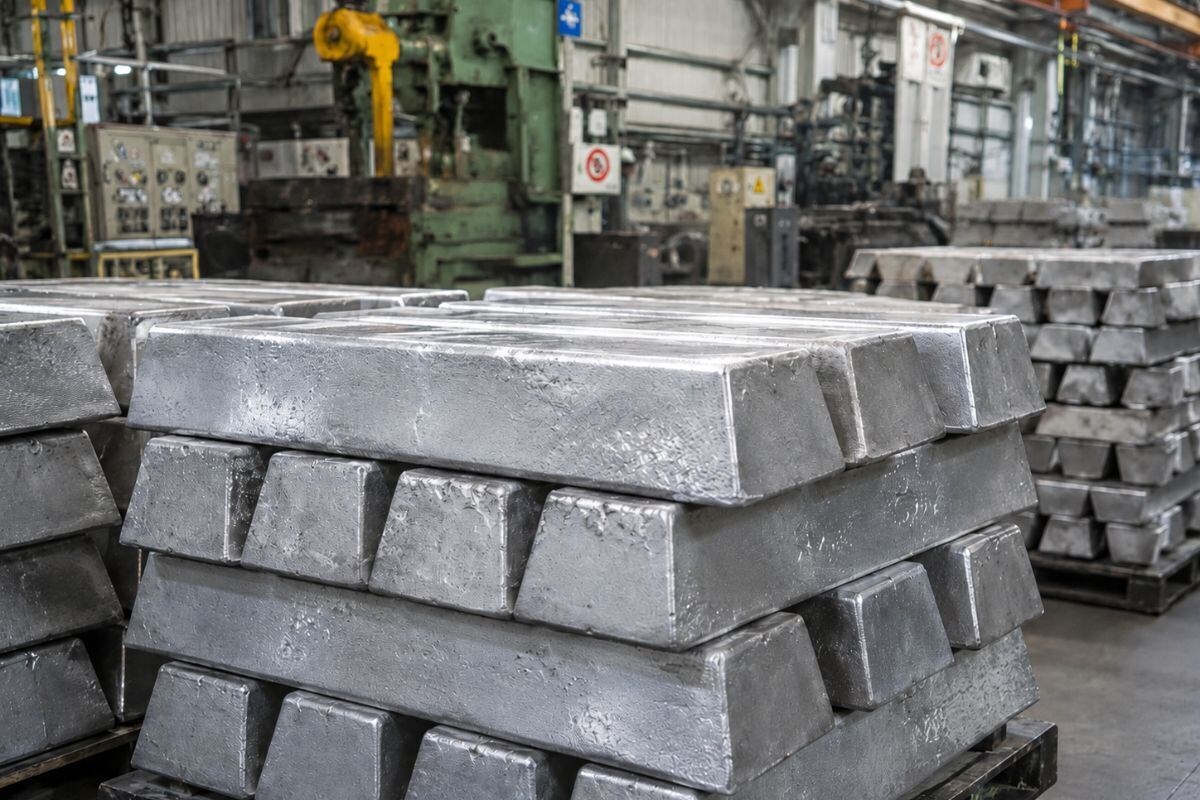
The image used in this article is generated with an AI tool and does not depict any real-time moment
Futures: SHFE aluminium closed at RMB 23,115 per tonne last Friday, up 0.81 per cent, with intraday fluctuations within 22,890-23,190. Prices are far below all key moving averages (MA5=23,119, MA10=23,622, MA30=24,149, MA60=24,501.5).
{alcircleadd}The moving averages are in a bearish alignment and diverging at an accelerating pace, signalling pronounced weakness. The MACD indicator shows DIF at -359.93 and DEA at -249.68, with a death cross downward and the negative histogram expanding to -220.50, indicating strengthening bearish momentum.
Trading volume slightly picked up to 88,800 lots but remains at a low level overall. SHFE aluminium's core trading range is recommended to reference 22,800-23,300. LME aluminium closed at USD 3,179 per tonne, down 0.59 per cent, with intraday fluctuations within 3,167-3,196. Prices are far below all key moving averages (MA5=3,187.4, MA10=3,290.35, MA30=3,505.97, MA60=3,528.59).
The moving averages are in a bearish alignment, with the medium-term trend clearly weakening. The MACD indicator shows DIF at -106.999 and DEA at -74.075, with a death cross downward and the negative histogram expanding to -65.85, signalling strengthening bearish momentum. LME aluminium's core trading range is recommended to reference 3,150-3,200.
Macro front: An Iranian official said Iran did not attend the technical negotiations originally scheduled for June 29, citing "recent attacks and failure to meet relevant conditions." Sources said the plan to resume US-Iran technical negotiations in Switzerland has stalled due to renewed conflict between the two countries. Latest reports indicate that the US and Iran have reached a consensus to cease mutual strikes and will hold a meeting this week.
The two sides will meet in Doha, the capital of Qatar, on Tuesday to discuss disputes concerning the Strait of Hormuz. Iranian Foreign Minister Araghchi stated that within the next 30 days, the Strait of Hormuz will remain under full supervision and management by Iran, and once all obstacles are removed, the waterway's full passage capacity will be restored. Any intervention or unilateral action will worsen the situation and delay the reopening of the strait.
Fundamentals: Supply side, according to SMM data, this week's domestic aluminium production rebounded W-o-W, mainly driven by the production ramp-up of newly commissioned capacity and resumption of idle capacity. Last week, the proportion of liquid aluminium rose 0.2 percentage points W-o-W, and casting ingot output further declined.
Outside China, high prices previously spurred accelerated commissioning of new projects. As these new projects are energised and ramp up, operating aluminium capacity outside China is expected to rise further W-o-W. On the inventory front, this week's aluminium inventory continued its smooth destocking trend.
As of this Monday, domestic social inventory of aluminium ingot fell by 40,000 tonnes compared to last Thursday and by 82,000 tonnes compared to last Monday. Lower aluminium prices and a pickup in downstream buying sentiment drove the destocking. On the exports front, the SHFE/LME price ratio recovered rapidly last week. As of June 25, the ratio had rebounded to 7.29, up 12.2 per cent from the previous low of 6.5. The import loss narrowed to around RMB 3,400 per tonne, down nearly 45 per cent from the peak loss of RMB 7,604 per tonne.
As a result, the profit margins that had been driving large-scale aluminium semis exports shrank sharply, and new orders for some segments already declined. With orders on hand gradually being fulfilled, if export margins cannot recover, aluminium semis exports may face downside risks going forward.
Primary aluminium market: In early trading, the SHFE aluminium 2606 contract’s price centre ran above the level in the same period of the previous trading day. Influenced by rising aluminium prices and restocking the previous day, overall market purchasing sentiment weakened last Friday. However, as sellers held prices firm near recent lows, transaction and offer prices edged up.
Mainstream transactions were executed at a discount of RMB 10-0 per tonne against the SHFE July contract. Last Friday, east China shipment sentiment index registered 3.14, up 0.25 M-o-M; procurement sentiment index stood at 3.00, down 0.16 M-o-M. Futures aluminium prices fell for days consecutively, leaving the central China market sluggish with strong bearish sentiment, and stockpiling willingness was low on Friday.
Downstream processing enterprises preferred warrant or long-term contract transactions, leading to heavy warrant outflows, while suppliers showed weak willingness to hold prices firm, pushing transaction prices steadily lower. In the end, actual transaction prices in central China ranged at a discount of RMB 10-40 per tonne against the SHFE July contract. Last Friday, central China shipment sentiment index came in at 2.90, up 0.01 M-o-M; procurement sentiment index was 2.14, remaining flat M-o-M.
Aluminium scrap: Last Friday, SMM A00 spot aluminium closed at RMB 22,880 per tonne, down RMB 30 per tonne from the previous trading day. The aluminium scrap market showed notable resilience, with only slight corrections. In terms of price spreads, on June 26, the price difference between A00 aluminium and mixed aluminium extrusion scrap free of paint in Foshan stood at RMB 1,942 per tonne, and the price difference between A00 aluminium and shredded aluminium tense scrap was RMB 1,070 per tonne.
These spreads continued to narrow over the week as scrap resisted declines and corporate tax burdens grew, with aluminium tense scrap series prices falling by less than wrought aluminium alloy scrap. Supply remained tight, supervision on reverse invoicing policies tightened, and production cuts or shutdowns expanded among small and medium-sized scrap utilisation enterprises in Anhui, Jiangxi, Hubei, etc., driving up the scarcity of compliant invoiced aluminium scrap.
On the import side, China’s aluminium scrap imports in May totalled 152,000 tonnes, down 10.88 per cent M-o-M and down 4.81 per cent Y-o-Y. Due to a 1-3 month shipping lag, port arrivals from June to August are expected to remain at low levels. Additionally, the UAE implemented a four-month temporary export ban on aluminium scrap starting June 3, further reinforcing expectations of tight high-quality scrap supply in Asia.
Next week, the aluminium scrap market is expected to continue consolidating at elevated levels with a slight downward bias, but downside room is limited. Shredded aluminium tense scrap (priced based on aluminium content) is expected to trade in a mainstream range of RMB 19,300-19,900 per tonne (ex-tax). The restrictive effects of the reverse invoicing policy and the lagged contraction in imported aluminium scrap continue to form bottom support, but weak off-season demand and low downstream operating rates cap the upside room. Going forward, attention should focus on the pace of policy compliance, the US-Iran peace talks and progress in Hormuz navigation, the arrival pace of overseas aluminium scrap, and changes in domestic downstream operations.
Secondary aluminium alloy: Spot market: Last Friday, China’s ADC12 market operated steadily with prices unchanged, and SMM ADC12 price held steady at RMB 23,850 per tonne from the previous day. As aluminium and cast aluminium alloy futures stopped falling and stabilised, the bearish sentiment from the sustained earlier drop eased, and the market entered a phase of wait-and-see.
Demand side, orders at downstream die-casting enterprises remain insufficient, and off-season characteristics continue to show, capping the price rise; but cost side, the difficulty of sourcing compliant aluminium scrap remains considerable, tax invoices and raw material costs stay high, squeezing profit margins of secondary aluminium enterprises, thus providing strong bottom support for ADC12 prices.
Under the weak supply-demand structure, the current market has limited momentum to further lower prices. In the short term, ADC12 prices are expected to mainly move sideways. Future attention should still be paid to aluminium price trends, changes in aluminium scrap supply, and the recovery of end-use demand.
Aluminium market summary: The US Fed’s hawkish shift boosted the US dollar index, weighing on nonferrous metals prices. The Middle East geopolitical situation showed some repetition but no deterioration signals. Under macro headwinds, aluminium prices both in and outside China fell, with bearish factors dominating in the short term and aluminium prices expected to continue in the doldrums.
Note: This article has been issued by SMM and has been published by AL Circle with its original information without any modifications or edits to the core subject/data.

Responses