您想继续阅读英文文章还
是切换到中文?
是切换到中文?

THINK ALUMINIUM THINK AL CIRCLE

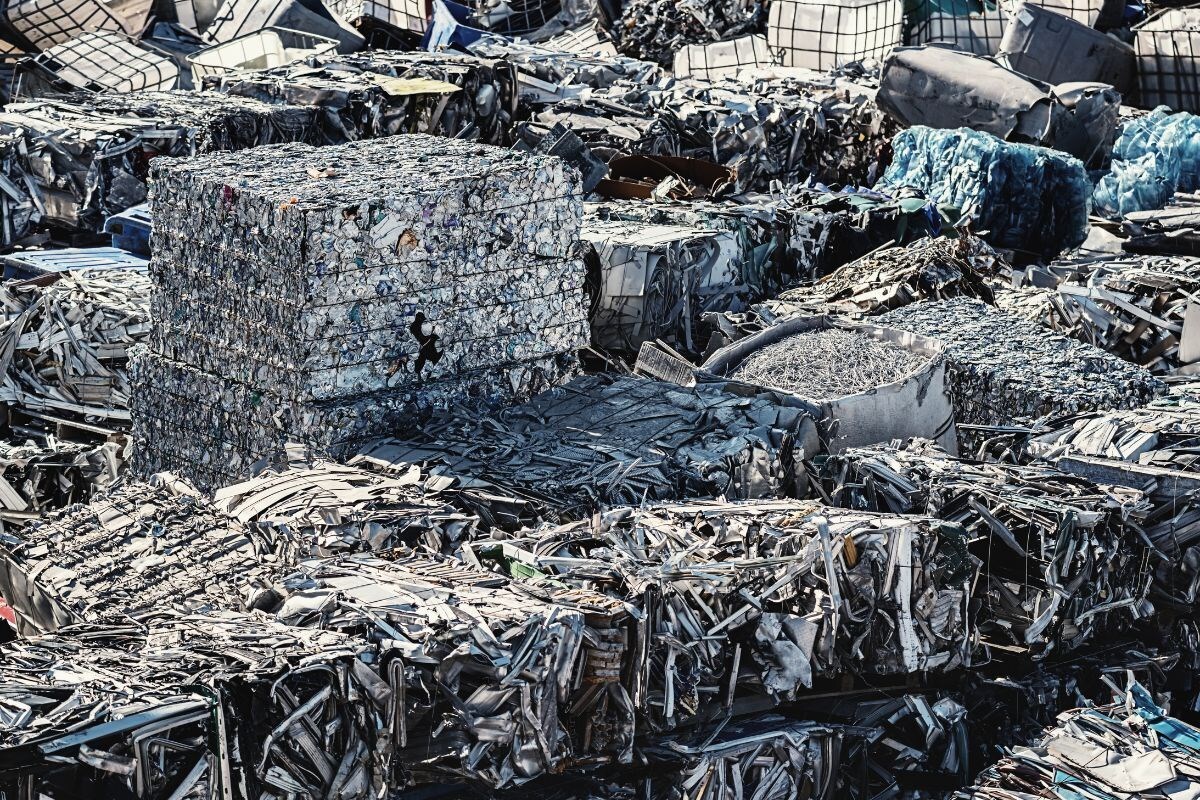
Aluminium scrap:
{alcircleadd}This week, the aluminium scrap market continued to see a tug-of-war between cost-supported floors and sluggish off-season demand, with prices moving sideways. The SMM A00 spot aluminium price closed at around RMB 22,950 per tonne on July 9. The decline in aluminium scrap was consistently smaller than that in primary aluminium, maintaining its downside resilience. Foshan shredded aluminium tense scrap (priced based on aluminium content) rose RMB 250 per tonne W-o-W.
On the price spread side, the price difference between A00 aluminium and mixed aluminium extrusion scrap free of paint in Foshan stood at RMB 2,011 per tonne on July 9, and the price difference between A00 aluminium and shredded aluminium tense scrap was at RMB 697 per tonne, stabilising slightly from their historically low levels last week but still holding at extremely low levels.
The tightening enforcement of the reverse invoicing policy provided a floor, leaving the logic that aluminium scrap is more likely to rise than fall intact. Supply-side constraints continued to intensify. The impact of the reverse invoicing policy deepened further, with reports emerging that Shandong suspended reverse invoicing from July. Small and medium-sized scrap utilisation enterprises in Anhui, Jiangxi, Hubei, and other regions saw spreading production cuts and suspensions, making compliant, invoiced aluminium scrap increasingly scarce.
On the import front, the earlier price spread inversion between Chinese and overseas markets led to a scarcity of high-quality overseas cargoes. With a 1-3 month shipping lag, port arrivals from June to August stayed low. Meanwhile, the UAE's aluminium scrap export ban and the EU's tariff hike further tightened overseas aluminium scrap supply.
Next week, the aluminium scrap market is expected to continue consolidating within a narrow range, constrained by demand and supported by costs. Mainstream transaction prices for shredded aluminium tense scrap (priced based on aluminium content) are expected to centre around 19,900-20,500 per tonne.
The pullback in spot primary aluminium prices limited the room for further narrowing of price spreads. The cost advantage of aluminium scrap over primary aluminium is unlikely to disappear in the short term, and demand-side price support for aluminium scrap remains.
Secondary aluminium alloy:
This week, SMM ADC12 prices continued to drift higher, accumulating a RMB 100 per tonne W-o-W increase to RMB 24,100 per tonne. On the cost side, tight tax invoices and insufficient compliant aluminium scrap supply kept enterprise procurement costs high, squeezing profit margins and strengthening producers' willingness to hold prices firm.
Market attention on substituting aluminium scrap with primary aluminium to produce ADC12 grew recently, but this route lacked overall economic viability. It was more of a temporary workaround for enterprises facing invoice shortages rather than a cost-driven proactive substitution. This week, primary aluminium prices strengthened W-o-W, further narrowing the substitution space, and the substitution scale did not expand significantly. Demand-side performance remained weak, with July's traditional off-season characteristics becoming more evident. Downstream enterprises faced insufficient new orders, and end-user restocking willingness was low, keeping overall market transactions sluggish.
After raising offer prices early in the week, follow-through on higher-priced deals weakened, and late in the week, some enterprises reported M-o-M weakening in orders. Insufficient demand constrained room for further price adjustments and became the primary factor suppressing upward price momentum.
The supply side continued to contract, but marginal changes warranted attention. This week, the operating rate of secondary aluminium industry leaders fell 0.4 percentage points W-o-W to 51.4 per cent, mainly due to tax invoice issues and the deepening off-season, as production cuts and suspensions continued. Inventory-wise, China's social inventory of secondary aluminium alloy ingots dropped 9,000 tonnes W-o-W to 35,300 tonnes, marking the sixth consecutive week of destocking.
This was mainly due to low operating rates limiting new arrivals into inventory, while a suitable spot-futures price spread spurred aggressive selling by spot traders, accelerating the destocking pace. On the import front, overseas ADC12 offer prices continued to fall to USD 3,100- USD 3,200per tonne, with some deals reportedly nearing USD 3,000per tonne.
The price spread between Chinese and overseas markets continued to normalise. If overseas offer prices keep pulling back, the import profit window could gradually open, at which point increasing import resources would supplement China's tight supply to some extent. Looking ahead, ADC12 prices are expected to move sideways within a range with a steady centre.
In the short term, with tight aluminium scrap, unresolved tax invoice issues, and low operating rates, cost support remains in play and downside room is limited. However, July's off-season demand is unlikely to improve significantly, and expectations of rising imports add overhead pressure. Overall, amid the tug-of-war between cost-supported floors and demand-constrained ceilings, short-term ADC12 prices are projected to trade within a range of RMB 23,700–24,300 per tonne.
Note: This article has been issued by SMM and has been published by AL Circle with its original information without any modifications or edits to the core subject/data.
Responses


A proud
ASI member
AL Circle Private Limited | CIN: U72200WB2017PTC221175
Registered Office: Ecospace Business Park, Block 3A, Unit 401A, New Town, Rajarhat, Kolkata, WB 700160
Corporate Office: Ecospace Business Park, Block 3A, Unit 401A, New Town, Rajarhat, Kolkata, WB 700160
© 2026 AL Circle. All rights reserved. AL Circle is not responsible for content from external sources.