您想继续阅读英文文章还
是切换到中文?
是切换到中文?

THINK ALUMINIUM THINK AL CIRCLE

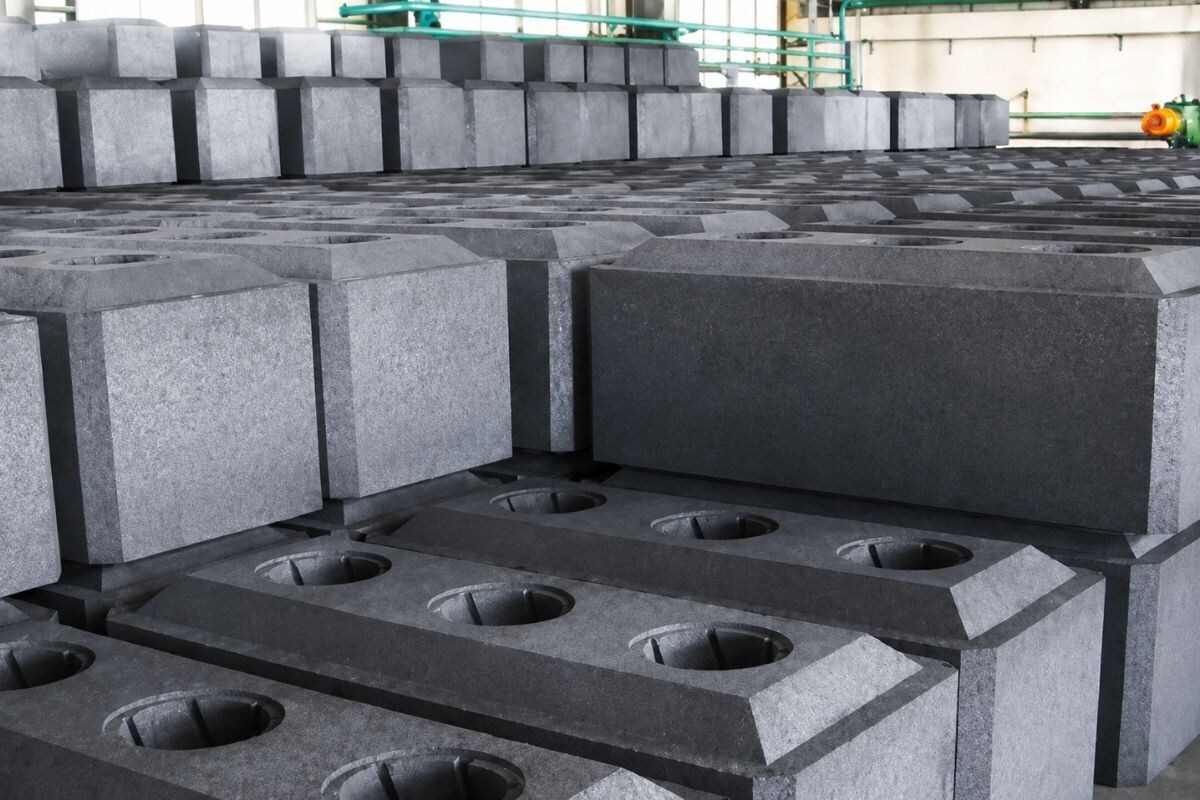
The image used in this article is generated with an AI tool and does not depict any real-time moment
China's pre-baked anode prices found upward momentum in July as cost-side support re-emerged during the settlement cycle. According to Mysteel, a major Shandong-based aluminium producer raised its July prebaked anode purchase benchmark price by RMB 30 per tonne month-on-month, with settlement price at RMB 5,683 per tonne by cash and RMB 5,707 per tonne by acceptance.
{alcircleadd}Following a brief downward correction, the prebaked anode market regained traction. Although the rebound was modest, price trends aligned with rising costs of upstream raw materials, petroleum coke and coal tar pitch, allowing cost pressures to successfully transmit to finished products. The industry's overall cost shifted slightly higher, but producers remained comfortably above the breakeven line, with marginal fluctuations contained.
Throughout the month, most pre-baked anode producers maintained stable production schedules amidst concurrent plant restarts and curtailments, leaving overall operating rates largely unchanged. Supply remained ample. On the demand side, growth in domestic aluminium capacity had largely plateaued, which operated steadily and provided consistent support for anode consumption. Fundamentals for prebaked anodes remained sound.
Supply side
In July, prebaked anode enterprises generally operated smoothly. Most commercial producers in key producing regions fulfilled orders, with some continuing toll-processing agreements. Environmental protection controls in parts of Henan constrained output in those areas. In Gansu, facilities that underwent maintenance completed repairs and resumed production in late July. Integrated smelters maintained stable output primarily for captive use. In Northwest China, plants undergoing maintenance compensated for lost output by sourcing externally and utilising outsourced baking for green blocks.
Regarding new capacity, the 600,000-tonne carbon-based project by Guangtou Qiangqiang entered trial production for its baking furnaces, while the baking workshop at Xinjiang Chenfeng Carbon's green energy-saving integration project commenced equipment linkage commissioning. Overall, concurrent restarts and cutbacks kept capacity utilisation rates stable. Mysteel data's shows China's prebaked anode capacity utilisation rate reached 76.53 per cent on average in July, down 0.25 percentage points month-on-month, indicating sustained sufficient supply.
To explore trade opportunities of aluminium consumables, visit AL Biz
Demand side
Domestic aluminium smelters maintained steady operations in July, supporting healthy anode demand. Having largely exhausted capacity expansion in H1 2026, the industry entered July with limited incremental space but sustained high operating rates. Smelters procured pre-baked anodes at a normal pace, keeping demand robust.
On the export front, data from the General Administration of Customs of People's Republic of China (GACC) shows China exported 279,900 tonnes of prebaked anodes in June 2026, surging 109.53 per cent YoY and 62.26 per cent MoM. Export volumes jumped by 107,400 tonnes from May, led by significant increases from Shandong (up by 118,400 tonnes) and Hebei (up by 14,800 tonnes). Destination-wise, Canada and Malaysia saw the largest gains, up 42,600 tonnes and 39,900 tonnes, respectively. Although shipments to the UAE and Norway dipped slightly, effective offsets from exports to Spain and Angola resulted in net growth, with total June exports outperforming May.
Cost side
The domestic petroleum coke (petcoke) market saw flat trading in July, with prices mixed. State-owned refineries mostly lifted prices for low-sulfur and high-sulfur petcoke, while medium-sulfur petcoke prices fell more than they rose. In Northeast China, refineries of low-sulfur petcoke aggressively destocked in June, entering July with negligible inventories. Coupled with feedstock purchases by battery anode producers, this drove consecutive price hikes for low-sulfur coke.
Independent refineries saw increased unit overhaul, with operating units trending toward lower sulfur content, increasing the supply of standard-grade petcoke. Refineries adjusted prices based on inventory and specifications. By late July, 3B petroleum coke in Shandong traded at RMB 3,580 per tonne (up by RMB 160 per tonne M-o-M), while 3C stood at RMB 3,050 per tonne (up by RMB 200 per tonne M-o-M). In East China, 3B coke was priced at RMB 3,520 per tonne (up by RMB 100 per tonne M-o-M).
Meanwhile, domestic coal tar pitch averages trended lower in July. Early in the month, high-priced coal tar offered cost support, lifting pitch prices briefly. However, the rally proved short-lived. From mid-month, coal tar prices retreated, eroding cost support.
Concurrently, downstream plants' operating rates slipped while feedstock inventories stayed high, dampening buying interest and prompting price corrections. Late-month price stabilisation followed as coal tar prices bottomed out, mitigating bearish cost impacts, while downstream buyers returned for essential replenishment. By July-end, modified pitch in Shandong closed at RMB 4,950 per tonne (flat M-o-M), while Shanxi prices settled at RMB 4,750 per tonne (down by RMB 100 per tonne M-o-M).
Outlook
In August, domestic refineries are expected to slightly lift the operating rates of delayed coking units, leading to a modest increase in domestic petroleum coke supply. Import arrivals remain steady, while port destocking accelerates. Consequently, total petroleum coke availability is expected to rise marginally. Petroleum coke prices are likely to fluctuate within a steady range amid cautious downstream essential buying.
For coal tar pitch, feedstock coal tar is anticipated to stage a rebound, offering stronger cost-side support. However, rising operating rates at deep-processing plants may cap pitch price gains. Overall, pitch prices are forecast to rise marginally before stabilising.
Concerning pre-baked anode fundamentals, scheduled restarts of maintenance units and ramp-ups from newly commissioned capacity will keep supply abundant in August, with operating rates remaining elevated as commercial producers focus on fulfilling existing orders. Domestic aluminium capacity has effectively hit its regulatory ceiling, limiting future demand growth. Nevertheless, high aluminium smelters' capacity utilisation rates combined with resilient overseas demand will continue to underpin anode consumption.
Reflecting raw material cost declines during the settlement period, the prebaked anode market has turned downward again. Mysteel reports that a major Shandong-based aluminium producer cut its August purchase benchmark price by RMB 53 per tonne M-o-M, setting e at RMB 5,630 per tonne by cash and RMB 5,645 per tonne by acceptance. After a brief rally, prices have corrected; however, the moderate decline has fostered cautiously optimistic sentiment. The cost pressures are expected to ease slightly. Market participants will continue to monitor raw material price trajectories to gauge their impact on producer profitability.
To learn about the market potential of aluminium dross, explore "ALuminium Dross Processing: Generation, Recovery & Strategic Roadmap"
Note: This news is published under a content and exchange agreement with Mysteel
Responses


A proud
ASI member
AL Circle Private Limited | CIN: U72200WB2017PTC221175
Registered Office: Ecospace Business Park, Block 3A, Unit 401A, New Town, Rajarhat, Kolkata, WB 700160
Corporate Office: Ecospace Business Park, Block 3A, Unit 401A, New Town, Rajarhat, Kolkata, WB 700160
© 2026 AL Circle. All rights reserved. AL Circle is not responsible for content from external sources.