您想继续阅读英文文章还
是切换到中文?
是切换到中文?

THINK ALUMINIUM THINK AL CIRCLE

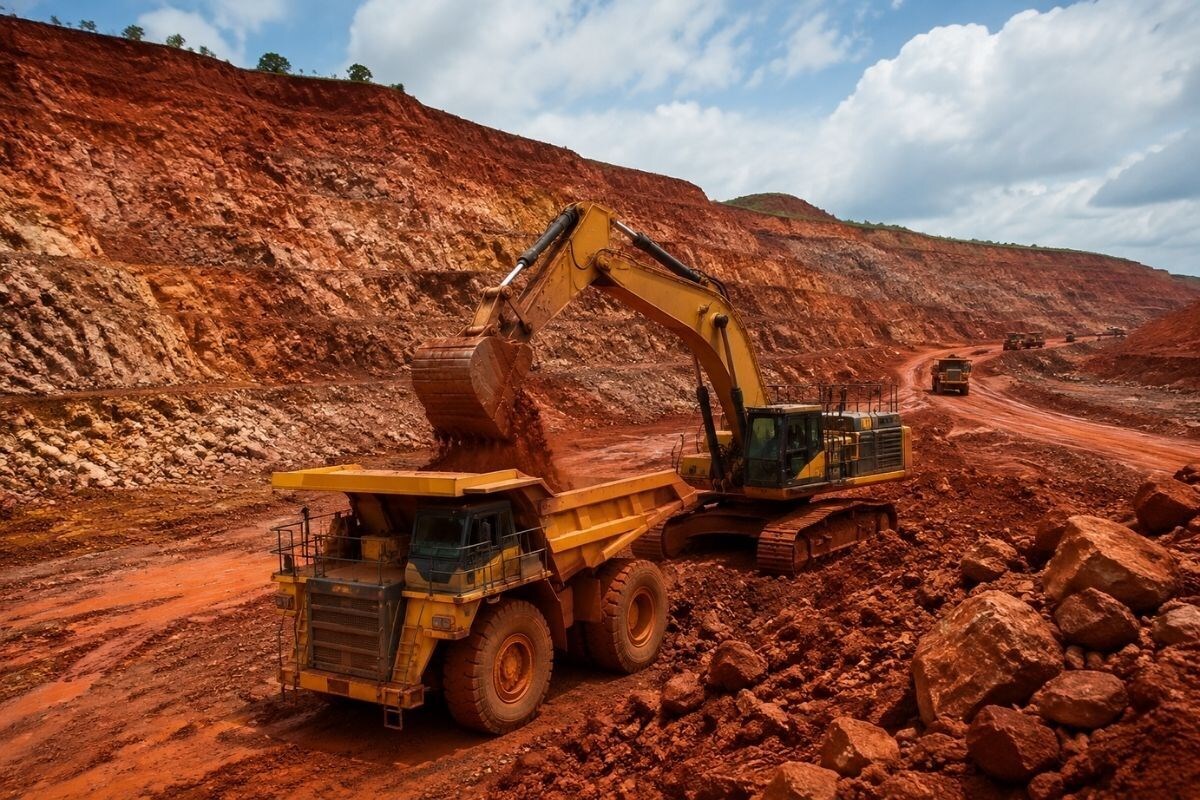
The image used in this article is generated with an AI tool and does not depict any real-time moment
Recently, persistent market rumours, such as the imminent introduction of an export quota system in Guinea and a potential reduction in China's imported ore supply, have captured the attention of participants in China's bauxite and alumina markets, intensifying the tug-of-war between market sentiment and expectations.
{alcircleadd}To June 25, the Guinean government has yet to publicly disclose any detailed rules regarding the proposed quota system, including its implementation timeline, mechanisms for controlling total shipments, specific quotas for individual mines, and any additional conditions imposed on mining companies. Mysteel sticks to the estimation that China's bauxite import market will remain oversupplied through 2026 despite expected mine production cuts.
Policy background: rumours of Guinea's export quota system await confirmation
As the world's largest producer of bauxite, Guinea accounts for over one-third of global bauxite output. In 2025, its shipments grew by a quarter to reach 183 million tonnes, with China's imports constituting over 74 per cent of this volume; the growth rate further accelerated in the first three months of 2026.
In recent years, Guinea has been advancing resource nationalism: in 2025, it raised export tariffs to 10 per cent, revoked mining rights from companies that failed to fulfil their commitments to build local refineries (including GAC), cancelled idle mining permits, and began exploring the launch of an official bauxite price index and requirements for some cargoes to be transported by its national fleet.
Market rumours suggest that an export quota system will be officially implemented in 2026, proposing an annual national export cap, with quotas allocated differentially based on miners' commitments to invest in domestic alumina plants, accompanied by punitive tariffs as a deterrent.
However, as of the end of June 2026, the Guinean government has not issued any formal decree; specifics regarding the total quota, individual company allocations, and retroactive clauses remain pending official confirmation.
Explore- Most comprehensive and forward-looking industry-focused report — Global Bauxite & Alumina Market Forecast to 2036: Supply–Demand, Trade Flows & Price Outlook
Freight rates and rainy season disruptions: Guinean shipments have not plunged
Despite heavy pressure from high freight rates, Guinean shipments have not experienced a cliff-edge drop. According to Mysteel's satellite data tracking, a review of Guinea's monthly shipments over the past three years reveals that while the year-on-year shipment growth rate in 2026 has notably slowed compared to 2025, total volumes have maintained positive growth. Particularly in April and May 2026, when freight rates peaked, shipment volumes still edged up year-on-year; model projections estimate June shipments at approximately 17 million tonnes.
Still, a sharp surge in freight rates has continuously threatened shipments from various Guinean mines since mid-to-late March. A clear divergence has emerged among miners: those who had locked in freight rates earlier enjoyed relatively smooth shipments, while others relying on spot vessel bookings faced risks of reduced or even halted shipments. Entering June, however, freight rates peaked and began to retreat, somewhat easing concerns over mine production cuts.
June marks the start of Guinea's traditional rainy season. Seasonal declines in shipments, followed by a gradual recovery after October, are a recurring annual pattern; thus, year-on-year trends serve as a more meaningful reference point.
In the second half of 2025, the revocation of Axis mine's operating license lowered the shipment base; in contrast, for the second half of 2026, against a backdrop where the quota policy remains unconfirmed and freight rates fall, Guinean shipments will likely still post considerable year-on-year growth. Even if the quota system is introduced after July, unless the government applies the retroactive policy to shipments already made in the first half, rolling out such a policy during the rainy season would weaken its impact on full-year shipment reductions.
Supply-demand mismatch: alumina demand growth struggles to offset excess ore imports
China's alumina production has also risen year-on-year, but the increase in imported bauxite cannot be fully absorbed, leaving the imported ore supply in surplus during the first half of the year. Although alumina production cuts occurred in northern China overall production remained on an upward trend amid new capacity additions in the first half of 2026.
Mysteel's data shows that China produced 38.262 million tonnes of alumina from January to May 2026, up 4.36 per cent year-on-year, providing some incremental demand for bauxite. However, this increase pales in comparison to the volume of imported bauxite.
According to customs data, China's cumulative bauxite imports reached approximately 100.76 million tonnes from January to May 2026, a year-on-year increase of 15.47 million tonnes, of which 82.57 million tonnes came from Guinea, up 24.5 per cent.
Based on Mysteel calculations, China's consumption of imported bauxite for alumina production from January to May 2026 was about 68.93 million tonnes, a year-on-year increase of roughly 8.07 million tonnes. The incremental imported bauxite far exceeded what could be consumed, leaving the imported ore supply still in surplus during the first half, with an excess volume of about 31.83 million tonnes. This surplus is reflected in the inventory buildup at ports and in the stockpiles of downstream alumina refineries.
It is worth noting that from June onwards in 2026, additional alumina capacity is scheduled to come online. In an optimistic scenario, static new alumina output in the second half of the year would reach 2.42 million tonnes, translating to an increased import ore consumption of roughly 6.5 million tonnes.
However, current alumina prices remain weak and volatile, raising the possibility of production cuts and maintenance at refineries. Based on Mysteel's theoretical balance model for Chinese alumina output, from June to December2026. China will need to consume about 86 million tonnes of Guinean imported ore.
Yet, given the pronounced surplus in the first half, high port inventories, and structural supply-demand mismatches between northern and southern Chinese alumina plants, even if Guinean shipments to China fall below theoretical consumption levels during the rainy season, the overall market can barely maintain a dynamic balance, provided the quota system has not been formally implemented to substantively tighten supply.
At present, the repeated delays in rolling out Guinea's quota policy mean it has yet to exert any real tightening effect on the supply side. The substantial year-on-year surge in total imports during the first half is already a foregone conclusion; even if individual mines cut production later, it would be difficult to reverse the overall surplus pattern of China's imported ore for 2026.
Conclusion
In summary, China's bauxite market is currently caught in a deep tug-of-war between strong expectations and weak reality. On one hand, uncertainty lingers over Guinea's bauxite export controls, with quota rumours continuing to disrupt market sentiment; on the other hand, real-world data provides a powerful counterbalance: the massive 31.83 million-tonne import surplus in the first half has already built up a buffer of high inventories at ports and plants. Coupled with freight rates pulling back, and the low-base effect of the rainy season, actual Guinean shipments have not plummeted off a cliff. In the short term, before the formal issuance of a quota policy decree with retroactive clauses, the overall surplus pattern of China's imported bauxite is unlikely to be reversed by policy expectations alone.
For forward-thinking aluminium market insights amidst supply chain and price challenges, read "ALuminium LeaderSpeak 2026."
Note: This news is published under a content and exchange agreement with Mysteel
Responses