Will India revise primary aluminium import duty? Downstream industry makes its case
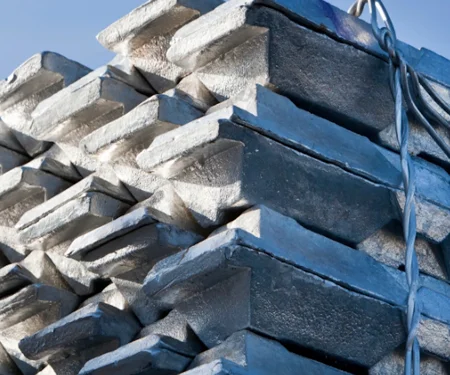
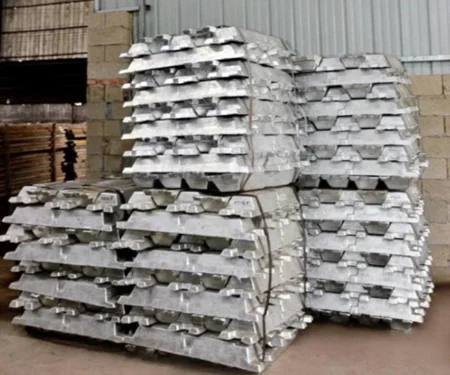
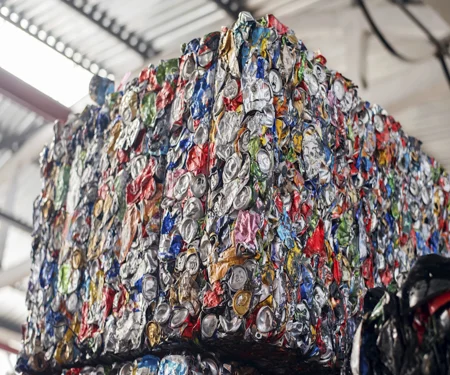
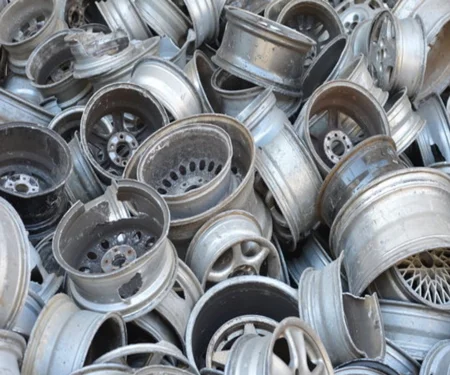
Stock image for referential purposes only
The Federation of All India Aluminium Utensils Manufacturers (FAIAUM) and the Cable and Conductor Manufacturers Association of India (CACMAI) requested the Ministry of Mines to reduce the effective Customs duty on primary aluminium imports. They cited concerns regarding the current tariff structure, which is increasing raw material costs and affecting the competitiveness of micro, small and medium enterprises (MSMEs).
The industry bodies submitted a joint representation on July 14, urging the Ministry for an immediate rationalisation of the effective 8.25 per cent import duty on primary aluminium.
Explore: The most comprehensive and forward-looking industry-focused report — Global Bauxite & Alumina Market Forecast to 2036: Supply–Demand, Trade Flows & Price Report
India's aluminium tariff burden
India's aluminium tariff policy has emerged as a pressure point, described by the bodies as “a critical burden on downstream manufacturers.”
The import duty, as per the industry bodies, allows domestic primary aluminium producers to adopt import-parity pricing. Consequently, downstream manufacturers face higher input costs, which, according to them, are reducing profitability and stunting growth opportunities.
At present, primary aluminium accounts for a 7.5 per cent basic Customs duty, along with a 0.75 per cent Social Welfare Surcharge, taking the effective import levy to 8.25 per cent.
While downstream manufacturers have called for a review of the duty structure, domestic primary producers maintain that the tariff remains necessary to safeguard India's smelting capacity and support domestic production.
These concerns were also highlighted in the Ministry of Mines' Aluminium Vision document released last year. The report estimated that import-parity pricing resulted in downstream manufacturers paying around USD 470 million more to domestic primary producers in 2022, reducing investment in value-added manufacturing.
MSMEs warn of shrinking margins and rising input costs
The representation noted that in recent years, downstream manufacturers producing cables, conductors, utensils and other value-added aluminium products have witnessed margin compression of up to 70 per cent, increasing the risk of reduced capacity utilisation, delayed investments, layoffs and plant closures.
"Reduced profitability has curtailed reinvestment, capital expenditure on technology, pollution control upgrades, and capacity utilisation. Continued stress has increased the risk of layoffs, closure of units, higher downstream prices for consumers, and weaker export performance," the associations stated.
They highlighted the sharp increase in global aluminium prices, which surged from around USD 2,200 per tonne in 2023 to over USD 3,700 per tonne, driven by the Middle East conflict-induced geopolitical tensions, logistics disruptions, elevated freight rates and volatile energy markets.
Consequently, overall input costs have likely increased by 20-35 per cent over the past three months.
Unlock key insights from leading companies and experts across the aluminium ecosystem with our e-Magazine - Mine to Market: ALuminium Producers & Manufacturers 2026
Global Trade Research Initiative (GTRI) released a report in June, reiterating these concerns. It was estimated that import-parity pricing increases the cost of aluminium-intensive public infrastructure projects by around 3 per cent, affecting sectors such as power transmission, railways, metro systems, renewable energy and defence.
The report also mentioned that in FY2025-26, India imported finished aluminium products worth USD 4.1 billion, with nearly one-quarter entering the country at low or zero duty under FTAs.
CACMAI President Sanjay Saboo noted, “The import-parity pricing mechanism imposes a cost burden on the cable and wire industry. Since the transmission sector is overwhelmingly driven by public investment, the inflated prices caused by the 7.5 per cent duty-added margin ultimately increase government expenditure.”
As a result, “taxpayers bear the cost of higher-priced cables and conductors, making transmission infrastructure more expensive than it needs to be.”
LME aluminium price makes modest recovery of 0.52% on July 16; stocks dip to 283,100t
Next articleLME aluminium warehouse inventories decline nearly 45%: How sanctions, geopolitics and trade reshaped Russian and Indian stocks
Grow with
AL Circle