Vietnam-China partnership aimed to solidify cross-border aluminium value chain

China’s Yunnan Province and Vietnam are joining in an economic collaboration, opening avenues for building an integrated, cross-border aluminium industrial chain. Anchored in the Red River basin’s 7+8 cooperation mechanism, the partnership is increasingly shifting from conventional trade to high-value industrial cooperation.
Explore- Most accurate data to drive business decisions with Global ALuminium Industry Outlook 2026 across the value chain
Under the Comprehensive Strategic Partnership, Yunnan-Vietnam ties are moving beyond border trade towards deeper industrial and service cooperation, which is considered an essential transition for long-term sustainability.
Speaking at the China-Vietnam Import-Export Business Networking Conference, Deputy Director at Vietnam’s Trade Promotion Department, Ms Nguyen Thi Thu Thuy, commented on Yunnan’s industrial strengths.
“Businesses in Yunnan are in the fields of machinery and equipment, chemicals, construction materials, and especially modern processing technology,” she stated.
She added, “The close cooperation between the business communities of both sides will be a direct driving force to promote sustainable development of import and export turnover, commensurate with the potential and advantages of each side.”
Backed by geographic as well as economic structure, Vietnam and Yunnan have sufficient scope for strategic alignment. As Yunnan and Vietnam share a border, the former benefits from the Red River system and multiple cross-border trade routes, facilitating seamless connectivity.
Vietnam brings abundant bauxite reserves, rising domestic demand, and a favourable geographic position. Northern Vietnam’s Red River basin combines an established industrial base with increasing demand from infrastructure and green transition projects.
Concurrently, Yunnan’s advanced processing technology and industrial expertise can offer a link between resource availability and technological capability.
Don't miss out- Buyers are looking for your products on our B2B platform
The "Vietnamese resources - Yunnan technology" model
Emphasising the scope for collaboration, Mr Hoang Luc, General Director of Yunnan Aluminium Joint Stock Company, referred to a joint venture plan. He mentioned, “With Vietnam's advantage of possessing abundant bauxite resources, while Yunnan Aluminum has advanced technology and production capacity, the two sides can combine under the ‘Vietnamese resources - Yunnan technology’ model to build a cross-border aluminium industrial chain.”
He further detailed the company’s capabilities, with “facilities in Lancang and Honghe, areas bordering the Vietnamese provinces of Lao Cai and Lai Chau, with three convenient national border crossings including land, rail, and waterway.” This would be crucial for “forming a cross-border supply chain.”
The company owns “integrated production facilities ranging from bauxite and alumina to electrolytic aluminium and aluminium alloys,” situated in Van Son, bordering the Vietnamese provinces. “We are also a large-scale alumina producer in the region, which allows us to provide strong technological support to Vietnamese businesses,” Mr Luc added.
With the annual capacity of 1.4 million tonnes of alumina, 3.08 million tonnes of aluminium, and 820 thousand tonnes of electrolytic aluminium, Yunnan’s industrial base plays a critical role in this partnership. Future cooperation is expected to expand to important areas like bauxite exploration, alumina refining, aluminium smelting, recycling, and circular economy development, while establishing industry standards.
Also read: China seizes opportunity to boost aluminium exports amid the Middle East conflict – which countries stand to gain?
Addressing bottlenecks in Vietnam’s aluminium sector
Despite its abundant resource base and comparatively low electricity costs, Vietnam’s aluminium industry has structural challenges. Industry stakeholders face limited capital constraints, a shortage of skilled labour, and gaps in advanced metallurgical technology.
Currently, domestic enterprises account for only about 20 per cent of export value, with the majority held by foreign-invested firms. Additionally, shifting to green technologies and sustainable practices is adding to operational complexity. Failing to make timely upgrades could limit Vietnam’s competitiveness in both domestic and global markets.
To address these issues, Mr Luc emphasised the importance of deeper collaboration, stating, “In addition to cooperation in exploitation and processing, the two sides could strengthen cooperation in human resource training, digital transformation, building smart factories, applying big data, and modern control technology.”
Must read: Key industry individuals share their thoughts on the trending topics
Strong demand outlook and connectivity enhancement
With a strong global aluminium market outlook, the demand growth projection is 25 per cent (approx.) by 2030. Vietnam’s domestic infrastructure expansion is contributing to the strong demand, particularly for aluminium profiles.
However, experts have cautioned that not only policy support but also improved internal capabilities, through quality improvements, technological upgrades, and workforce development, are critical for long-term success.
Mr Li Zhangwu, Deputy Head of Honghe Prefecture, stressed the need for improved connectivity that both sides should focus on upgrading border infrastructure, enhancing customs efficiency at key points like Hekou and Jinshuihe, and resolving cross-border transportation challenges.
He also highlighted the importance of expanding cooperation into complementary sectors, including manufacturing, e-commerce, agriculture and tourism, with Honghe positioned as a “bridge” to facilitate practical implementation.
By improving connectivity and strong market demand, Vietnam and Yunnan can maintain a sustainable cross-border aluminium value chain. That said, realising this potential will depend on how effectively both sides address technological gaps, strengthen domestic capabilities, and advance a successful execution.
Trading aluminium across borders? Find out the exact cost you need to bear for the embedded carbon in the product by using this CBAM calculator.

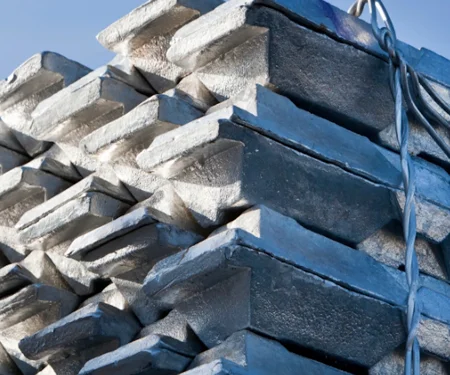
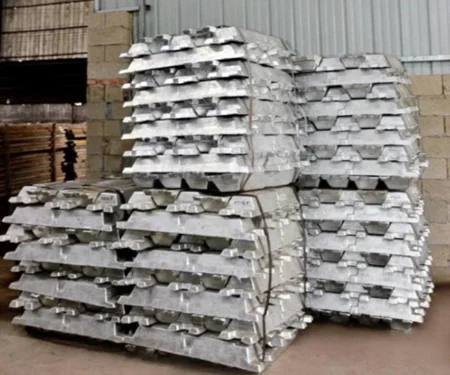
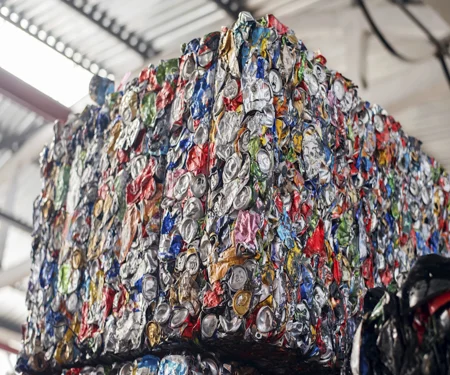
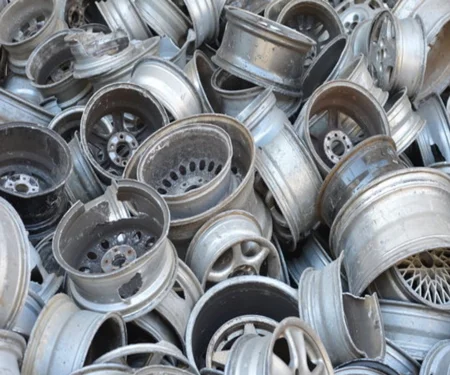
Image for referential purposes only
Hind Aluminium clarifies share price movement, cites market factors
Next articleGolkonda Aluminium files Q4FY26 compliance certificate with BSE
Grow with
AL Circle