Vedanta, NALCO or Hindalco: Recent aluminium price correction to offer a buying window?

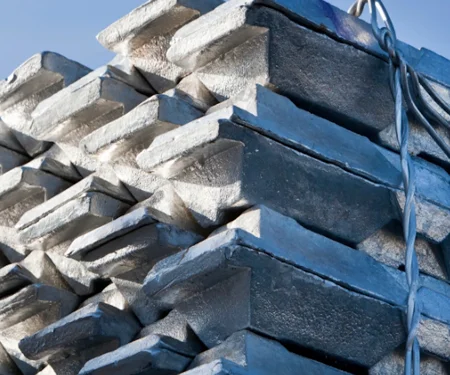
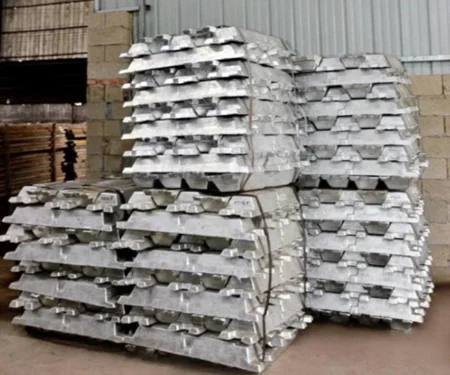
Stock image for referential purposes only
After a volatile first half of the year, analysts believe that the recent correction in aluminium prices could bring favourable news. It may open up opportunities for investors in India's leading aluminium producers, including National Aluminium Company (NALCO), Hindalco Industries and Vedanta Aluminium Metal.
From January to June, the London Metal Exchange (LME) aluminium prices surged almost 25 per cent, driven largely by geopolitical concerns surrounding the Strait of Hormuz. However, after a temporary easing of tensions in West Asia, prices retreated by more than 17 per cent to around USD 3,019 per tonne, weighing on aluminium stocks. Since early June, NALCO has declined by over 19 per cent, while Hindalco has fallen by more than 15 per cent.
Analysts pointed out that although the Middle East conflict has renewed the Strait of Hormuz tensions, recent aluminium price swings might indicate geopolitical uncertainty rather than a weakening of demand.
Explore the relevance of red mud in the sustainable aluminium industry in A Comprehensive Analysis of Bauxite Residue (Red Mud): Sustainability, Resource Recovery and Strategic Recommendations
Demand outlook remains firm despite geopolitical volatility
Hitesh Jain, Lead Analyst at Yes Securities, expects aluminium prices to stay relatively firm even as new capacity comes online in Indonesia and China. He believes steady consumption from the power sector, renewable energy projects and electric vehicle manufacturing will continue to provide support.
Jain expects aluminium to trade in the USD 2,800-3,000 per tonne range over the medium term and remains positive on the metal's long-term outlook, citing favourable demand-supply fundamentals.
A similar view has been expressed by JPMorgan, ING and Kotak Securities, all of which continue to forecast a global aluminium deficit in 2026. Kotak estimates demand will grow at a 1.5 per cent CAGR between 2026 and 2029, slightly ahead of the projected 1.3 per cent increase in supply, indicating that market fundamentals are likely to remain supportive.
Supply additions may not be enough to ease the market
While Indonesia has outlined plans to raise aluminium smelting capacity to 14.9 million tonnes by 2030, analysts question how quickly those ambitions can be realised.
Aditya Welekar, Senior Research Analyst at Axis Direct, believes limited power-generation capacity could become a major hurdle, estimating Indonesia's aluminium output may reach only 3.4-3.5 million tonnes by the end of the decade.
China, meanwhile, has little room to significantly increase production as it approaches its effective aluminium capacity cap of 45 million tonnes. With expansion opportunities becoming increasingly limited, analysts expect global supply growth to remain measured, helping keep the aluminium market relatively tight over the medium term.
The recent decline in aluminium prices has also made sector valuations more reasonable.
According to Vinod Nair, Head of Research at Geojit Investments, aluminium companies are currently trading close to their five-year average EV/EBITDA multiples, indicating broadly fair valuations. He also pointed out that aluminium stocks continue to trade at a discount compared with steel companies.
"With aluminium prices showing signs of stabilisation after the recent correction, supported by easing Fed-related concerns and a weakening US dollar, the recent weakness could be viewed as an accumulation opportunity,” he stated.
Considering “the prevailing global macro uncertainty,” he recommended “a staggered investment or buy-on-dips approach.”
Risks and stock outlook
Despite the constructive outlook, analysts caution that geopolitical developments remain the biggest near-term risk. Renewed disruptions in West Asia could trigger sharp swings in aluminium prices.
Other factors that could influence the sector include faster-than-expected global supply additions, weaker global economic growth and the future path of US Federal Reserve interest rates, which could affect both the US dollar and commodity prices.
The following outlook has been shared for the three companies:
Hindalco Industries’ earnings are likely to be backed by stable aluminium prices, lower bauxite mining and coal costs, and contributions from its new alumina refinery. Its diversified aluminium and copper businesses provide balanced earnings.
NALCO is expected to benefit from favourable aluminium prices, currency depreciation and expanding alumina production. Lower mining and coal costs are also likely to support margins.
The company is pursuing long-term diversification through rare-earth recovery projects. Its strong balance sheet remains strong despite near-term capacity and execution challenges.
Vedanta Aluminium continues to benefit from its integrated operations spanning bauxite, alumina, coal, power and aluminium production.
Ongoing capacity expansion, improving earnings visibility, disciplined capital allocation and continued deleveraging could support future growth and strengthen returns.
Unlock key insights from leading companies and experts across the aluminium ecosystem with our e-Magazine - Mine to Market: ALuminium Producers & Manufacturers 2026
Vedanta Aluminium to rally 22%? Nuvama initiates ‘Buy’ with 29% EBITDA forecast
Next articleLME aluminium prices ease on July 13; stocks and cancelled warrants continue to decline
Grow with
AL Circle