In a policy shift announcement on Monday, February 10, the United States government has brought forth the decree to implement a 25 per cent tariff on all primary aluminium imports, effective March 4, 2025. The executive order, signed by President Donald Trump, aims to bolster the country’s domestic aluminium industry and address long-standing concerns over unfair international trade practices.
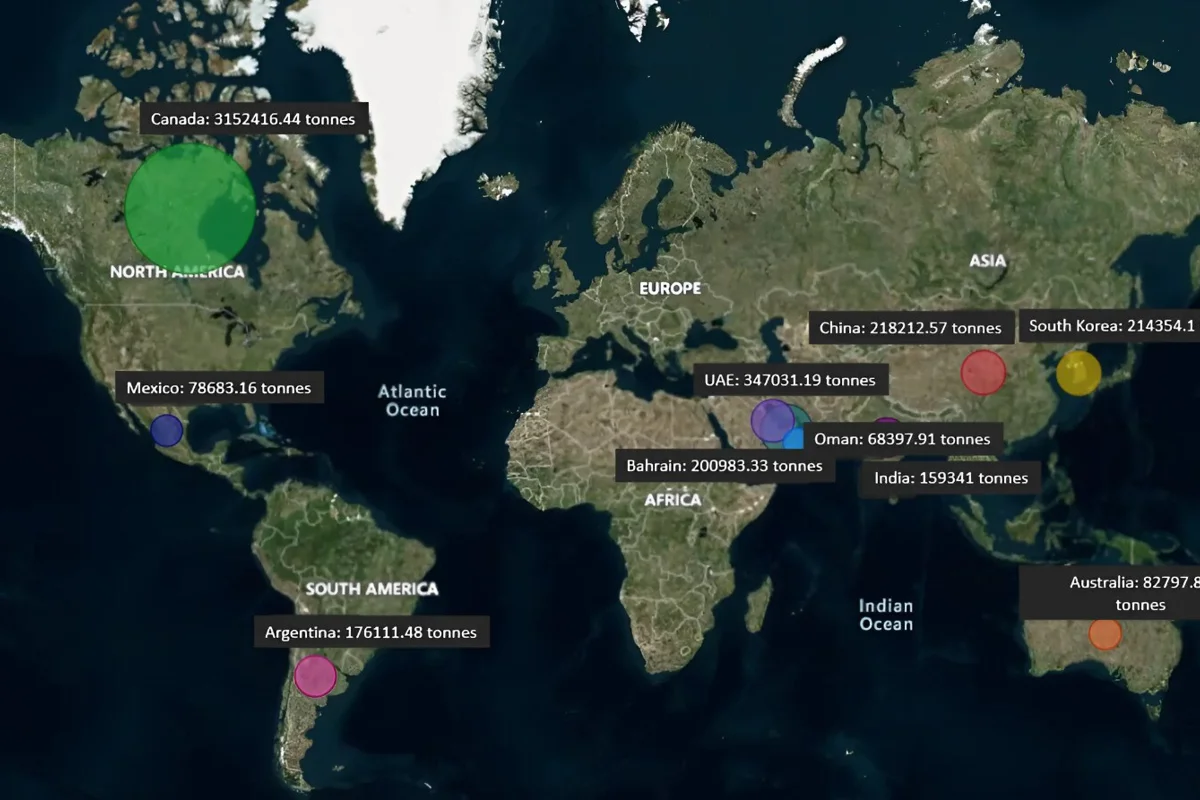
US aluminium imports in 2024 from top 10 countries worldwide
The newly enforced tariff removes previous exemptions and quota deals, closing loopholes that had allowed nearly 75 per cent of aluminium imports to bypass tariffs. Domestic entities anticipate this move will benefit American aluminium producers, including Century Aluminum, a leading primary aluminium manufacturer based in Chicago.
Century Aluminum’s CEO, Jesse Gary, expressed strong support for the President’s decisive action to fight back against unfair trade practices that have disadvantaged the US primary aluminium industry for years. He stated, “We strongly support today’s Executive Order from President Donald J. Trump imposing a 25 per cent tariff to stop the flood of aluminium imports into the United States. President Trump’s decisive action will protect national security and help level the playing field for America’s aluminium workers. On behalf of our employees, I thank President Trump for putting America first and strengthening the Section 232 tariffs, which will help drive the resurgence of domestic aluminium production.”
The measure is part of an effort to rejuvenate domestic production and safeguard American jobs. According to industry analysts, the primary aluminium sector has been under significant pressure from low-cost foreign imports, particularly from China and Russia.
What does the trade data say about US aluminium imports?
The United States of America has been heavily dependent on transnational aluminium till 2024. According to the International Trade Administration, the 2024 data shows that Canada stands out as the most significant exporter to the US, with an impressive 3.15 million tonnes, dwarfing other contributors. Other notable exporters include the UAE exports of 347 thousand tonnes, China’s 218 thousand tonnes, and South Korean quantity of 214 thousand tonnes. In South America, Argentina exports 176 thousand tonnes. In Asia, India accounts for 159 thousand tonnes. Other relevant contributors include Bahrain, which has 200 thousand tonnes; Mexico, which has 78 thousand tonnes; Oman, which has 68 thousand tonnes; and Australia, which has 82 thousand tonnes. These are the top ten countries exporting aluminium to the United States, led by Canada’s dominance. There are smaller yet regular exporters of aluminium who will be equally (read even more) affected by the tariff imposition.
The US president views these tariffs as a mechanism to gain revenue, remedy trade imbalances, and increase pressure on countries to act on US concerns. The aluminium tariff increase, up from the previous 10 per cent rate introduced in 2018, is expected to have a marked impact on import volumes. Data from the US International Trade Commission indicates that nearly 3.5 million tonnes of primary aluminium were imported in 2023. With the new 25 per cent tariff, industry experts forecast a decline in import levels as domestic producers regain market share. Moreover, the move is projected to protect thousands of American jobs in this specific base metal sector as per the recent report by the Economic Policy Institute. They share that the 2018 tariffs resulted in the creation or safeguarding of over 5,000 jobs within the US aluminium industry. The latest measure is likely to amplify these gains.
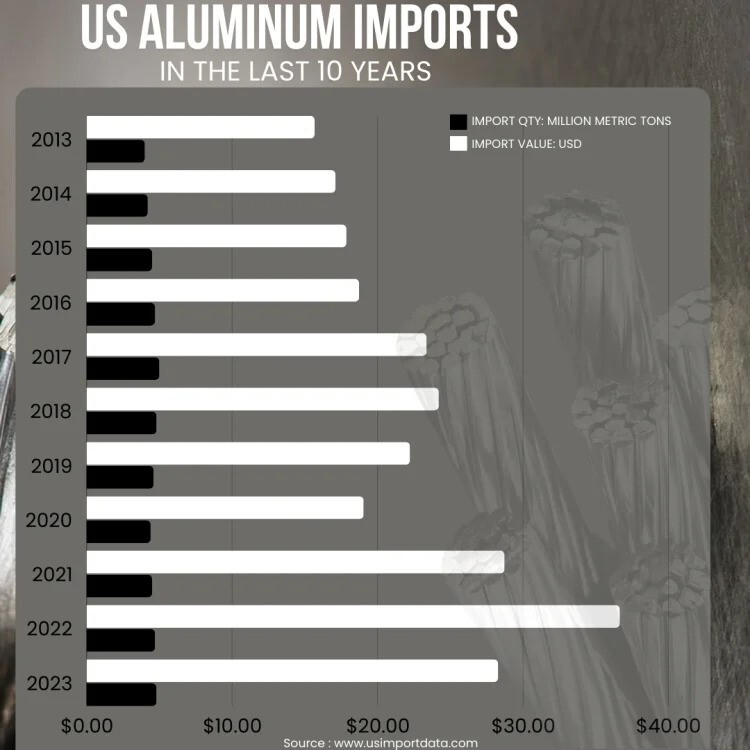
Image Source: www.usimportdata.com
Will US exports also take a hit?
As the tariff is to be imposed on aluminium imports, it primarily impacts countries exporting aluminium to the United States rather than directly affecting US exports. However, tariffs can have indirect consequences for US exports wherein other countries have started to impose counter-tariffs on American goods, making US exports less competitive internationally. Higher aluminium costs within the US could increase production costs for industries reliant on aluminium, such as the automotive, aerospace, and beverage sectors. This would make their products more expensive and less competitive in global markets. Strained trade relationships due to tariffs can lead to reduced export agreements or market access restrictions for American products.
For example, recent developments indicate that the United States’ imposition of a 25 per cent tariff on steel and aluminium imports is prompting significant international responses. The European Union, for instance, is considering firm and proportionate countermeasures to protect its economic interests, which may include retaliatory tariffs on key US exports. Similarly, Canada has expressed strong opposition to these tariffs, with Prime Minister Justin Trudeau labelling them as “unacceptable” and indicating a firm response.
New regional production requirements
In addition to the blanket tariff increase, the executive order introduces a new North American production standard for metals. Steel imports must now be ‘melted and poured’ and aluminium ‘smelted and cast’ within the country’s boundaries to qualify for trade without additional penalties to condition a curb in the influx of minimally processed Chinese and Russian metals that previously circumvented tariffs.
A White House official has said, emphasising the importance of the new guidelines, stating, “These measures ensure that American and regional producers can compete on a fair playing field. The loopholes in the previous tariffs had eroded the effectiveness of protections meant to strengthen our national security and manufacturing base.”
Industry and economic implications
Century Aluminum and other domestic producers are expected to see a surge in demand as the tariff restructuring levels the competitive landscape. However, a section of the market analysts have cautioned ahead that the higher import tariffs are potent to lead to increased costs for manufacturers reliant on aluminium, potentially impacting sectors such as automotive and construction. In 2024, the US operated a trade deficit in goods of more than USD 1.2 trillion (EURO 970 billion) with the rest of the world but operated a surplus of nearly USD 300 billion in services.
The broader economic implications of the tariff changes will depend on how international trading partners respond. Some experts anticipate potential retaliatory measures from key trading nations, which could influence global aluminium prices and trade dynamics.













_md.webp)
_md.webp)







