Trump’s 15% tariff push puts Australia-US partnership to the test
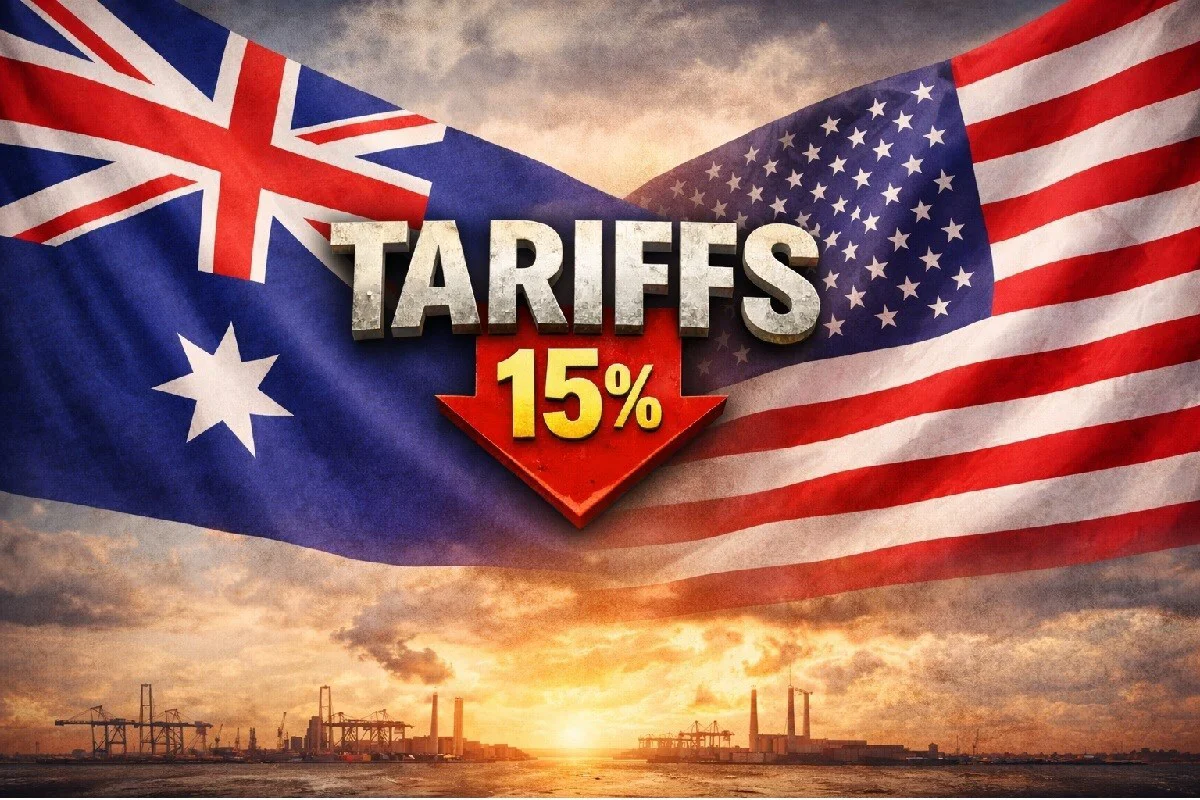
Australia is reassessing its trade position with the United States after President Donald Trump announced plans to impose a new 15 per cent tariff on all imports, a move that could directly affect Australian exporters and test the resilience of a long-standing free trade partnership.
The decision follows a US Supreme Court ruling that struck down a sweeping tariff regime introduced in April last year, finding that the President had exceeded his authority in applying the so-called “reciprocal” tariffs on more than 100 countries, including Australia. While the court left intact the sector-specific 50 per cent tariffs on steel and aluminium, it overturned the across-the-board 10 per cent “liberation day” tariff.
Within hours of the ruling, President Trump reinstated a baseline 10 per cent tariff and flagged plans to raise it to 15 per cent. To sidestep the court’s decision, he relied on separate legislation that allows the President to impose tariffs of up to 15 per cent to address “fundamental international payment problems”. However, the law limits such measures to 150 days unless Congress votes to extend them.
Also read: 15% duty prevails post US Supreme Court ruling, as uncertainty lingers for aluminium & auto industry
Australia pushes back against tariff hike
Trade Minister Don Farrell said the Albanese government was working closely with Australia’s embassy in Washington to assess the implications and examine all available options.
“Australia believes in free and fair trade. We have consistently advocated against these unjustified tariffs,” Senator Farrell said.
The federal Opposition has called for a firmer response, warning that the move risks damaging global growth and undermining established trade commitments. Shadow trade minister Kevin Hogan argued the tariffs contradict the spirit of the free trade agreement between Australia and the United States, as well as broader World Trade Organisation principles.
He cautioned that higher duties would push up prices for American consumers -particularly in sectors such as beef, where the US currently relies on imports due to drought - while also threatening Australia’s export-driven economy, which supports one in four jobs.
Explore- Most accurate data to drive business decisions with Global ALuminium Industry Outlook 2026 across the value chain
Long-standing agreement under strain
Australia and the United States have operated under a Free Trade Agreement since 2005, signed during the Howard and Bush administrations. The pact provides duty-free access to 97 per cent of Australia’s non-agricultural exports, with two-thirds of agricultural products also subject to zero tariffs.
However, the latest tariff escalation adds to earlier sector-specific measures and places renewed pressure on the agreement. As the 150-day window attached to the new tariff authority begins, Canberra faces the challenge of defending its trade interests while preserving a key economic relationship.
Don't miss out- Buyers are looking for your products on our B2B platform

Reliance hit with rating cuts from JP Morgan, BMO amid aluminium market volatility
Next articleLME aluminium cash offer hits $3,070/t as Asian Reference Price & inventories fall
Grow with
AL Circle