15% duty prevails post US Supreme Court ruling, as uncertainty lingers for aluminium & auto industry
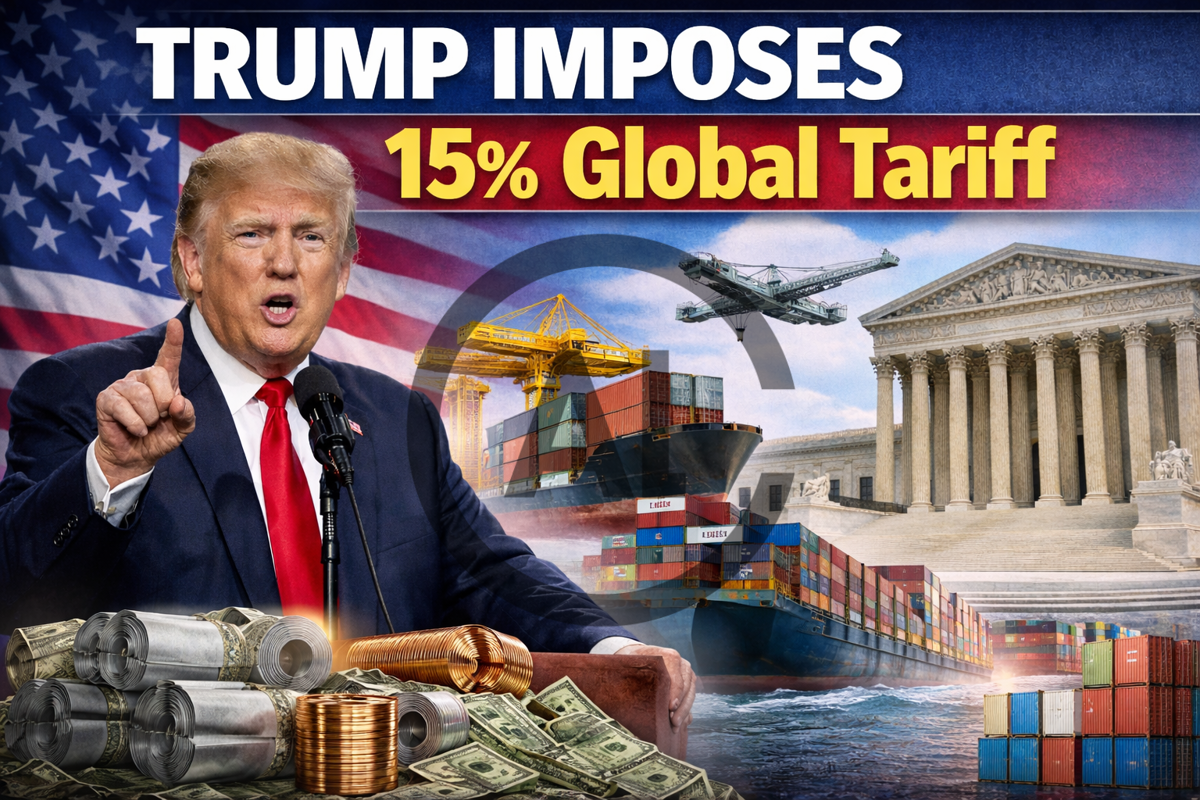
The US President Donald Trump has issued a new 15 per cent global tax using Section 122 of the Trade Act of 1974 on February 21. It is a response to the Supreme Court’s ruling on Trump’s previously imposed tariffs. Vehicles and parts, already under motor vehicles tariffs, are spared from the new duties.
On February 20, 2026, Trump announced a 10 per cent worldwide tariff, shortly after the Supreme Court of the United States ruled that many of his earlier import taxes were illegal. It was supposed to take effect on February 24.
For the global aluminium value-chain 2026 outlook, book our exclusive report “Global ALuminium Industry Outlook 2026"
The new 15 per cent tariff does not apply to imports of steel, aluminium, and copper. Goods from Canada and Mexico that follow North American Trade rules are also spared. This new duty will prevail for 150 days under the Trump administration.
On February 20, the Supreme Court stated that most of the tariffs imposed by Trump are illegal, but did not provide any statement regarding refunds or compensation. The ruling applies only to the tariffs issued under the International Emergency Economic Powers Act of 1977, which includes ‘reciprocal’ tariffs (10 to 50 per cent) on Canada, Mexico and China on the charges of fentanyl trafficking.
On the other hand, the White House is planning to launch investigations into unfair foreign trade under Section 301 of the Trade Act that may result in more duties. Previously, this section was used to impose tariffs on China.
This recent statement by the Supreme Court may affect the car manufacturers. The US government reportedly gained USD 8.6 billion from the automotive companies and USD 29 billion from imported manufactured goods, USD 11 billion from part duties and USD 13 billion from aluminium, copper and steel, under tariffs that are now considered illegal.
Don't miss out- Buyers are looking for your products on our B2B platform
Motor and Equipment Manufacturers Association (MEMA) welcomed the court’s decision, stating, “Suppliers operate within a deeply integrated North American supply chain, and policy changes of this scale have broad and complex implications for production, investment and competitiveness.”
According to US Customs and Border Protection, the federal government collected about USD 314 billion in total since the beginning of the year 2025 and approx. USD 133 billion under the emergency powers law. The bench of the Supreme Court said that Trump does not hold the authority to issue tariffs under this law.
It is uncertain how the ruling will affect the US trade with major automotive exporters such as the European Union, Japan and South Korea. These agreements included US promises to reduce reciprocal and automotive tariffs in exchange for investment and other concessions.
Must read: Key industry individuals share their thoughts on the trending topics
The automobile industry is waiting for the review of the United States-Mexico-Canada Agreement (USMCA), which supports North American automotive manufacturing and free trade deals. While Donald Trump has suggested the possibility of the US withdrawal from the agreement amid tensions with Canada, car manufacturers and suppliers support maintaining the trilateral agreement, stating it is important for global competitiveness.

The UP beer industry is set to invest ₹55 billion in aluminium cans and greenfield breweries
Next articleSteelforce Packaging appoints Brion S. Talley as CEO, North America
Grow with
AL Circle